Art-o-mat converts disused cigarette machines into art dispensers. Each piece needs packaging sized for the mechanism and a clear introduction to its maker.
Article
There are no snacks or drinks in this vending machine. Above the handles are small signs describing artworks. Choose a slot, pull its handle, and out comes something small enough to hold in a palm. Art-o-mat, which began in the United States, converts disused cigarette machines into dispensers of art.
Artist Clark Whittington presented the first machine at a café exhibition in Winston-Salem, North Carolina, in 1997. It sold black-and-white Polaroid photographs mounted on wooden blocks for one dollar each. When the exhibition ended, the café owner wanted to keep the machine. Other local artists joined, and the project continued. That first exhibition price is a historical figure, not the price of every work today.
The mechanism sets a physical limit. The artist guidelines specify a finished size of 54 millimeters wide, 82 millimeters tall, and 21 millimeters thick, including protective packaging. A drawing or tiny sculpture must fit through the machine without catching.
Flat works are generally made on wooden blocks; three-dimensional pieces and jewelry go in boxes. An underfilled, very light box can cause problems. Its contents need support and sufficient weight so the work does not shift or the packaging collapse. Protection and reliable dispensing have to be solved within the same small package.
An artist proposing a new work first submits one prototype ready for sale. The organizers assess craftsmanship and originality as well as dimensions and construction. Once approved, the artist sends a batch of finished works. The actual object and its packaging are checked before they enter a machine.
The small sign above the handle matters too. The guidelines ask artists to state their name and describe clearly what the buyer will receive, since buyers cannot handle the work before choosing. The work or packaging also carries the artist's name and contact details, offering a way to learn more after the purchase.
The pieces share a size without all becoming identical objects. The organizers also consider how a work will appear to someone buying art for the first time through the machine. At the machine, a buyer reads the signs and chooses a slot. After pulling the handle, they can turn the little object over and find its maker's name.
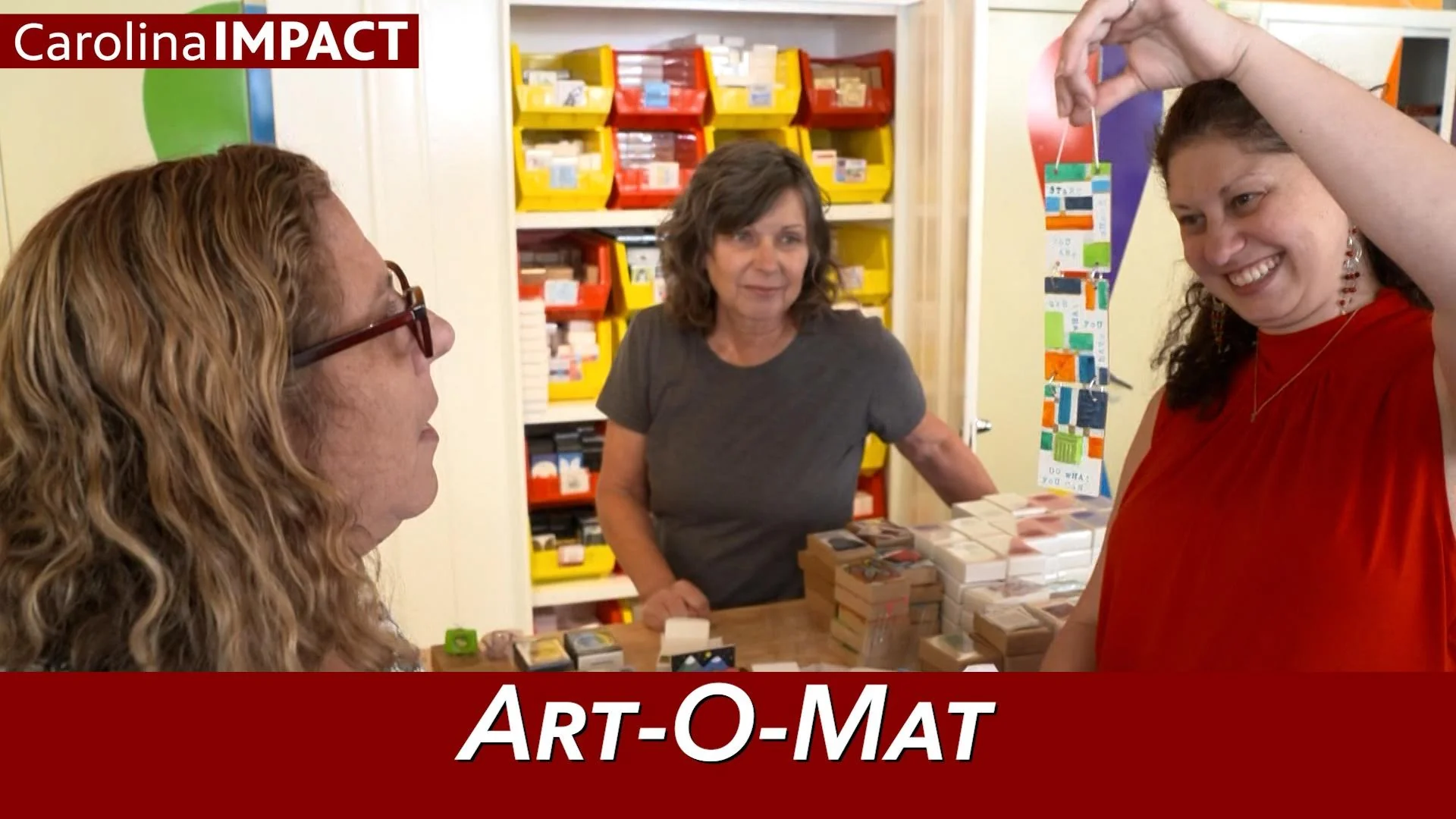
Image Description: A preview of the Carolina Impact Art-o-mat broadcast on PBS Charlotte.
Image Source: PBS Charlotte / Carolina Impact / Art-o-mat Official Broadcast Preview
https://www.pbs.org/video/art-o-mat-shyjg9/
Image changes: resized with the original aspect ratio preserved and converted to WebP. No cropping.
Sources and editorial notes
Art-o-mat · Official introduction
Art-o-mat · About · Records started in 1997
Art-o-mat · Guidelines for Artists · 2026-02-22 Enforcement Guidelines
Source of preview · PBS Charlotte / Carolina Impact / Art-o-mat Official Broadcast Preview
Editorial note: Factual statements are based on the sources above; interpretations reflect MUADAILY's editorial perspective. Image: PBS Charlotte / Carolina Impact / Art-o-mat Official broadcast preview.
Machine-translated from Korean. Read the original.