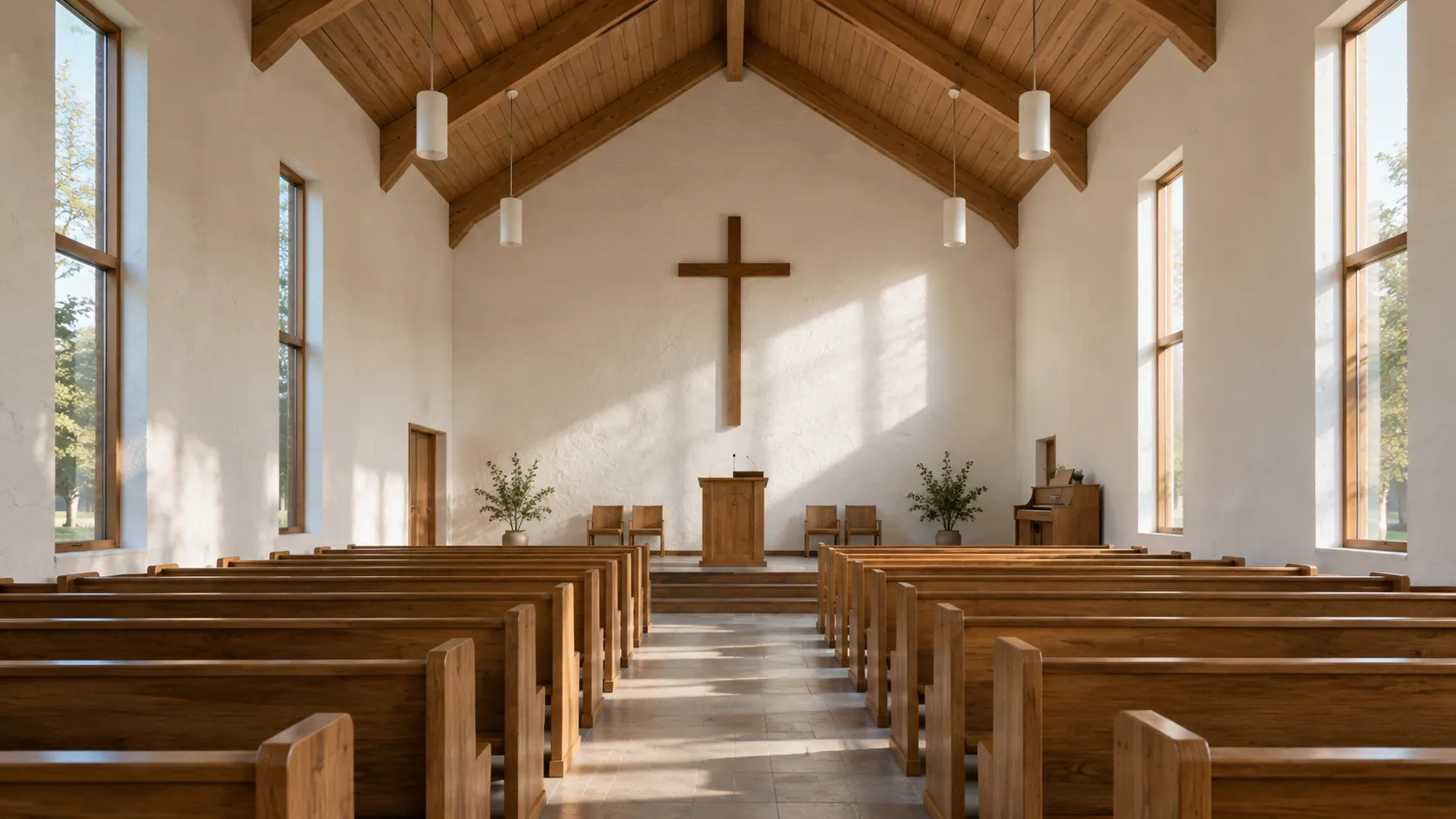
Presbyterian Church, Methodist Church, Holiness Church, Full Gospel, Baptist Church. Five familiar names retain different histories and emphases.
Article
If you look at church signs while walking down the street, each building has a similar but different name. Presbyterian Church, Methodist Church, Holiness Church, Full Gospel Church, Baptist Church. Everyone says they are Protestants, but why are their names so divided?
Looking at the names, the differences may seem to be quickly sorted out, but the five names are not classified according to the same standard. Some names came from the way the church was run, while others came from experiences or rituals considered important in religious life. In Korea, each tradition is sometimes divided into several denominations, so a name and a single organization do not always correspond.
Presbyterian: sharing responsibility for the church
The name Presbyterian Church is connected to the role of elders who govern the church. Pastors and elected elders take charge of church affairs together through the session, and local churches have a structure of presbytery and general assembly. Here, elder does not simply mean an older person.
Its theological background lies in Calvin and the Reformed tradition, with an emphasis on God’s sovereignty, grace and biblical teaching. However, even within the Presbyterian Church, denominations and theological positions are diverse. You cannot know all the thoughts and worship atmosphere of a church just by looking at the words ‘Presbyterian Church.’
Methodism, the process of faith becoming a way of life
Methodism has its roots in John Wesley and the religious movement around him in 18th-century England. The way of regularly reading the Bible, praying, and reflecting on one's life is connected to the name of this tradition. The tradition values not only the moment of professing faith, but also how life changes afterward.
The word that often comes up in the process is sanctification. It may sound like a difficult word, but in the Methodist tradition, it is explained as growing into a life of loving God and neighbors in God's grace. The Korean Methodist Church has a system that connects local churches, including bishops and annual conferences. The mere presence of elders does not make a church a Presbyterian church.
Holiness Church, life after rebirth
Holiness Church is a tradition connected to the Wesleyan holiness movement. The Korea Evangelical Holiness Church began in 1907 and emphasizes the fourfold gospel of rebirth, sanctification, healing, and second coming.
Rebirth refers to being born anew in faith, sanctification refers to a holy life, divine healing refers to healing from God, and second coming refers to the belief that Christ will come again. These explanations describe the denomination’s own language of faith and does not mean that the healing effect is guaranteed as a medical fact. The name ‘Holiness’ emphasizes that professed faith should shape everyday conduct.
Full Gospel, a tradition that emphasizes the experience of the Holy Spirit
Full Gospel is a name closely linked to the Pentecostal faith in Korea. It deals with the presence and power of the Holy Spirit, the baptism and gifts of the Holy Spirit, healing, and evangelism. The Assemblies of God, a global Pentecostal denomination, also explains the baptism of the Holy Spirit and divine healing as core doctrines.
Although they are sometimes remembered for praying out loud together or actively praising, the loudness of worship is not a criterion for distinguishing between traditions. Other denominations also offer this kind of worship, and even within the same Full Gospel group, the methods can be different. Also, it is not accurate to read ‘Full Gospel’ as a single organizational name that means all churches belong to one general assembly.
Baptist: a personal profession of faith
Baptists emphasize baptism after an individual confesses his or her faith. The immersion method of submerging the body in water is also revealed in the name. This is a point of difference from the tradition of baptizing infants who cannot confess their faith.
Baptists also value each local church’s autonomy. Churches may cooperate through conventions and other bodies, but local decision-making remains central. Other denominations also practice baptism; the differences concern who receives it and how it is administered.
The sign is the starting point
These names do not signify belief in entirely different gods. Within Protestantism, which places Jesus Christ and the Bible at the center, there is a trace of divergence in the emphasis on history, church management, and expression of faith. Presbyterians and Methodists also talk about the Holy Spirit, and Full Gospel and Baptists value a holy life.
When reading a sign, it is more accurate to look at the official name of the denomination and the description of the church, rather than determining the character from a single word. Five familiar names become our first introduction to communities with different histories in the same neighborhood.
Sources and editorial notes
Presbyterian Church of Korea (Tonghap) · Church polity
Korean Methodist Church · Official denomination information
United Methodist Church · Wesley's Emphasis
Korea Evangelical Holiness Church · Fourfold Gospel Information
Korea Evangelical Holiness Church · History and faith explanation
Assemblies of God · Pentecostal Faith
Christian Korean Baptist Church · History and Characteristics
Southern Baptist Convention · Autonomy of local churches
Presbyterian Church of Korea · Reformed Church History
Editorial note: Facts were checked against the sources above; interpretations are MUADAILY’s editorial views. Image: MUADAILY.
Machine-translated from Korean. Read the original.