Researchers documented the smell of old books through both people’s descriptions and chemical analysis. An odor wheel links terms such as chocolate and coffee with another dimension of heritage preservation.
Article
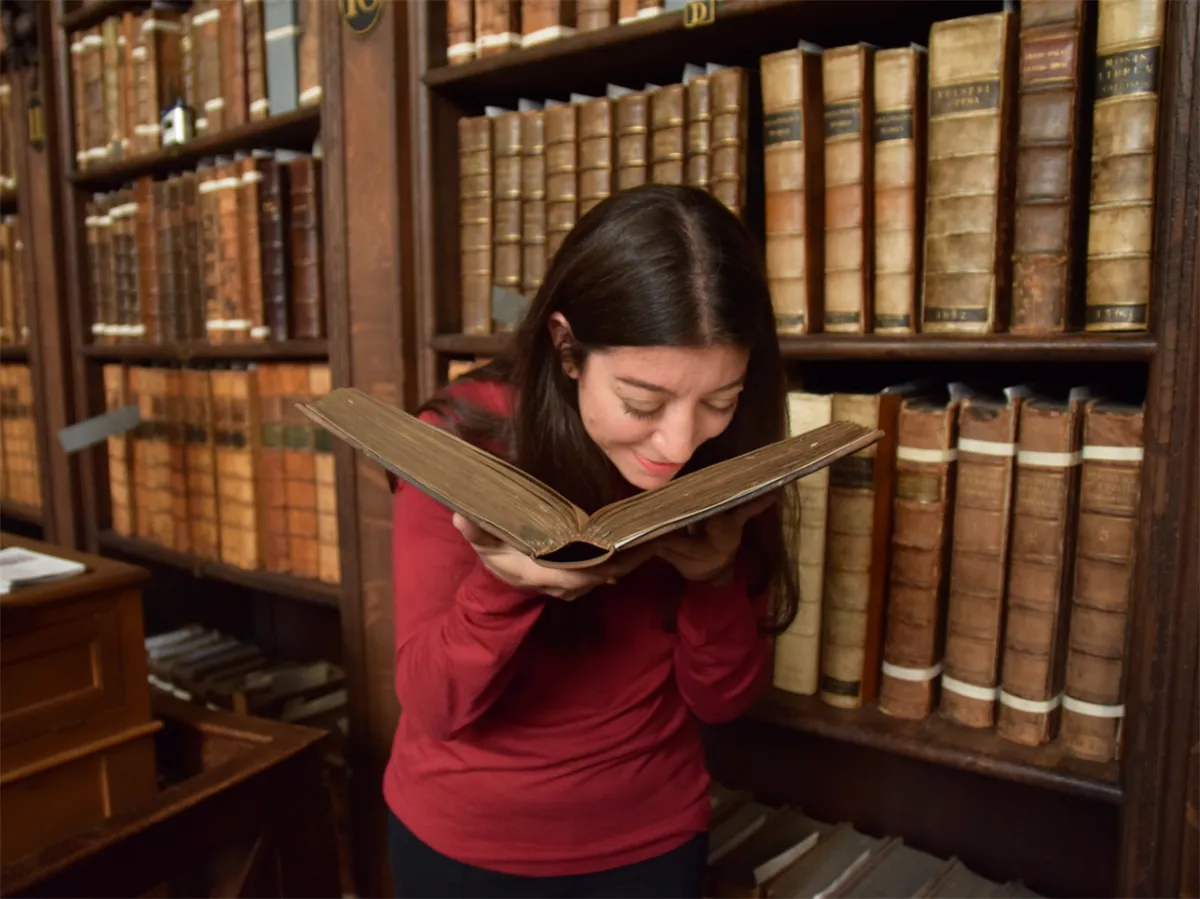
Smell a sample without being told what it is, then write down what comes to mind. Given a scent from an old book, some participants thought of chocolate and others of coffee. Instead of page-turning sounds or yellowed paper, the experiment recorded clues arriving through the nose. Familiar food names appeared even without a book in view.
In a paper published in 2017, Cecilia Bembibre and Matija Strlič proposed ways to document historic smells as cultural heritage. At a museum in Birmingham, England, 79 people smelled a sample from an old book and described it. Chocolate and coffee were participants' own comparisons, not fragrance names assigned by the researchers.
Old-book odors arise as paper's constituent materials change over time and release volatile compounds into the air. The researchers collected and analyzed compounds from books and the air of an old library. Chemical measurements were placed alongside descriptions of how a smell was perceived. Instruments and human language supplied different kinds of evidence.
One result was the Historic Book Odour Wheel. Its concentric layers connect broad descriptions such as woody, earthy, and sweet with more specific scent terms and related compounds. The diagram goes beyond calling a book pleasant-smelling or musty. Comparing different people's perceptions requires recording the words they use.
The study does not mean every old book smells of chocolate. Museum participants smelled a sample from one particular book. Other scents were presented too, and the researchers discussed whether chocolate and coffee among them might have influenced responses. A separate sensory assessment in a library should not be confused with the museum's 79-person exercise. Both sample and setting matter.
A diagram cannot trap the air of the past intact. The work offers a starting point for recording a smell's significance, chemistry, and human associations together. It draws attention to what photographs of books or buildings leave out. Some people think of paper and others of chocolate. Recording that difference adds a sensory dimension to what can be preserved.
Sources and editorial notes
Bembibre & Strlič · Heritage Science Original text (2017)
University College London · Open-access PDF of the same paper
Editorial note: Facts were checked against the sources above; interpretations reflect MUADAILY’s editorial perspective. Image: FMartin / AIC·FAIC · Cecilia Bembibre’s book-smell research.
Photograph / image source
FMartin / AIC·FAIC · Cecilia Bembibre’s book-smell research
Image description: Researcher Cecilia Bembibre smelling a historic book at St Paul’s Cathedral library
Original aspect ratio preserved; resized and reformatted for web display
Machine-translated from Korean. Read the original.