Written in 1976, Für Alina pairs a moving melody with notes from a triad. The Arvo Pärt Centre’s commentary and ECM’s recordings reveal both its rules and its flexible duration.
Article
There are few notes on the page in Arvo Pärt's piano piece Für Alina. Yet it is more than a handful of notes repeated for a fixed duration. A moving melody interlocks with notes from a set chord, leaving room for the sound to linger. The Arvo Pärt Centre's commentary explains the rules within this spare score.
Pärt wrote the piece in February 1976, emerging from a prolonged creative crisis. It was the first work to reveal his tintinnabuli style. One way into that unfamiliar term is to follow two strands: one carries the melody, while the other draws on a central three-note chord, or triad.
According to the Centre, the number of melody notes increases by one in each bar until it reaches eight, then decreases. Beside it, the other voice selects nearby notes of the triad. The two voices follow different rules on the same piano: one moves through the melody while the other keeps returning to the chord.
The piece does not follow its pattern mechanically to the end. The Centre points out a moment when the triadic voice departs to an unexpected C-sharp, and an addition in the final bar. Three more notes follow the place where the shrinking melody would have ended on one. Knowing the rule makes these small departures easier to hear.
Its duration is flexible, too. The Centre's work catalogue gives approximately two minutes, yet both tracks titled Für Alina on ECM's album Alina last more than ten minutes. ECM explains that the piece has no fixed meter or tempo, and that pianist Alexander Malter developed different interpretations with the composer and producer involved.
Alina was recorded at Frankfurt's Festeburg Church in 1995 and first released in 1999. Versions of Spiegel im Spiegel appear before, between, and after the two solo-piano performances of Für Alina. The album and the piano piece have similar names, but the album contains more than one composition. The performer and track list help identify which recording you have found.
When listening for the first time, try comparing the durations beside the titles. A recording much longer than the description of a short piano piece does not necessarily mean you have found the wrong work. Check the performance, then listen for how the notes accumulate and what remains at the end.
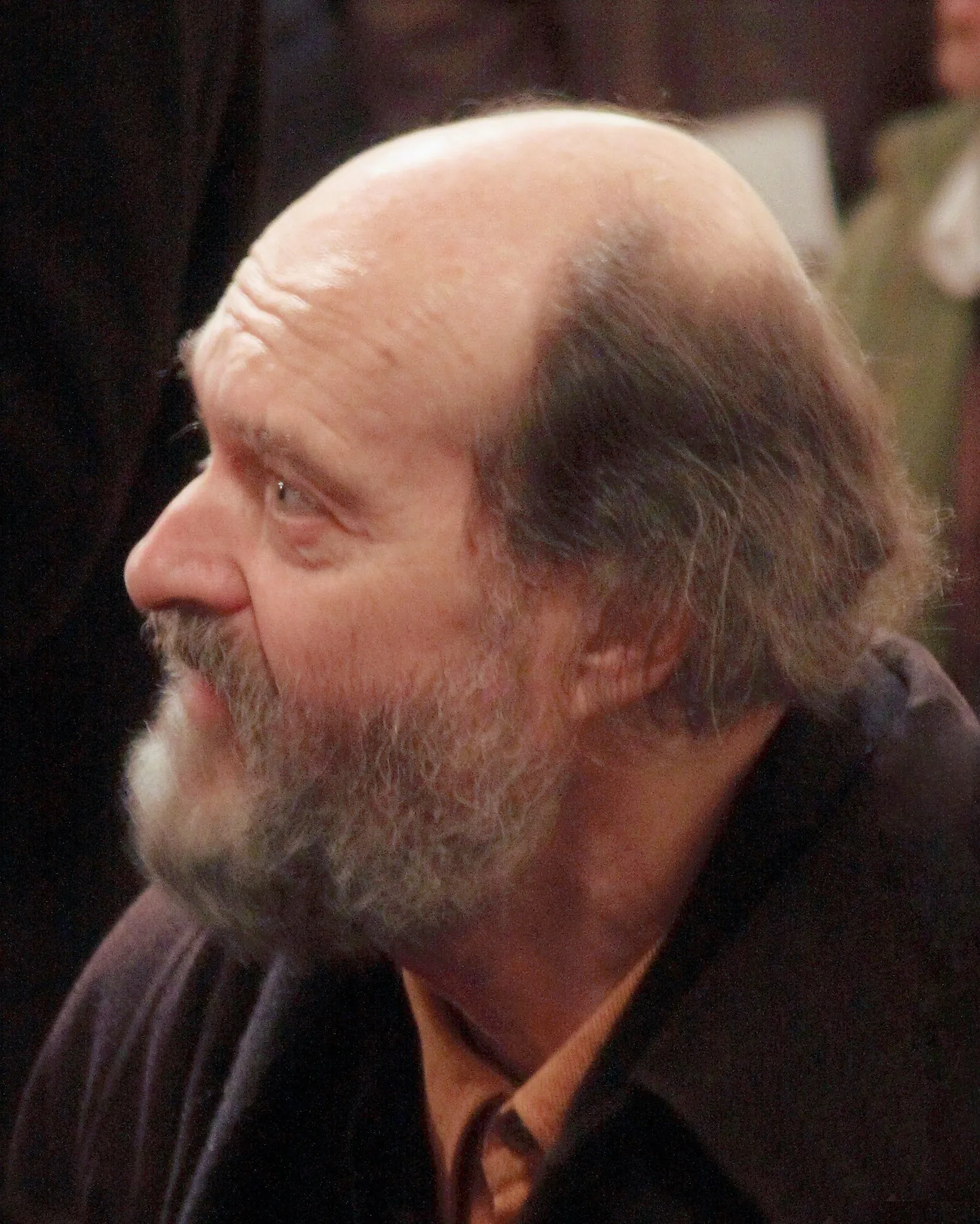
Photo Caption: 2008 file photo by Arvo Pärt.
Image source/terms of use: Woesinger; color adjustment Bogomolov.PL / CC BY-SA 2.0
https://commons.wikimedia.org/wiki/File:Arvo_P%C3%A4rt.jpg
https://creativecommons.org/licenses/by-sa/2.0/
Image changes: resized with the aspect ratio preserved and converted to WebP.
Sources and editorial notes
Arvo Pärt Center · Für Alina · Commentary on the work
ECM Records · Arvo Pärt: Alina · Recording·First release·Track·Performance description
Editorial note: Factual statements are based on the sources above; interpretations reflect MUADAILY's editorial perspective. Image: Woesinger; color adjustment Bogomolov.PL / CC BY-SA 2.0.
Machine-translated from Korean. Read the original.