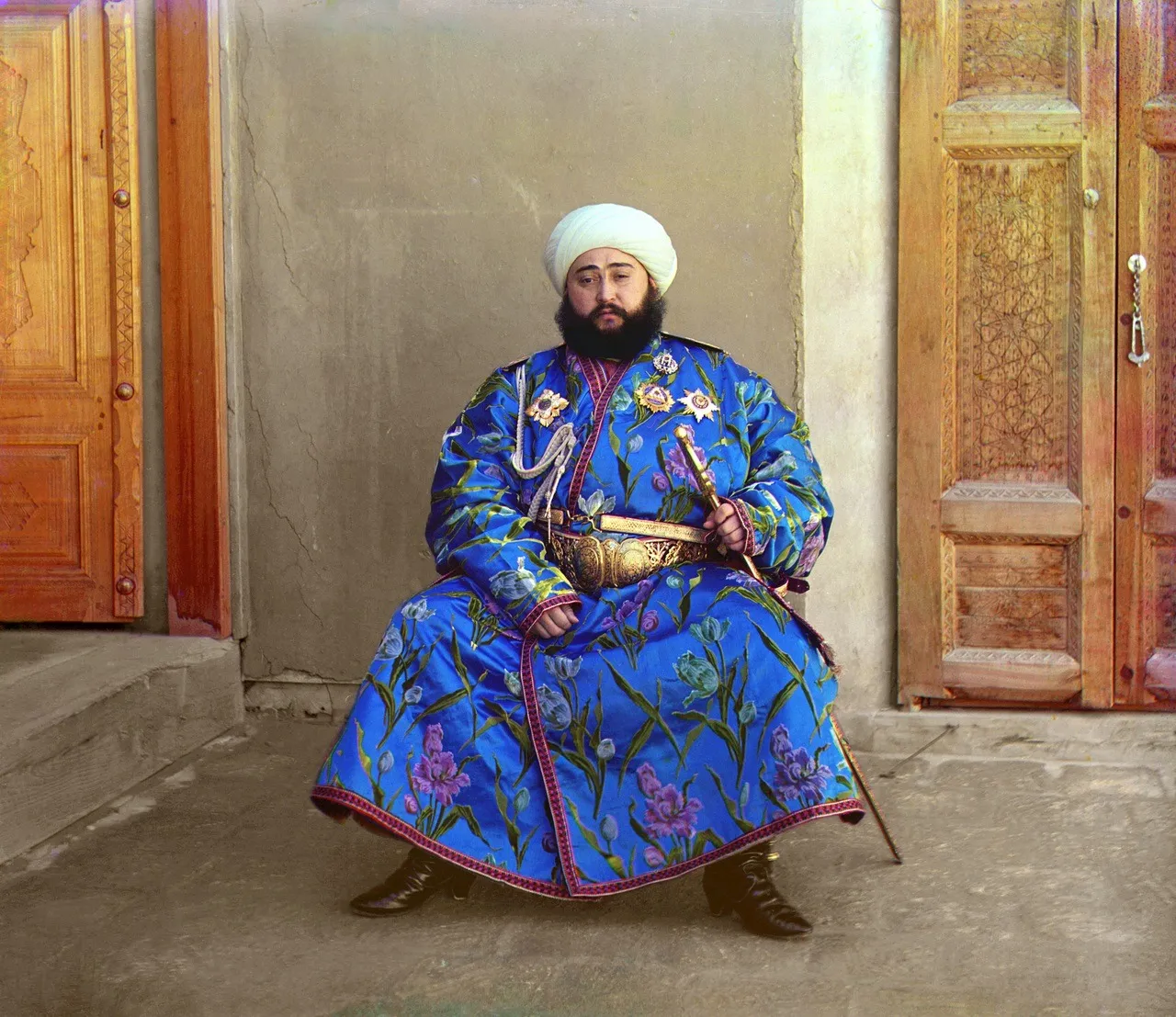
Prokudin-Gorsky photographed scenes through three filters. Misaligned colours can preserve traces of movement between exposures.
Article
Clothes and walls retain vivid colour in old photographs of Russia. They might look like colourized black-and-white pictures, but the Library of Congress’s Sergei Prokudin-Gorsky collection was made differently. Colour information was recorded in three stages at the time of exposure.
He photographed the same scene successively through red, green and blue filters. A glass plate held three monochrome images with different distributions of light and dark. None could show the scene’s complete colour alone. Superimposing them in their corresponding colours produced the coloured view.
Buildings, people and workplaces across the Russian Empire were recorded this way around 1905–1915. Originally, the images could be combined using coloured projection. The pictures seen on screens today result from the Library’s digitization and alignment of the glass negatives. Their starting point differs from AI guessing colours in a monochrome photograph.
The method also left traces. A moving person or flowing water changed position between the three exposures. Their edges might not align perfectly, producing displaced colours. This is both a limitation of the process and evidence that the world kept moving while it was photographed.
Look at the edges as well as the vivid colours. Still buildings and moving people were recorded differently. A single recovered view of the past actually contains three slightly different moments.
Sources and editorial notes
Library of Congress · Prokudin-Gorskii collection
Library of Congress · Photography method
Library of Congress · Making Color Images
Image source · Sergei Prokudin-Gorskii
Editorial note: Facts were checked against the linked material. Interpretations are MUADAILY’s editorial perspective. Image: Sergei Prokudin-Gorskii · Public domain · Alim Khan in 1911, digitally combined from three colour-filtered records.
Machine-translated from Korean. Read the original.