A recorded book needs a way to be heard. America’s talking-book service provided for players as well as recordings, with a programme to produce 5,000 machines in 1935.
Article
Record a book and send it to someone who cannot readily read print. But if the recipient has no player, the story cannot begin. America’s talking-book history concerns both recording books and providing a practical way to hear them.
According to the Library of Congress, federal funding for recorded books for blind readers began in 1934. Long texts demanded a different kind of listening from a single song: following sentences, changing records and keeping track of a book’s progression.
In 1935, a programme through the Works Progress Administration pursued production of 5,000 players. Providing recorded books also meant providing equipment that could play the records. With a player at home, a reader could choose when to listen and change discs to continue the book.
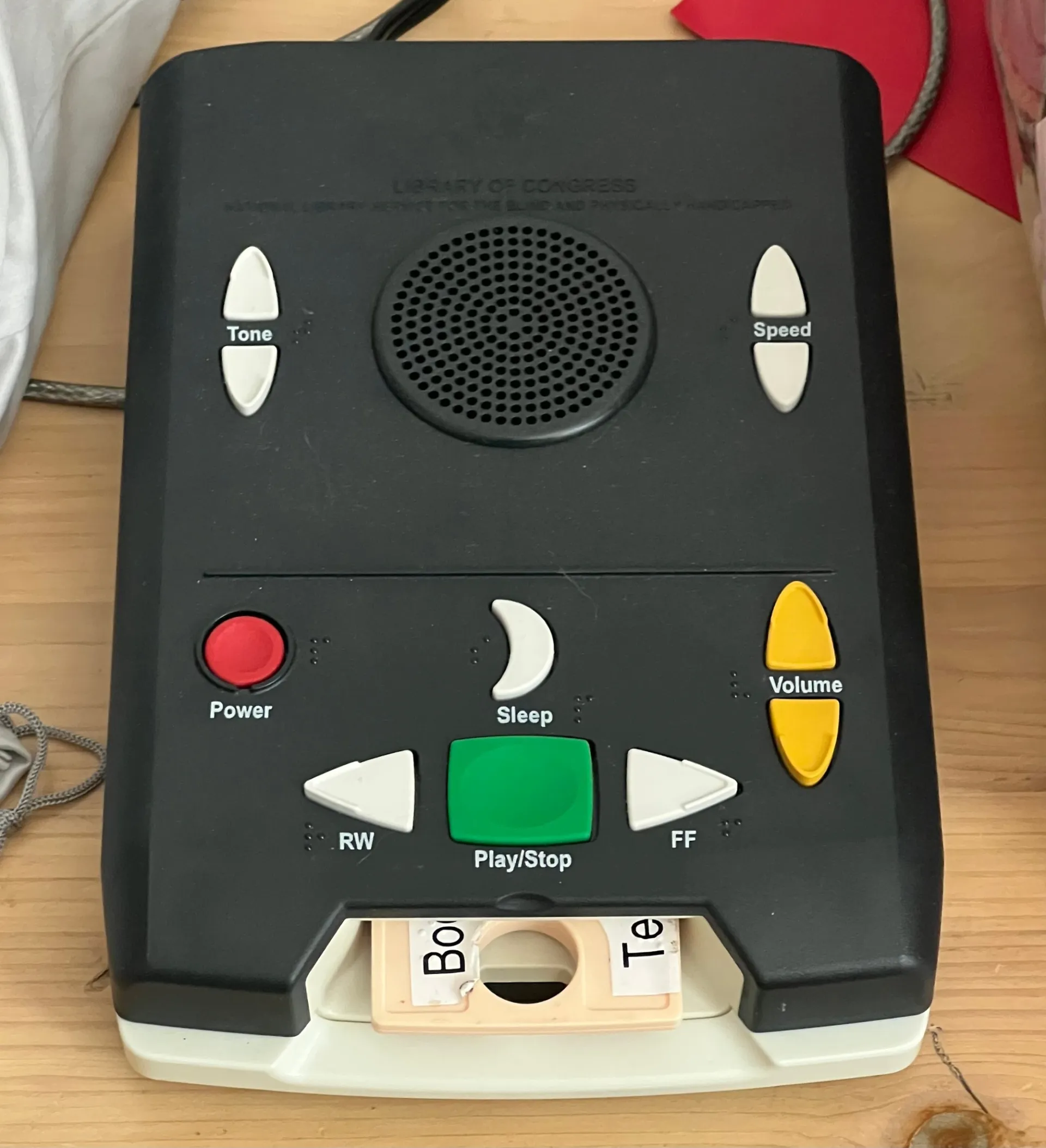
The media later changed from records to cassettes and digital formats. The pictured digital player is a successor, not one of the early record machines. Controls distinguishable by touch and functions for resuming a book became important parts of designing for sustained listening.
A reader pauses a book, resumes it later and locates the play button by touch. Talking-book players were designed around such actions. Once a recording reached the home, its reader needed to be able to start it and return to the desired passage.
Sources and editorial notes
Library of Congress NLS · History
Library of Congress NLS · 90th anniversary
Image use terms · CC BY-SA 4.0
Editorial note: Facts were checked against the linked material. Interpretations are MUADAILY’s editorial perspective. Image: TaurusEmerald · CC BY-SA 4.0 · NLS digital player, a later successor to the 1930s machines.
Machine-translated from Korean. Read the original.