The satellite is due to stop observing on December 1, but its accumulated data will remain available.
Article
Place satellite views of coastlines, forests or snowy mountains from different dates together and changes emerge that a single image cannot reveal. Years of records help distinguish recurring seasonal snow from longer-lasting changes on the ground. This is one use of Terra’s long archive. [1]
NASA says Terra will stop collecting science data on December 1, 2026, and switch off all spacecraft systems in January 2027. Designed for six years, it has operated for more than four times that period. Ageing systems and orbital drift are bringing the mission to an end. [1]
Individual instruments have stopped at different times. MOPITT, which observed carbon monoxide, ceased collecting data and was powered off in 2025. Not every instrument has continued the same work to the final day; power constraints have already required choices. [1]
Comparing images also requires attention to the season and instrument. If we compare two pictures with different amounts of snow without checking when they were taken, we may mistake seasonal variation for a longer-term change. Dates and observing conditions are part of the record.
Terra’s data will remain freely available after the mission ends. Adding new observations will stop, but earlier views of Earth will stay accessible. An old image needed for comparison with today’s observations can still be found there. [1]
Sources and editorial notes
[2] Image source · Jacques Descloitres, MODIS Rapid Response Team, NASA/GSFC
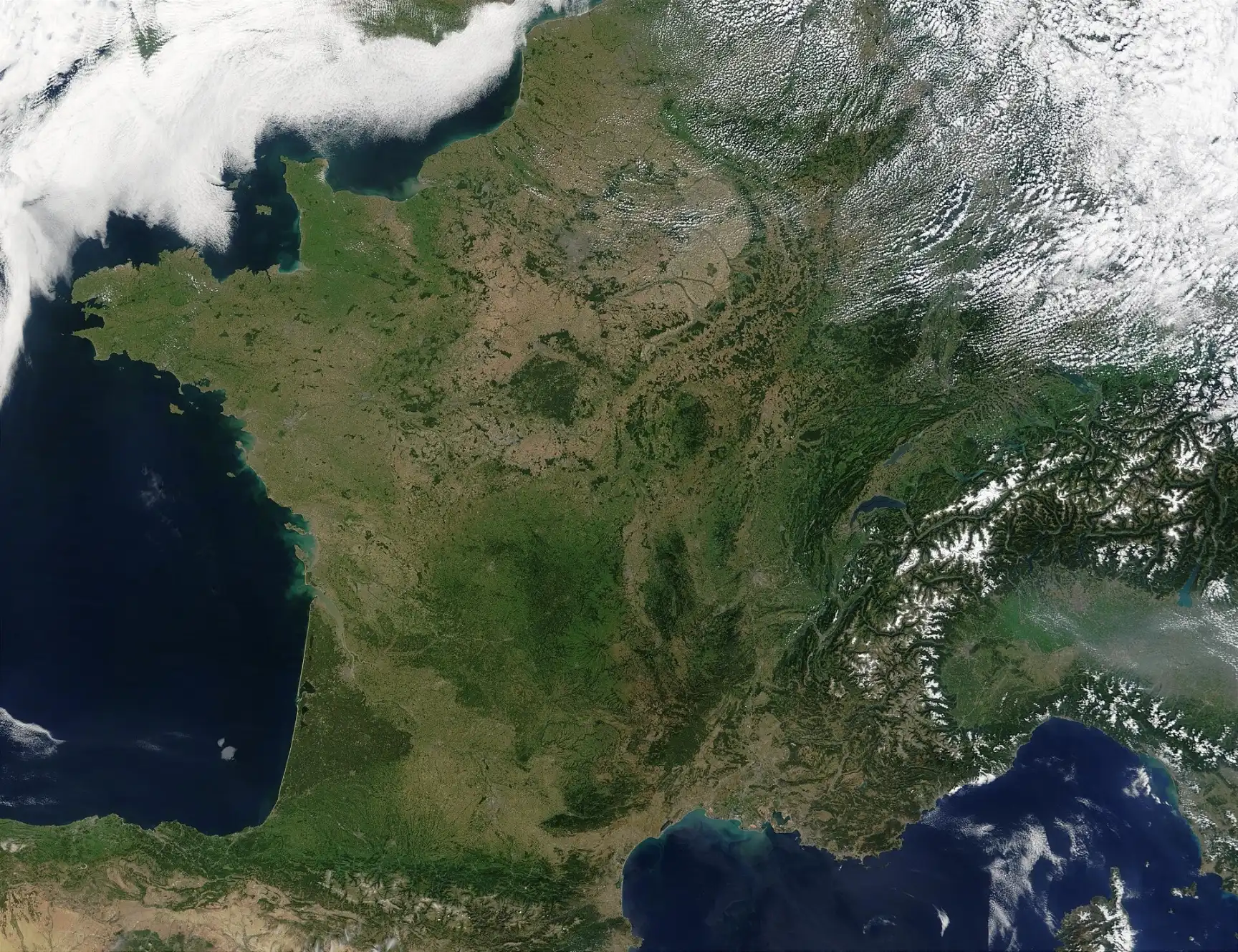
Editorial note: Facts were checked against the linked sources. Interpretations are MUADAILY’s editorial perspective. Image: Jacques Descloitres, MODIS Rapid Response Team, NASA/GSFC · Public domain (NASA) · France and surrounding areas observed by Terra on August 14, 2002, one image from the mission’s long archive.
Machine-translated from Korean. Read the original.