Household objects and processional pictures offer a route through the V&A’s exhibition on a city shaped by two empires.
Article
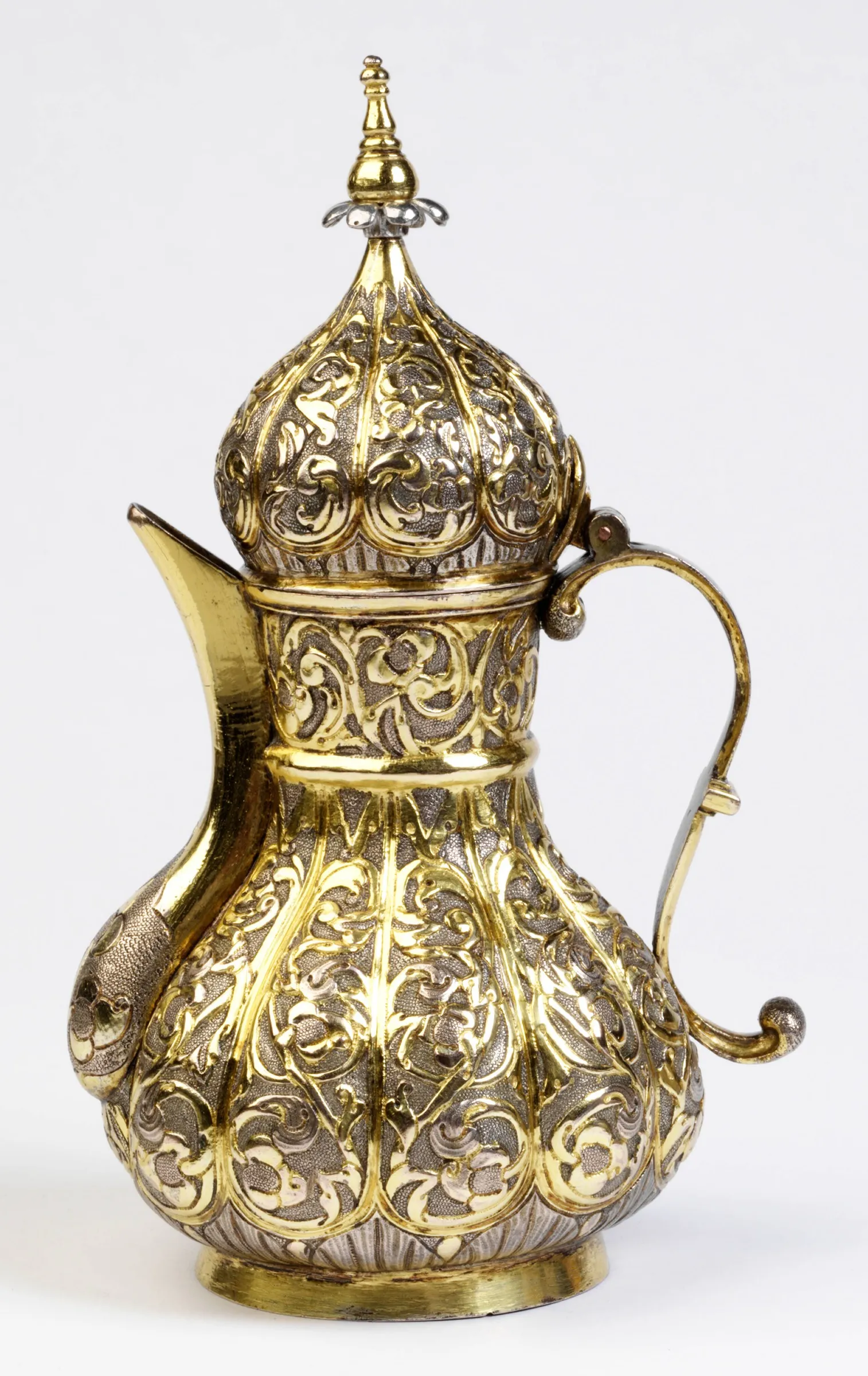
A long-necked instrument and a flower-decorated coffee pot appear in the same exhibition. Constantinople to Istanbul: One City, Two Empires at the V&A explores Byzantine and Ottoman history through objects that can also bring a vast subject within reach. [1]
The coffee pot dates from 1800–1850 and was made in Turkey, probably Istanbul. Copper, silver, gilding and floral ornament combine a vessel for pouring coffee with intricate surface work. [1]
A tambur from around 1750 has a long neck extending from its rounded body. Its shape separates the place where fingers stop the strings from the body that resonates. Food and music offer different routes into urban life. [1]
A watercolour from about 1809 depicts the sultan’s procession to Friday prayers. Beside a small vessel and an instrument, a crowd using a city street changes the scale of the story. [1]
The exhibition is scheduled to run until May 9, 2027. Attention can move from a pot’s spout to an instrument’s long neck, then out to the street occupied by a procession. Across 1,600 years of city history, objects held in the hand sit alongside scenes of spaces shared by many people. [1]
Sources and editorial notes
Editorial note: Facts were checked against the linked sources. Interpretations are MUADAILY’s editorial perspective. Image: © Victoria and Albert Museum, London · A flower-decorated coffee pot featured in the V&A exhibition, dated to 1800–1850 and made in Turkey.
Machine-translated from Korean. Read the original.