A leaf folded yesterday has opened a little today. A plant chosen for its looks brings small tasks into the home: checking water and light, and waiting for change.
Article
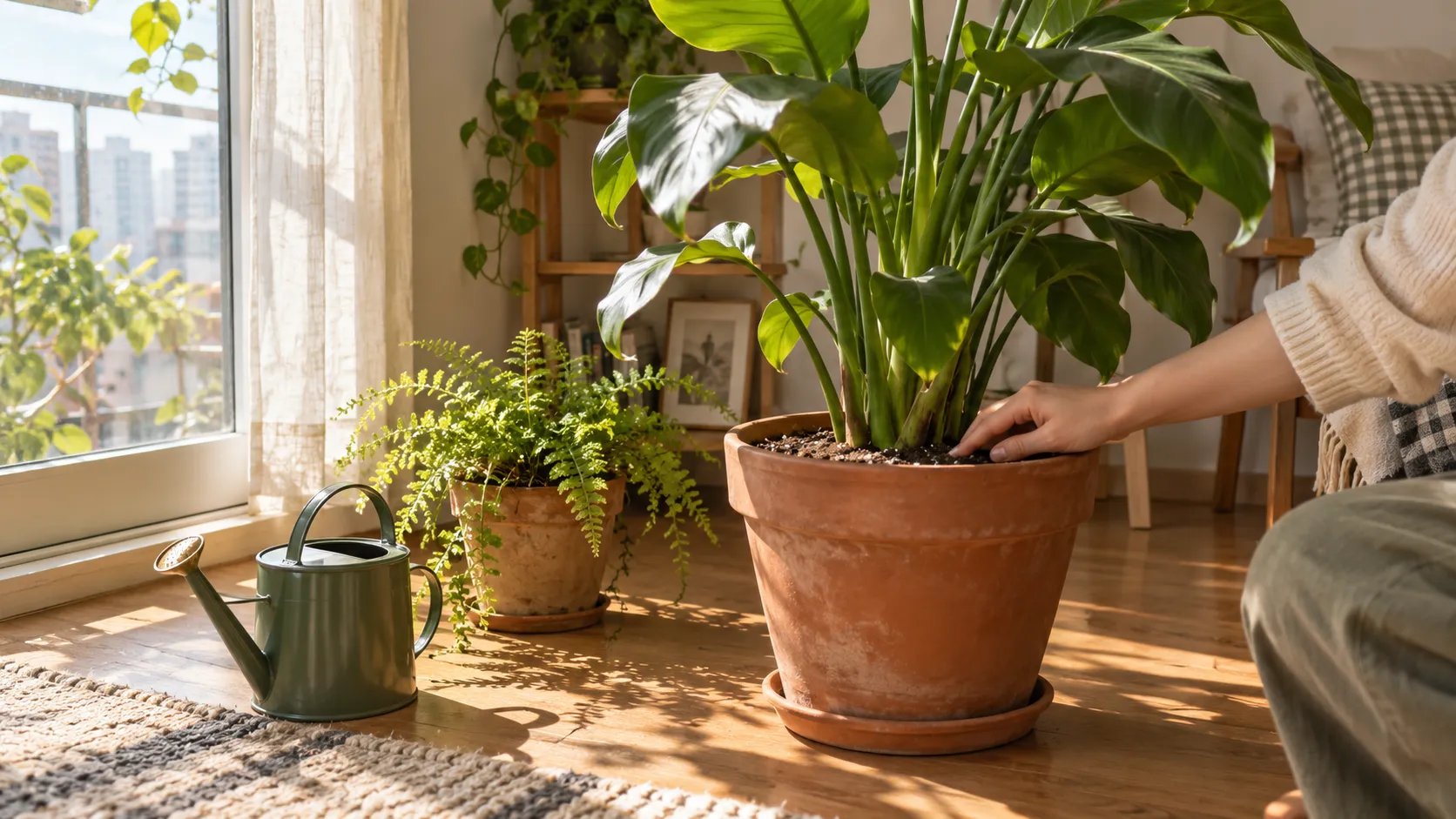
Opening the curtains in the morning, you glance at a potted plant: has the leaf that was folded yesterday opened a little, and is the soil still damp? The other objects in the room remain the same, but the plant very slowly takes on a different appearance. Noticing a new leaf can mean watching the same plant for several days.
At first, you may choose a plant because it will look lovely by the window. Once it is home, looking at it is only part of the experience. Small tasks—checking the light and deciding whether it needs water—become part of the day.
The impression given by the shape of the leaves
A study introduced by the Royal Horticultural Society (RHS) and the University of Reading showed images of indoor plants to 520 participants and looked at their reactions. Healthy, lush plants were generally evaluated well, while plants whose leaves had turned brown due to poor care were evaluated poorly. Even if it was the same green, it felt different depending on its shape and condition.
The study measured responses to the appearance of plants in photographs. This does not mean that one plant will cure a disease or sufficiently purify the air in a room. Choosing a plant you like the look of and checking whether you can meet its needs remain separate tasks.
Check the soil before adding more water
Plants do not produce new leaves to a schedule we choose. Giving more water just because you want it to grow faster is not the answer. Even within the same house, the light near the window and inside the room is different, and each plant has different requirements. Caring for them can mean asking whether it is time to wait, rather than deciding what else to do.
Sometimes the first question is how many plants you can care for, rather than how many more would look nice. Interior photographs rarely reveal how long someone is away from home, how much sunlight a room receives or whether a pot drains after watering. In the RHS study, participants responded that they were worried that the plants would wilt.
A new reason to look by the window
Growing plants is not always comfortable. It can be frustrating to see withered leaves, and maintenance can be a burden. The hobby may be easier to sustain with plants whose needs fit into daily life than with a large collection.
The joy of finding a new leaf differs from the pleasure of buying a plant. It is a change noticed after several days of looking in the same place. A plant chosen as decoration has become a reason to look by the window each morning. Caring for it takes shape in the small differences we learn to notice.
Sources and editorial notes
RHS · Introduction to research examining the appearance and psychological responses of indoor plants
RHS · Guide to growing indoor plants
Editorial note: Study subjects and results are based on the RHS official introduction. Responses to images of plants do not establish disease treatment or substantial air-purifying effects. The discussion of care in daily life is MUADAILY’s editorial interpretation. Image: MUADAILY · AI-generated concept image.
Machine-translated from Korean. Read the original.