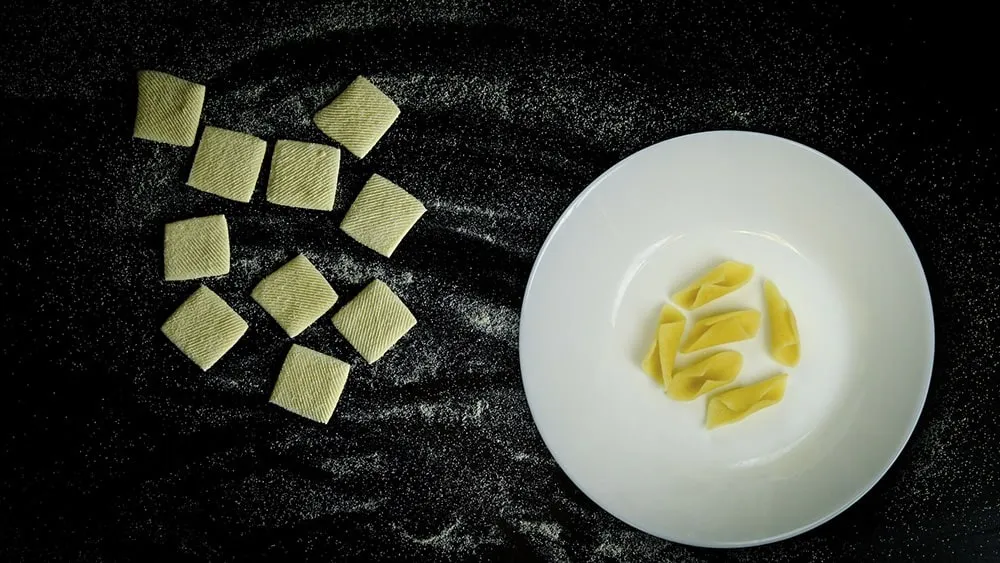
Surface grooves make pasta change shape as it cooks. The 2021 morphing-pasta research explored a way to reduce packing space.
Article
Flat pieces of dough enter a pot and curl into tubes or waves as they cook. Carnegie Mellon researchers presented morphing pasta in 2021: food that changes shape before eating. They asked whether pasta could travel flat instead of occupying its full cooked form.
The ingredients are semolina flour and water. Rather than adding unusual chemicals, the team impressed small grooves into the surface. Grooved and smooth regions change differently as they absorb water, bending the dough during cooking. Groove direction and arrangement influence the resulting shape.
The Morphing Matter Lab cited flat-packed furniture as an inspiration. Must an object retain its final three-dimensional shape throughout transport? Here, hot water supplies the transformation instead of a person assembling parts.
The 2021 research tested the possibility of reducing packaging and transport space. It did not establish mass-market distribution or an overall carbon saving. A practical product would also need to retain its grooves and flat form through production and storage, then reliably take the intended shape during cooking.
The research photograph places flat dough beside the three-dimensional shapes produced by cooking. Before cooking, pieces can lie together in a flat stack; in the pot, the groove pattern makes them bend. Changing the dough’s surface lets it lie flat in a package and take a three-dimensional shape on a plate.
Sources and editorial notes
Carnegie Mellon University · Pasta that morphs
Morphing Matter Lab · Morphing Pasta and Beyond
Editorial note: Facts were checked against the linked material. Interpretations are MUADAILY’s editorial perspective. Image: Morphing Matter Lab · Research image of morphing pasta before and after cooking.
Machine-translated from Korean. Read the original.