Fold and knot a square of cloth to wrap a bottle, box, or lunch. Furoshiki can be opened, washed as its fabric allows, and used again.
Article
A bottle makes a good gift, but wrapping one without a box can be awkward. Paper has to fit around a round body and narrow neck. Japanese furoshiki use a square of cloth instead: fold it around the object and tie the corners to hold the wrapping in place.
Furoshiki maker MUSUBI shows different ways to wrap a long box, a box with a roughly square footprint, a flat box finished with a bow, and one or two bottles. The folds and knots change with the shape of the object. The same square of cloth can take on several forms.
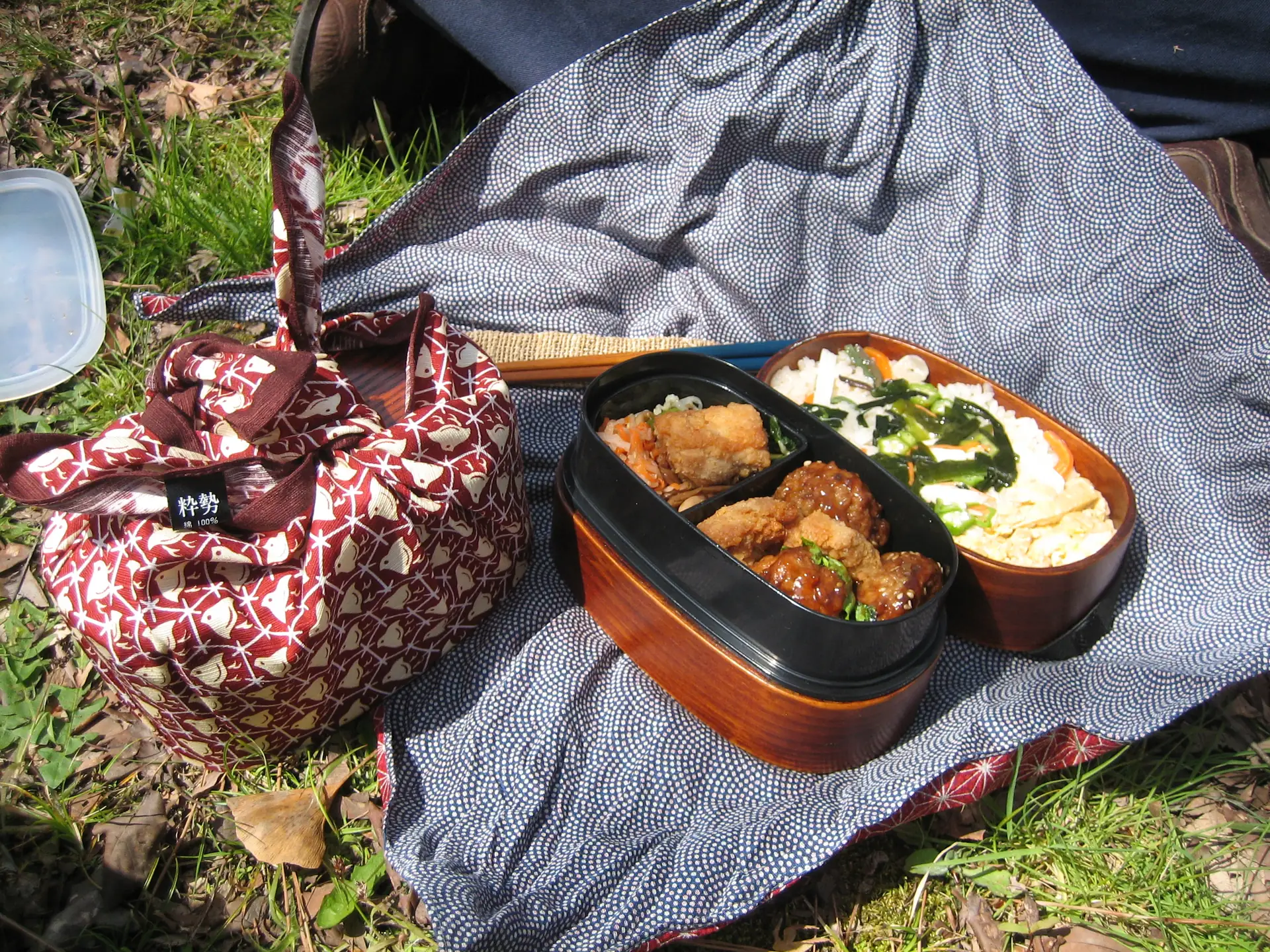
MUSUBI gives examples such as 45–50 cm cloths for lunch boxes and 68–70 cm cloths for wine bottles. Those figures are guides, not guarantees of fit. Lunch boxes vary in height as well as width, and the corners need enough spare length to make a knot.
Larger cloths have other uses. Sizes around 90–120 cm can become bags; cloths around 130–195 cm can serve as covers or wall hangings. The right size depends on what you want to wrap, carry, or cover.
Untie the knots and the wrapping becomes a flat cloth again. It does not need to be cut or sewn to fit one gift. A piece used to wrap a bottle can later wrap a box, with a different arrangement of folds.
Fabric changes the feel and handling. Cotton is easy to knot and generally suitable for washing at home. Polyester is also easy to wrap and knot, and resists wrinkling and shrinking. Silk and rayon offer a sheen, but their appearance comes with different care needs.
Check the care label first. Cotton and polyester cloths can generally be washed at home, separately if color may run. Silk and rayon can shrink in water; MUSUBI recommends dry cleaning for these fabrics. A cloth used around a lunch box may need frequent washing, so its material matters as much as its pattern.
Sources and editorial notes
MUSUBI · A History of Furoshiki: Definition of wrapping and carrying cloth
MUSUBI · What is the best size?: Packaging method for each type of product
MUSUBI · FAQ: Usage examples by size
MUSUBI · Washing and Care: Washing instructions for each material
Kraig Donald/Wikimedia Commons · Home made Bento original photo
Photo use conditions · CC BY-SA 3.0 (same conditions for photos with changed size and format)
Editorial note: Factual statements are based on the sources above; interpretations reflect MUADAILY's editorial perspective. Photo: Kraig Donald / Wikimedia Commons / CC BY-SA 3.0 · Change size/format, maintain original proportions · Adapted image shared under the same license.
Machine-translated from Korean. Read the original.