Swift bricks create nesting spaces inside building walls. British conservation guidance considers the cavity, entrance, and flight path together.
Article
Sealing gaps in a house keeps out wind and rain, but it can also close an entrance used by nesting birds. Swift bricks, used in the UK, leave a cavity inside a building's wall. A small opening leads to a place where a bird can nest. A home for people can include room for a bird.
The intended resident is the common swift. The Royal Society for the Protection of Birds, or RSPB, explains that swifts nest under eaves and roof tiles and in wall cavities, often returning to the same site each year. Demolition, renovation, and tightly sealed new buildings can reduce these places.
A nesting brick is hollow, with an entrance from outside. It is not limited to red-brick houses: the RSPB notes that units can be incorporated into walls made from other materials. Unlike a separate nest box attached outside, the cavity can sit within the building, leaving only its entrance visible.
Swift Conservation's product descriptions include hollow units made from concrete-based materials and options suited to brick or stone finishes. The cavity may sit behind the cladding, but its entrance must remain open. Making a nest discreet is different from sealing off access to it.
Height is only one consideration. Conservation guidance advises avoiding strong direct sun and considering shaded sites such as beneath eaves. Trees, wires, and other obstructions can interfere with access. The approach needs a clear flight path as well as a suitable cavity. This guidance concerns these birds in the UK and Europe.
Knowing where birds already nest also helps. The RSPB and its partners use Swift Mapper to record birds entering buildings and the locations of their nests. A bird high overhead provides different information from one entering a particular building. Nest records help identify places to protect or provide replacements.
One hollow brick does not guarantee breeding or solve every cause of decline. The same products and siting guidance cannot simply be transferred to Korean birds and buildings. The useful question here is how building work can retain small spaces that animals already use. Within the walls enclosing a person's rooms, another entrance can remain open.
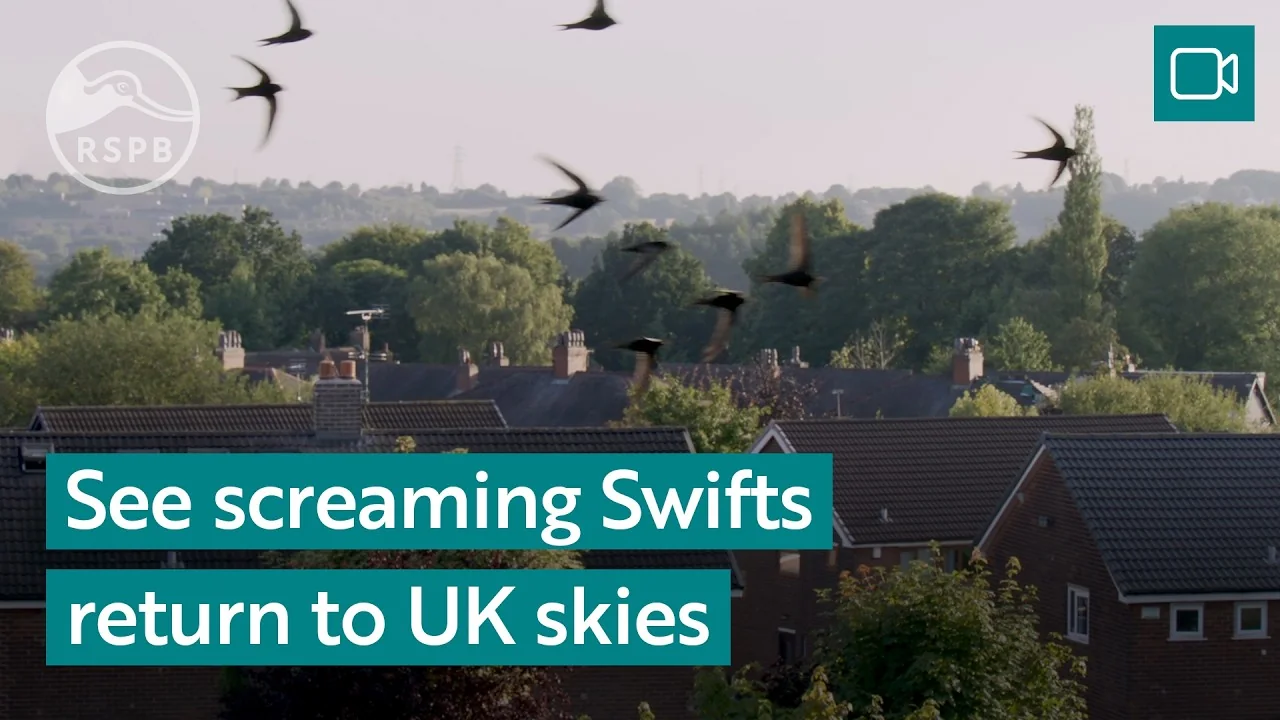
Image caption: Preview of the RSPB's official swift introduction video. This is not a construction photo of nest bricks.
Image source: RSPB / Official release video preview
https://www.youtube.com/watch?v=_W1Idlw3h3A
Image changes: resized with the original aspect ratio preserved and converted to WebP. No cropping.
Sources and editorial notes
RSPB · How Swift bricks can help save Swifts in Scotland · 2026-06-04
Swift Conservation · Swift Bricks · Product structure and installation location description
RSPB · Help nesting Swifts – Take part in Swift Mapper · Guide to nesting records
Source of preview · RSPB / official public video preview
Editorial note: Factual statements are based on the sources above; interpretations reflect MUADAILY's editorial perspective. Image: RSPB / Official release video preview.
Machine-translated from Korean. Read the original.