A time bank records hours of help in a shared system. Credit earned by helping one member can be used to receive help from another.
Article
Imagine helping a neighbor sew for an hour, while the help you need is a ride from someone else. Time banking allows the person you help and the person who later helps you to be different. Your contribution is recorded, and that record lets you receive help from another member.
TimeBanks.Org explains that one hour of help earns one time credit. The provider receives a credit; the recipient spends one or takes on a balance to be offset by contributing time later. The record arises through an exchange between members. It does not require an initial deposit of cash.
Consider three members. One teaches another to cook for an hour and earns a credit, then spends it on transport help from a third. The member who learned to cook later contributes something they can do. This is an illustration of the shared-credit system, not an anecdote about identified participants.
The unit is time spent, rather than the service's market price. An hour is recorded as an hour regardless of the kind of help. TimeBanks.Org describes this as a way of valuing people's time and skills equally. The record measures time given and received rather than assigning different hourly rates.
Members still need to specify what they can exchange. The organization gives examples including tutoring, cooking, repairs, transport, and companionship. A listed example does not guarantee that service in every local group. Someone must be available to provide it, and both sides need to agree on the task and timing.
A coordinator or steering group usually helps match offers with requests and manage the records. Online tools and apps support this process. A simple rule for counting time does not settle what will happen, where, or when. Accumulating credits alone cannot make an unavailable service appear.
TimeBanks.Org emphasizes that giver and receiver are not fixed roles. Someone may teach cooking one day and request a ride another. Their balance records time contributed and help received. After an exchange, members record the hours and can offer another skill or post a new request.
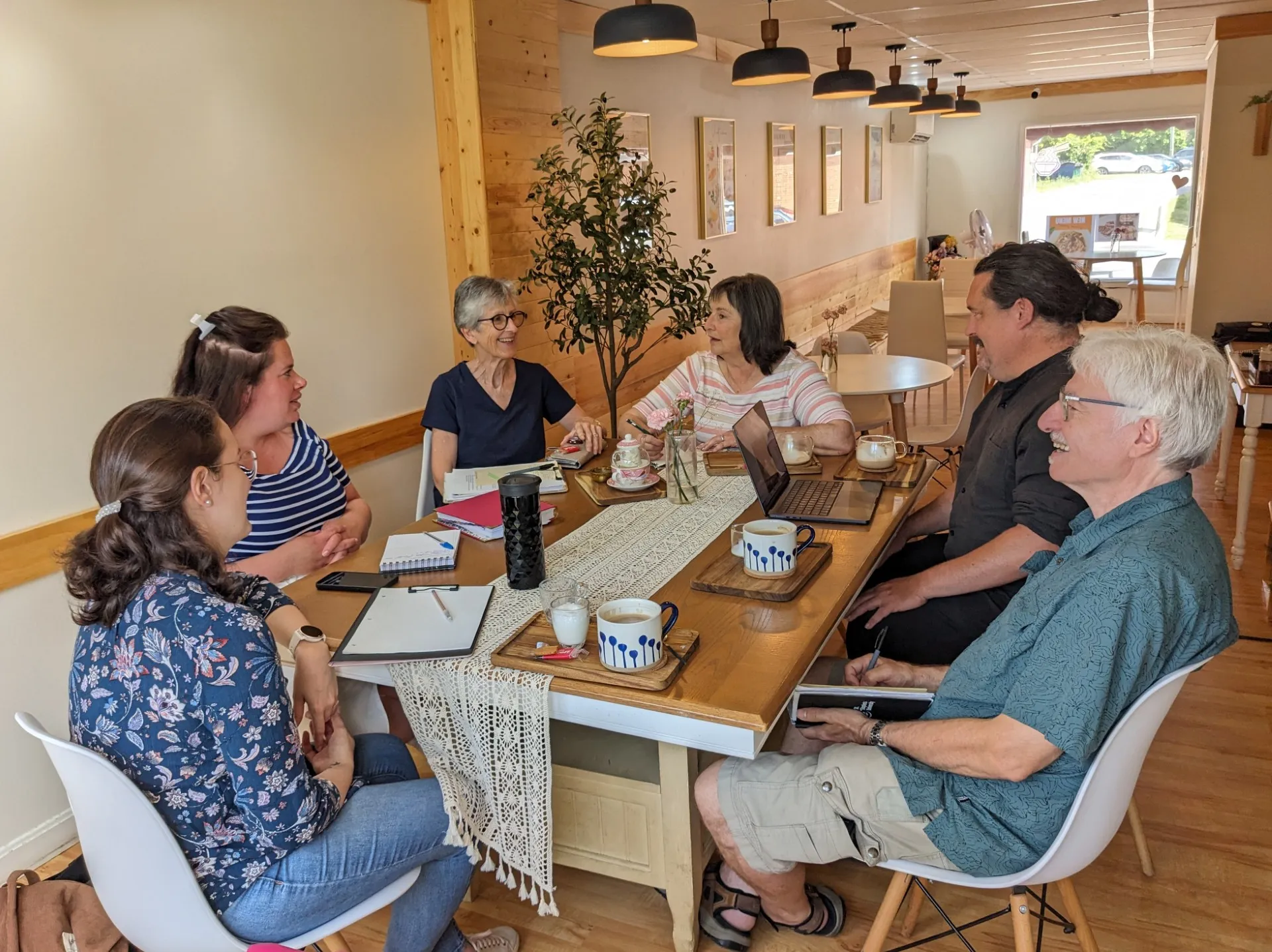
Image description: Members of the Charlotte County timebank in Canada meeting around a table; a contextual photograph
Image source: Source: Timebanking UK · Charlotte County timebank meeting, Canada
https://timebanking.org/
Related video: https://www.youtube.com/watch?v=Fii0yvJ4fMc
Image changes: resized with the original aspect ratio preserved and converted to WebP. No cropping.
Sources and editorial notes
TimeBanks.Org · FAQ · Differences between Credit and Direct Barter
TimeBanks.Org · How it Works · Mutual Credit/Records/Operation Coordination
TimeBanks.Org · Who We Are · Time Exchange Principles and Illustrative Examples
Related video source Warwickshire County Council / Time Bank Explanation Official Video Preview
Editorial note: Factual statements are based on the sources above; interpretations reflect MUADAILY's editorial perspective. Image: Source: Timebanking UK · Charlotte County timebank meeting, Canada.
Photograph / image source
Source: Timebanking UK · Charlotte County timebank meeting, Canada
Image description: Members of the Charlotte County timebank in Canada meeting around a table; a contextual photograph
Original aspect ratio preserved; resized and reformatted for web display
Machine-translated from Korean. Read the original.