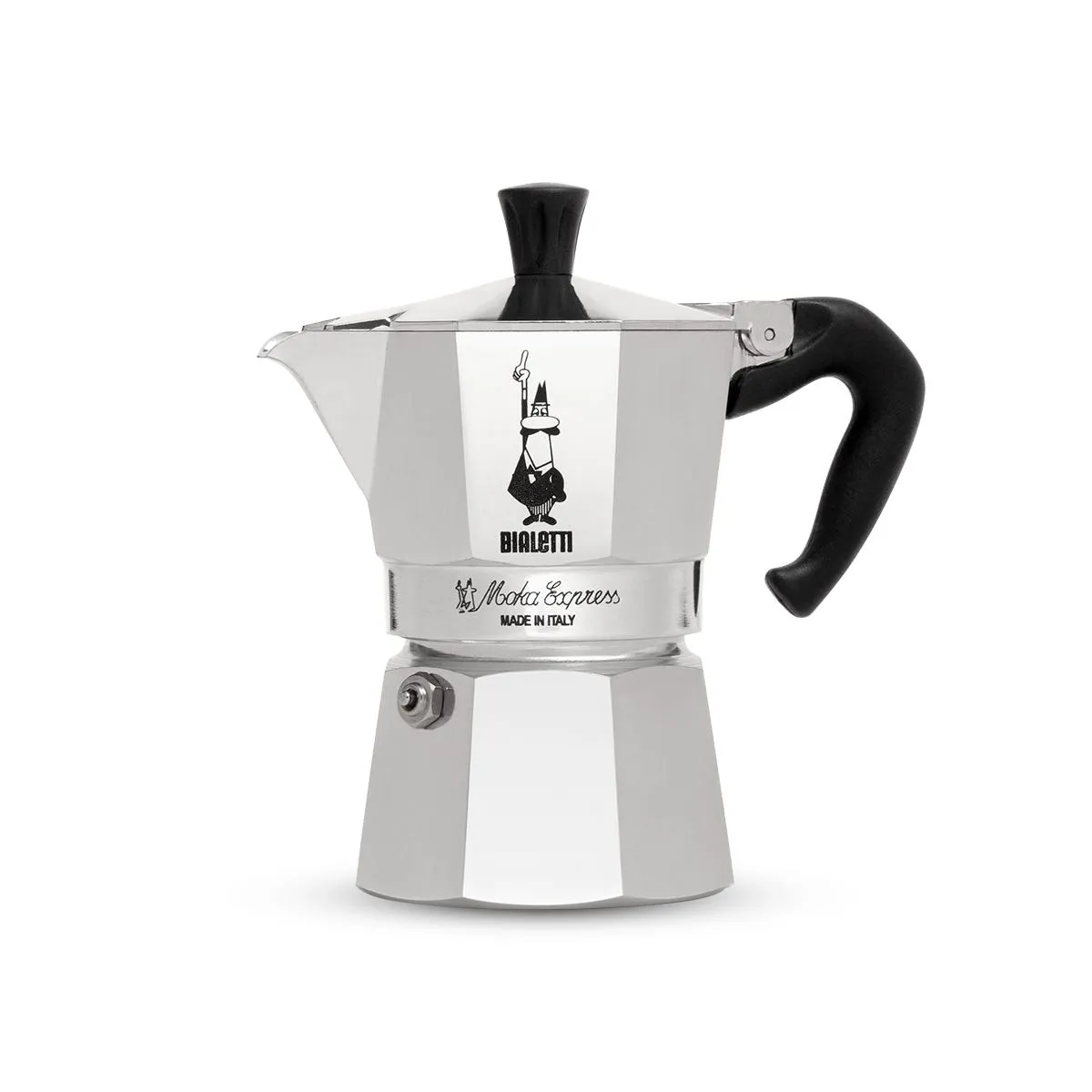
The Moka Express combines a lower water chamber, a coffee basket and an upper collector. We look at the flow of water and the daily routine behind a design dating to 1933.
Article
Some coffee makers are remembered through the order of preparation: filling the lower chamber, adding ground coffee to the basket and screwing on the upper section. These few actions prepare Bialetti’s Moka Express for the stove. Unscrew the octagonal body and the parts washed and filled each time are visible. The ingredients and the process are connected inside the small pot.
Bialetti traces the Moka Express to Alfonso Bialetti’s 1933 design. It consists of a lower water chamber, a filter basket and an upper vessel collecting the brewed coffee. Heating increases pressure in the lower chamber, pushing water through the grounds and up the central outlet. Heat moves the water without a hand-operated piston or electric pump.
The preparation instructions have a purpose. Water must stay below the safety valve, and the grounds in the basket should not be tamped. Assemble and close the parts, then heat gently. Its familiar pot-like appearance does not make it an ordinary water kettle. Following the product instructions lets the valve, filter and connections perform their intended jobs.
Expectations can be misleading if moka coffee is treated as espresso. Both can be strong, but their operating conditions differ from those of a high-pressure, pump-driven espresso machine. Heat, water quantity and grind interact in the Moka Express. It is better understood through its own method and range of results than as a miniature espresso machine.
Taking the body apart each time is part of the experience. The water chamber, grounds basket and coffee collector are seen separately; washing, drying and reassembling also belong to the routine. That does not make it easier than every other method. To one person these are extra steps; to another, a familiar beginning to the morning.
Beyond a longstanding tool’s famous outline, it is worth noticing what the hands do. Filling and fastening are followed by heat and pressure. There is no complicated control screen, but conditions to observe and a feel for the process remain. The octagonal pot suggests one way an old design persists: through actions that people are willing to repeat.
Sources and editorial notes
Bialetti · Official product information
Editorial note: Facts were checked against the sources above; interpretations reflect MUADAILY’s editorial perspective. Image: Bialetti.
Machine-translated from Korean. Read the original.