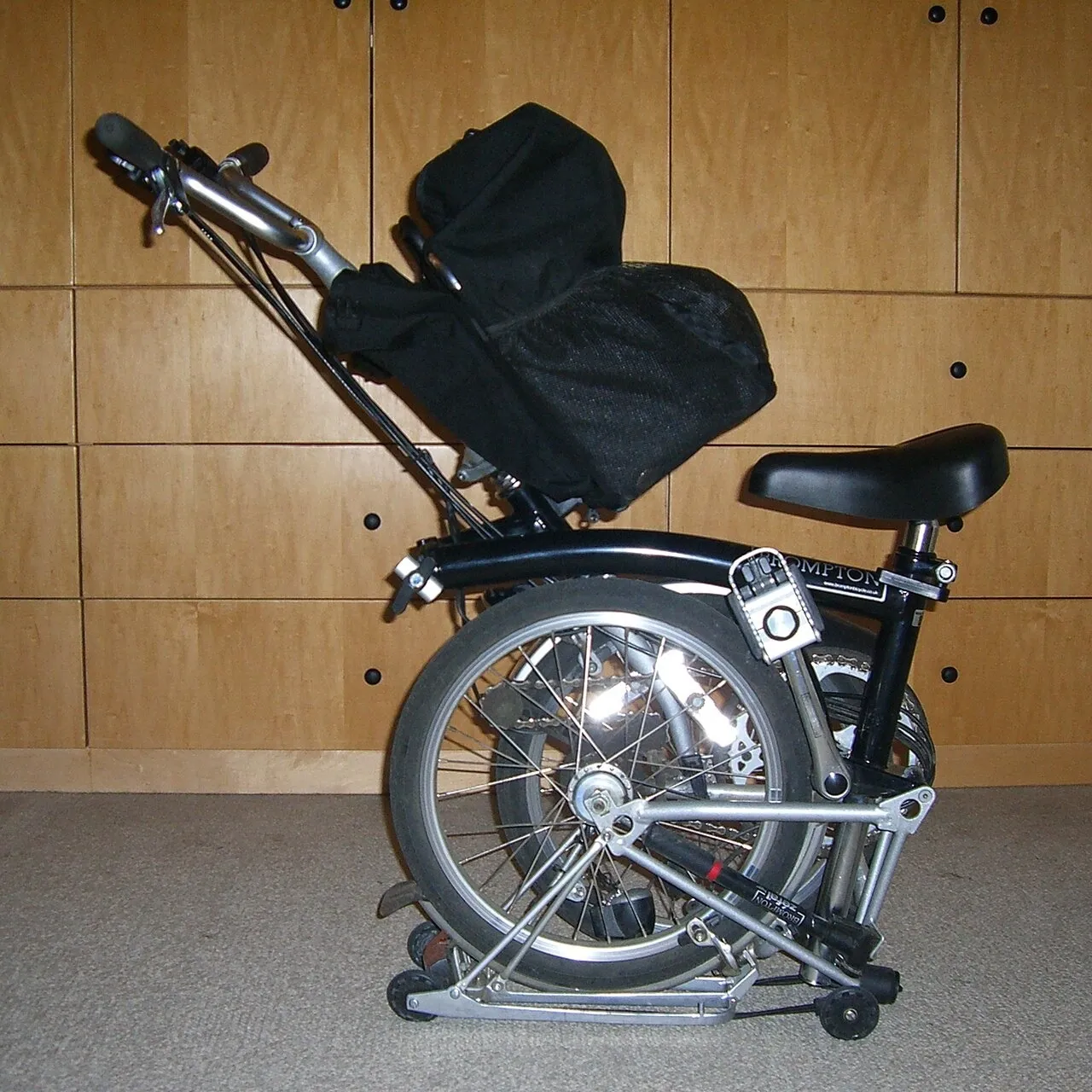
Fold the rear wheel under, then bring in the front and handlebar sections. Brompton turns a bicycle into a compact package for the space it needs after the ride.
Article
A bicycle reaches its destination. Now comes the question of where to put it. It is large against a wall and can obstruct people indoors. Brompton tries to accommodate both the bicycle in motion and the object carried or stored afterward.
Andrew Ritchie began developing the idea at his London home in 1975. The name came from the Brompton Oratory visible outside. A personal effort to make a compact, manageable fold preceded large-scale production.
A Brompton does more than hinge in half. Its rear section swings beneath the frame, the front and handlebar sections fold, and the lowered saddle helps retain the package. Successive actions bring wheels and frame together. Details vary by model.
A successful fold and a viable manufactured product are different challenges. Brompton’s official history also records early production, financing and expansion. The folding action is brief; turning the design into a business took considerably longer.
After folding, what matters is where to grip the bicycle and where to put it. Bringing the wheels and frame together lets it occupy less space than an unfolded bike. Those final movements after arrival become part of the ride.
Sources and editorial notes
Brompton · Folding instructions
Image source · Bossphotography
Editorial note: Facts were checked against the linked material. Interpretations are MUADAILY’s editorial perspective. Image: Bossphotography · CC0 · A partially folded Brompton bicycle.
Machine-translated from Korean. Read the original.