ESA’s Gaia repeatedly measured the positions of stars. Turning those observations into a map continues after observing has ended.
Article
Watching the same stars night after night, it is hard to notice their changing positions with the naked eye. The European Space Agency’s Gaia repeatedly scanned the sky and measured where stars appeared with great precision. Comparing observations at different times reveals information that a single set of positions cannot provide.
As Earth orbits the Sun, nearby stars appear to shift slightly against a distant background. Measuring this small apparent difference using Gaia’s observations allows distances to be estimated. Changes over time also help reveal the direction in which a star moves across the sky.
Hold a finger up close and look at it with one eye and then the other. The finger stays still, yet appears to shift against objects behind it. Stellar parallax similarly uses the change in apparent position caused by a change of viewpoint. Stars are so distant that the difference is too small to see unaided, requiring precise measurements over months.
Nor are stars fixed markers in front of the observing instrument. A measured position can change both because the observer moves and because the star itself moves. Teams combine measurements from many times to separate the effects. Each additional observation helps interpret those made before it.
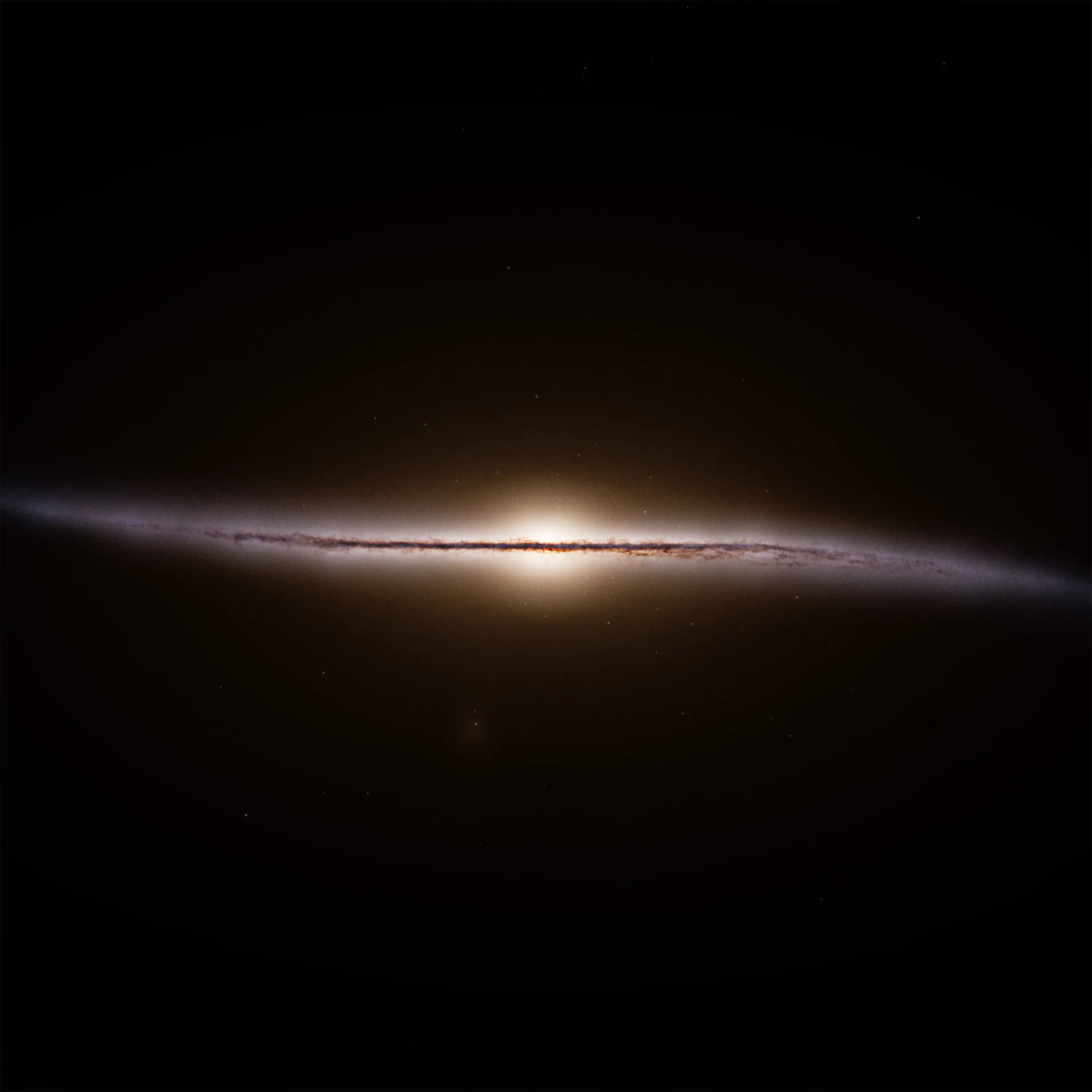
The edge-on view of the Milky Way in this article is an illustration based on observations, not a photograph Gaia took from outside the galaxy. Comparing the positions and distances of stars in different directions helps reconstruct galactic structure from within. Calculating and combining those measurements takes time after observations have ended.
Gaia completed scientific observations in 2025. The end of observing and the completion of data processing do not coincide: measurements taken at different times must be calculated on a consistent basis. Its map is not a single photograph finished at the final exposure, but a record built from watching the same stars over many years.
Sources and editorial notes
Editorial note: Factual statements are based on the sources above; interpretations reflect MUADAILY’s editorial perspective. Image: ESA/Gaia/DPAC, Stefan Payne-Wardenaar · CC BY-SA 3.0 IGO · https://creativecommons.org/licenses/by-sa/3.0/igo/ · Converted for web display.
Machine-translated from Korean. Read the original.