The Smithsonian’s cryopreservation work keeps biological specimens alongside efforts to care for living animals.
Article
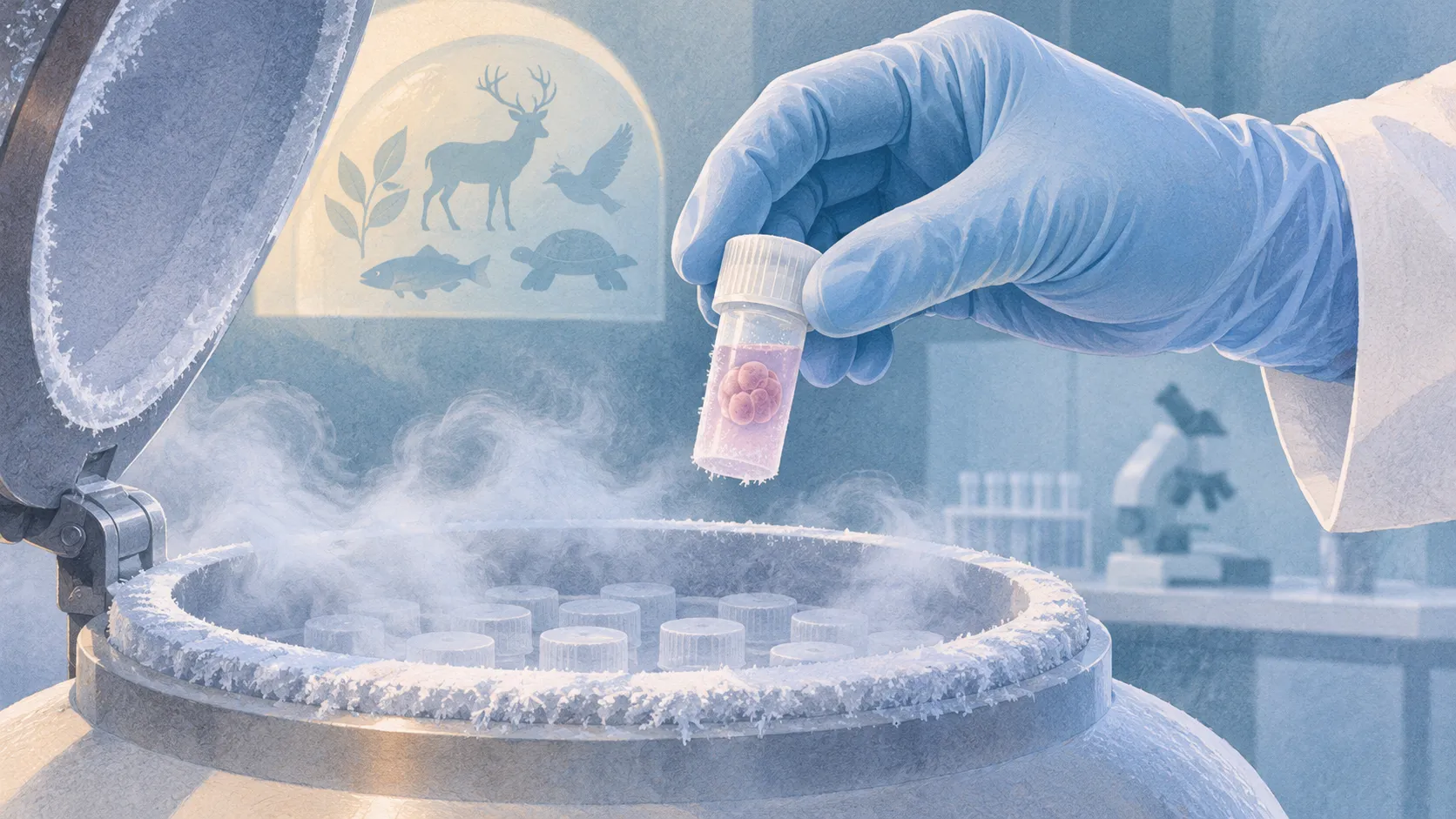
Most animals encountered at a zoo are in an enclosure or across a visitor path. In the Smithsonian’s cryopreservation work, researchers also handle specimens such as cells and tissue in containers. Keeping them at low temperatures can preserve material for later research and conservation techniques.
The size of the freezer is not the only issue. Records must show when a specimen was obtained, which animal it came from, and how it was preserved so it can be found and used appropriately later. Specimen types serve different purposes: studying genetic characteristics and preserving material for reproductive research may require different approaches.
Nor is every frozen specimen treated alike. Preserving tissue to read genetic information later differs from keeping cells usable for research after thawing. The intended use matters from the point of collection, and the material’s condition must remain traceable after freezing.
The place and date of collection cannot be rediscovered simply by looking at a frozen sample. A container’s identifier therefore needs to connect to research records. Similar-looking vials become evidence for population diversity only when their origins and relationships to other samples can be established.
Having such specimens does not mean a vanished animal population can immediately be restored. Protecting living animals and habitats remains necessary. Cryopreservation adds an opportunity for future researchers to examine material available today. Even when their questions are not yet known, the material’s provenance must not be lost.
Conservation of future generations depends on caring for habitats and present populations. Preserved specimens add biological material that research may need later. The small label on a frozen container is a starting point for someone, decades from now, to understand where the sample came from.
Sources and editorial notes
www.nationalzoo.si.edu · Official source
Editorial note: Factual statements are based on the sources above; interpretations reflect MUADAILY’s editorial perspective. Image: MUADAILY · AI-generated explanatory illustration.
Machine-translated from Korean. Read the original.