Following a fleeting radio signal, the James Webb Space Telescope identified a distant galaxy. Its unexpectedly small size offers new clues to the signal’s origin.
Article
Researchers knew where to look in the sky, but could not see the galaxy there. Very short radio signals arriving from distant space left behind a location, but it was difficult for ground-based telescopes to find their origin.
This is the story of FRB 20240304B, a fast radio burst detected by South Africa's MeerKAT radio telescope on March 4, 2024. FRB is a radio wave emission phenomenon that lasts for about a thousandth of a second. The challenge is less to wait for it to finish than to capture its fleeting trace and work out where it came from.
Looking in infrared where radio waves pointed
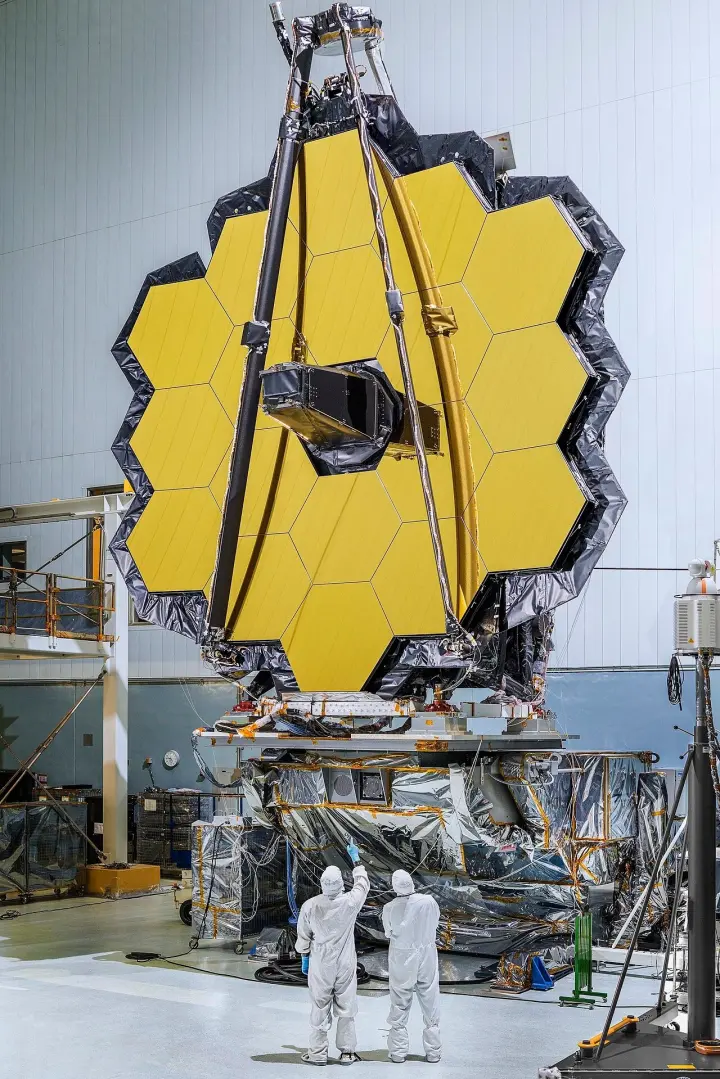
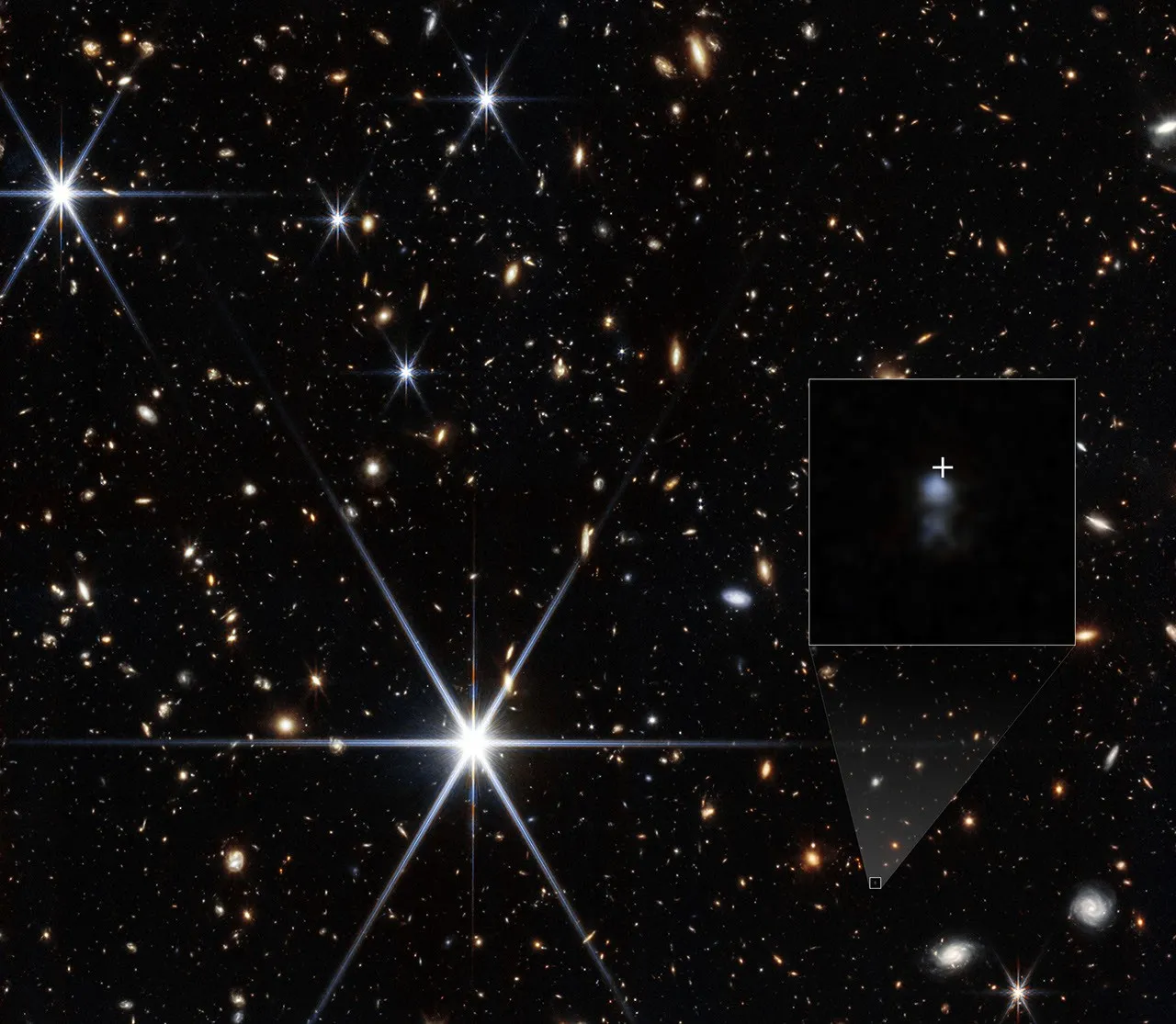
The research team looked at the same location with the James Webb Space Telescope. The near-infrared camera NIRCam found a host galaxy that was not visible from the ground, and NIRSpec, which divides light by wavelength, measured the galaxy's redshift. NASA introduced these results on October 8, 2026.
Redshift measures how much light’s wavelength has stretched as the universe expands. The value confirmed by the research team was 2.148. Interpreted through a cosmological model, that value places the source in the universe about three billion years after the Big Bang. It is among the confirmed FRBs reaching us from the most distant past.
The radio telescope captured the short signal and its location, and Webb took a longer look at the galaxy there. The blank spaces of the same event were filled in with different types of light.
A smaller galaxy than expected
The host galaxy was a small dwarf galaxy that was actively forming stars. Its mass was about one-thousandth that of the galaxy the researchers had expected. The reason why this small galaxy, which is different from the environment in which many FRBs are observed, is important is because it is linked to the age of the celestial body that created the signal.
If two neutron stars are merging after circling each other for a long time, the preparation time is long. On the other hand, magnetars, which are neutron stars with very strong magnetic fields left over from the explosion of massive stars, can also appear in groups of relatively young stars. The galaxy's young stars make it difficult to explain the FRB solely through the merger of older neutron stars.
However, this is a clue obtained from one incident. This does not mean that magnetars have been confirmed as the cause of all FRBs or that the mystery of the universe is over. Finding the distant signal in an unexpected environment changes what researchers may look for next.
There are traces on the path where the signal passed
The FRB does not leave only information about the starting point. Matter encountered along the way to Earth leaves traces in the radio signal. The research team found the influence of two cosmic structures in this signal. One brief burst helped locate a galaxy and provided clues about the space along the way.
The galaxy on the screen appears as a small blob of light. Finding that point required two telescopes working together: one to capture the fleeting radio burst, and another to identify its host afterward.
Sources and editorial notes
NASA · FRB host-galaxy observations
NASA · Image usage information
Editorial note: Facts were checked against the sources above; interpretations are MUADAILY’s editorial views. Image: NASA/ESA/CSA/STScI · T. Nanayakkara · Image processing: J. DePasquale.
Machine-translated from Korean. Read the original.