Performances, exhibitions and gatherings have moved into tanks once used to store oil. Oil Tank Culture Park retains their large walls and volumes while changing what happens inside.
Article
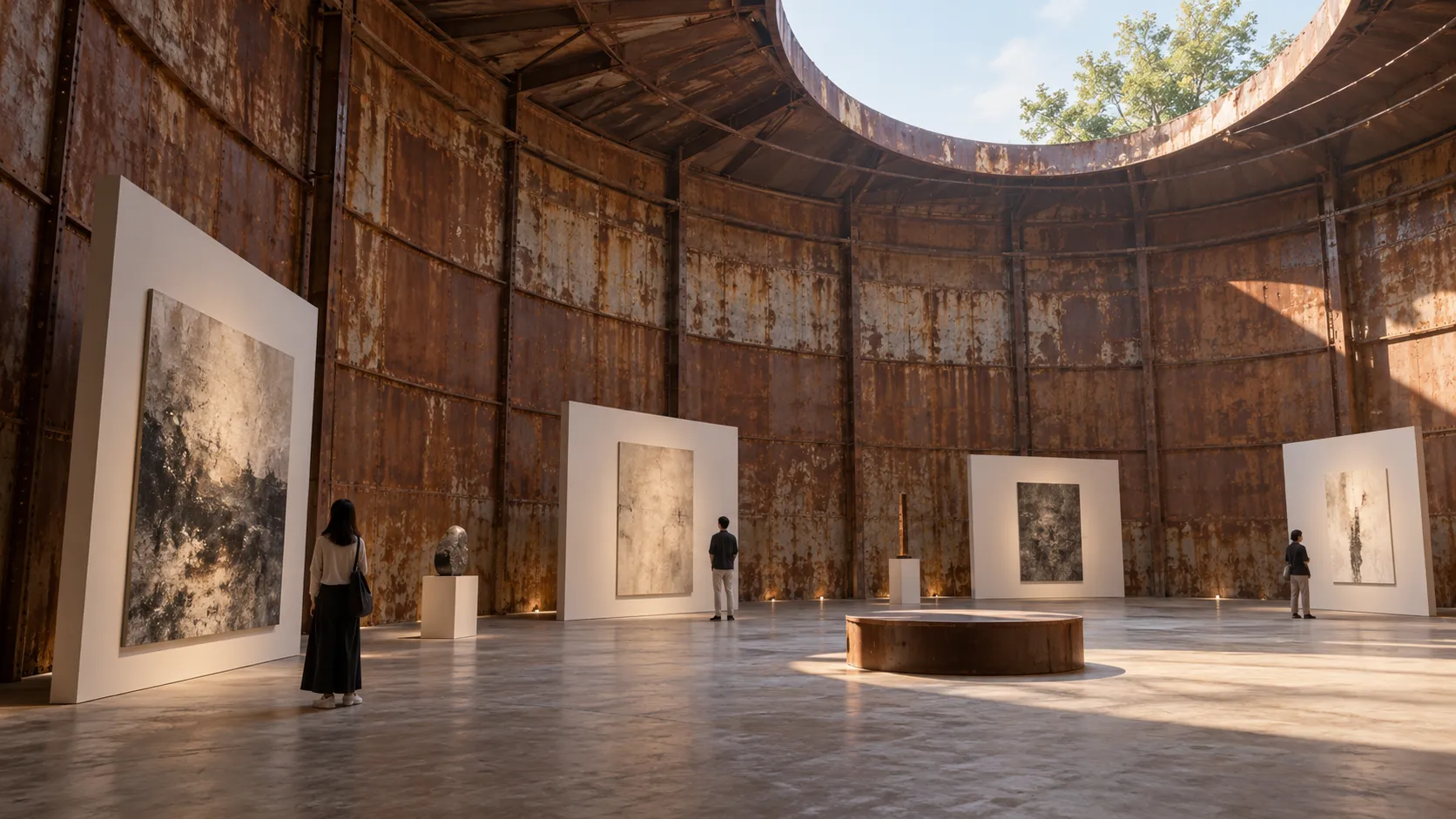
In a gallery, the artwork usually catches the eye first. Inside a converted oil tank, the wall behind it is harder to overlook. The rounded form and enormous volume are unlike those of an ordinary exhibition room. That difference is where the story of Oil Tank Culture Park in Sangam-dong, Seoul begins.
An oil storage facility became a cultural space. The Korean name still retains the word for a reserve. A place once closed to the public for storing oil now accommodates performances, exhibitions and gatherings.
A different role for each tank
According to Seoul’s official guide, T1 was developed as a pavilion, T2 as an outdoor stage and performance hall, and T4 as a multipurpose cultural space. T5’s story hall traces the conversion of the oil depot into a cultural park, while T6 became a community center. The tanks were not all turned into identical galleries.
Each space retains and changes different elements. Where the old structure survives, the tank’s scale forms a backdrop to activities. Where the site’s history is presented, records help explain that structure. Seeing the tanks’ forms alongside the facility’s history makes it clear why this is more than an ordinary cultural center.
Keeping the large volumes
Once emptied of oil, the tanks left spaces much larger than everyday rooms. Any new use had to work with their shape. Rounded walls and broad interiors influence where people stand and what they look toward. Conditions that could have been chosen freely in a new building had to be worked out around the existing structures here.
Keeping an old facility does not mean continuing its former use. The walls and volumes can remain while the activities inside change. Oil Tank Culture Park brings gathering, watching and listening into spaces built for storage.
Check which spaces are open now
Descriptions of the original conversion and current visitor information serve different purposes. Seoul’s guide, checked in October 2026, says the outdoor park is open 24 hours a day. The tank interiors, however, have operated under use-and-revenue permits since April 2025 and are not open for routine visits. Anyone hoping to go inside should first check access conditions for the particular facility and program.
The tanks’ history as converted cultural spaces remains, but which doors are open today depends on current operations. The change is most tangible in what people can do beyond those doors. Rather than removing the volumes once occupied by oil, the project made room for people and new activities.
Sources and editorial notes
Seoul City · 2022 Oil Tank Culture Park tank tour guide, refer to explanation of space conversion
Editorial note: Facility roles and operating conditions are based on official guidance from the Seoul Metropolitan Government. The 2022 program is not being introduced as an ongoing event. The meaning of reused space is MUADAILY's editorial interpretation. Image: MUADAILY · AI-generated concept image · Not an actual on-site photo.
Machine-translated from Korean. Read the original.