An elevated freight line that began operating in 1934 reopened as a park in 2009. New York’s High Line places paths, benches and planting alongside the old rails.
Article
Climb a flight of stairs from a New York street and a path of trees and grasses replaces the traffic. On the High Line, roads pass below while people view the city from railway height. The park occupies a disused railway rather than an empty plot at ground level.
The elevated freight line began operating in 1934. Its last train ran in 1980, after which plants grew among the tracks. A movement formed to preserve the structure rather than demolish it, and residents established Friends of the High Line in 1999.
The park’s first section opened in 2009, with design by Field Operations, Diller Scofidio + Renfro and planting designer Piet Oudolf. Vegetation on the abandoned railway offered an important starting point. The present garden, however, is not simply untouched spontaneous growth: its paths and planting were redesigned and are maintained.
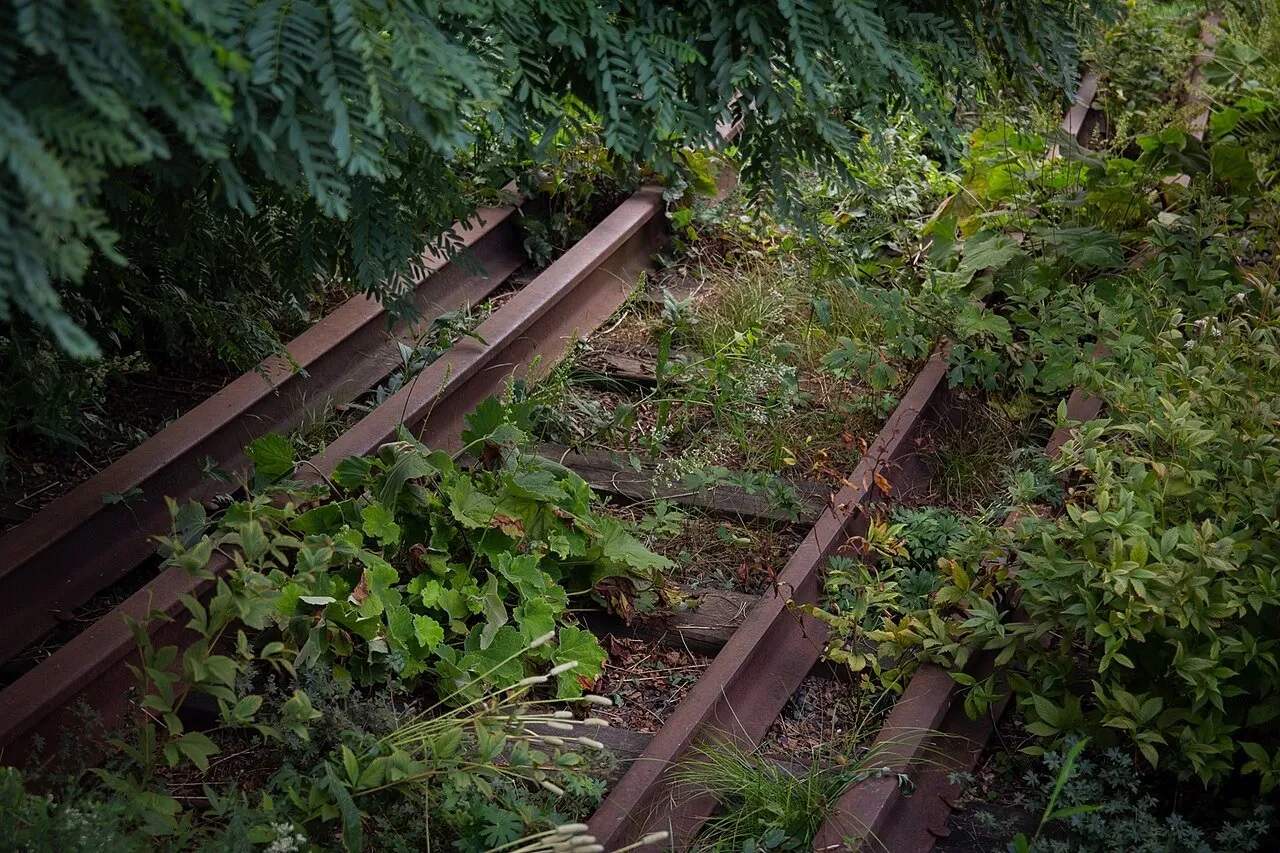
Old rails remain among the planting. Walking alongside them brings benches, building windows and the streets below into view. From railway height, walkers face façades and windows they would otherwise look up at from the pavement.
The long, narrow freight route now has places to sit during a walk. Visitors can watch traffic below from a bench, then continue along the path through the planting. The former railway offers a leisurely view of the city from the height once occupied by trains.
Sources and editorial notes
Friends of the High Line · Fact sheet
Image use terms · CC BY-SA 4.0
Editorial note: Facts were checked against the linked material. Interpretations are MUADAILY’s editorial perspective. Image: HadarHecht · CC BY-SA 4.0 · Rails among planting on New York’s High Line.
Machine-translated from Korean. Read the original.