Behind the sculpture and flowing water was a practical purpose: making drinking water available on the street.
Article
With their green columns and sculpture, Wallace fountains can look like small monuments from a distance. Up close, water flows beneath the canopy supported by the figures. City material describes them as facilities provided by Richard Wallace in the nineteenth century to supply drinking water in Paris.
Access to water on the street attracts less attention than a grand building. Yet a public fountain means a drink does not have to involve entering a shop or returning home. A recognizable appearance helps, too: meeting the same form on an unfamiliar street makes its purpose easier to identify.
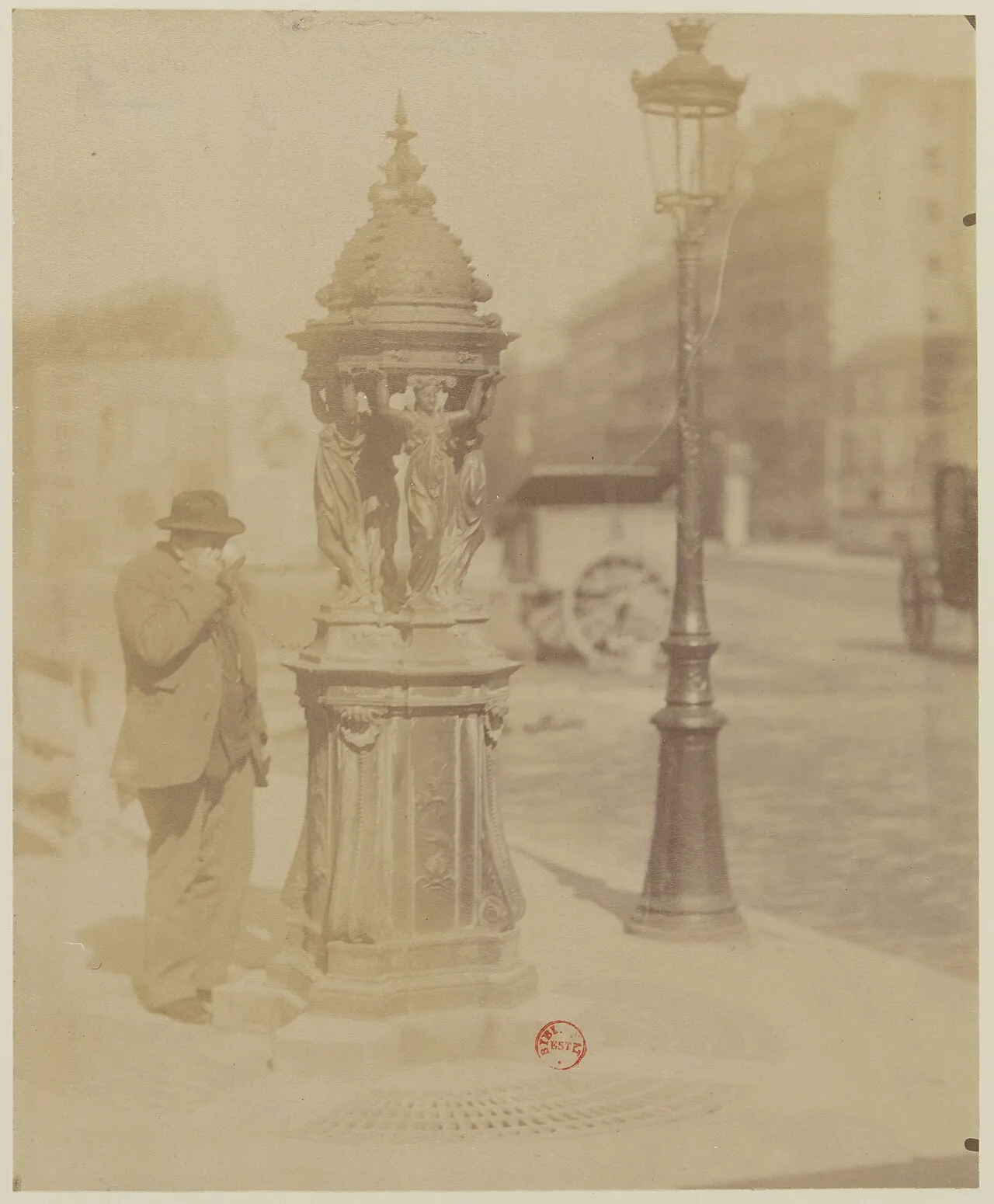
The old photograph accompanying this article shows a passerby drinking at a fountain. From a distance, the canopy and the figures holding it up draw the eye, but the person in the photograph looks lower. A single image reveals the structure’s purpose as somewhere to stop for water.
The Wallace fountains presented by the City of Paris come in more than one form. There is the large model with four figures supporting a canopy, as well as smaller models that occupy less space. A spacious site and a location close to a wall can require different structures for the same task. Looking only for the familiar large version makes the others easy to miss.
The fountain’s practical purpose becomes clear when someone stands in front of it for a drink. Its green color and historic ornament mark the place where water is available. Preserving a public facility involves keeping it usable as well as making that use recognizable.
Some people notice the sculpture before discovering the water. Up close, an object to look at and an object to use occupy the same spot. The decoration is also a marker that helps someone looking for drinking water recognize the fountain from farther away.
Sources and editorial notes
www.paris.fr · Official source
parismuseescollections.paris.fr · Official source
Editorial note: Factual statements are based on the sources above; interpretations reflect MUADAILY’s editorial perspective. Image: Bibliothèque nationale de France / Gallica · Public Domain.
Machine-translated from Korean. Read the original.