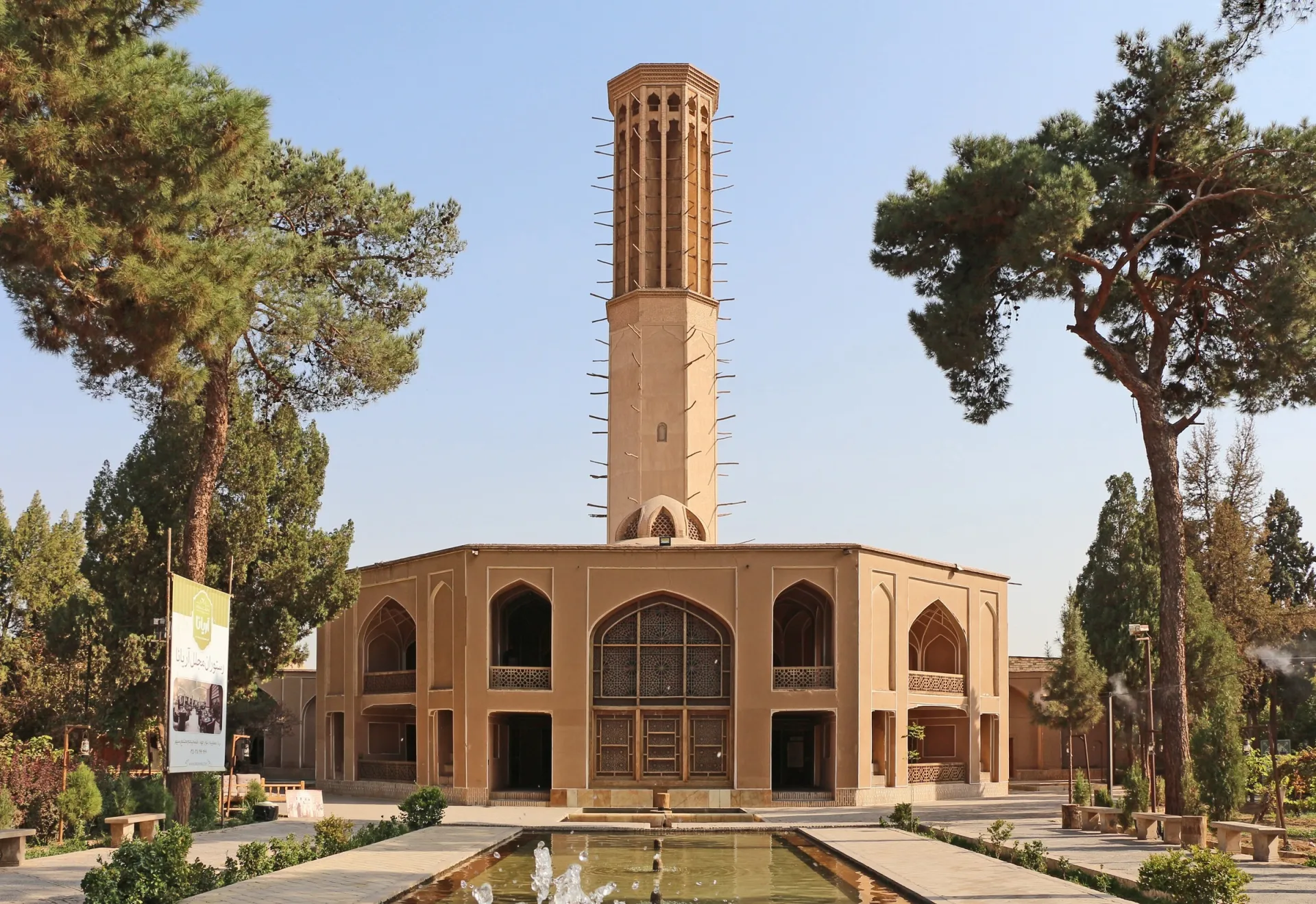
Windcatchers connect air above the roofs to rooms below. Earthen walls, courtyards and underground water channels form the wider setting of this desert city.
Article
Towers with long openings rise above the roofs of Yazd in Iran. They can resemble chimneys, but their purpose is to catch wind and circulate air through buildings. They are known in Persian as badgir, or windcatchers.
Openings and internal shafts connect air above roof level with rooms below. Pressure differences between windward and leeward surfaces help air enter and leave. Flow varies with wind direction, tower design and indoor and outdoor temperatures.
Yazd’s houses did not rely on towers alone. Thick earthen walls, courtyards and shaded lanes also shaped living conditions. Water arrived through underground channels called qanats.
UNESCO inscribed the Historic City of Yazd on the World Heritage List in 2017. It describes traditional neighbourhoods, water channels, religious buildings and Dolat-abad garden as evidence of life with limited desert resources.
The repeated vertical openings at the top can look ornamental. Their paths do not stop at the roof. They continue toward the rooms where people spend their time.
Sources and editorial notes
www.sciencedirect.com · 야즈드 바람탑 자료 2
Editorial note: Facts were checked against the linked sources. Interpretations are MUADAILY’s editorial perspective. Image: Bernard Gagnon · CC BY-SA 4.0 · The windcatcher in Dolat-abad Garden, Yazd.
Machine-translated from Korean. Read the original.