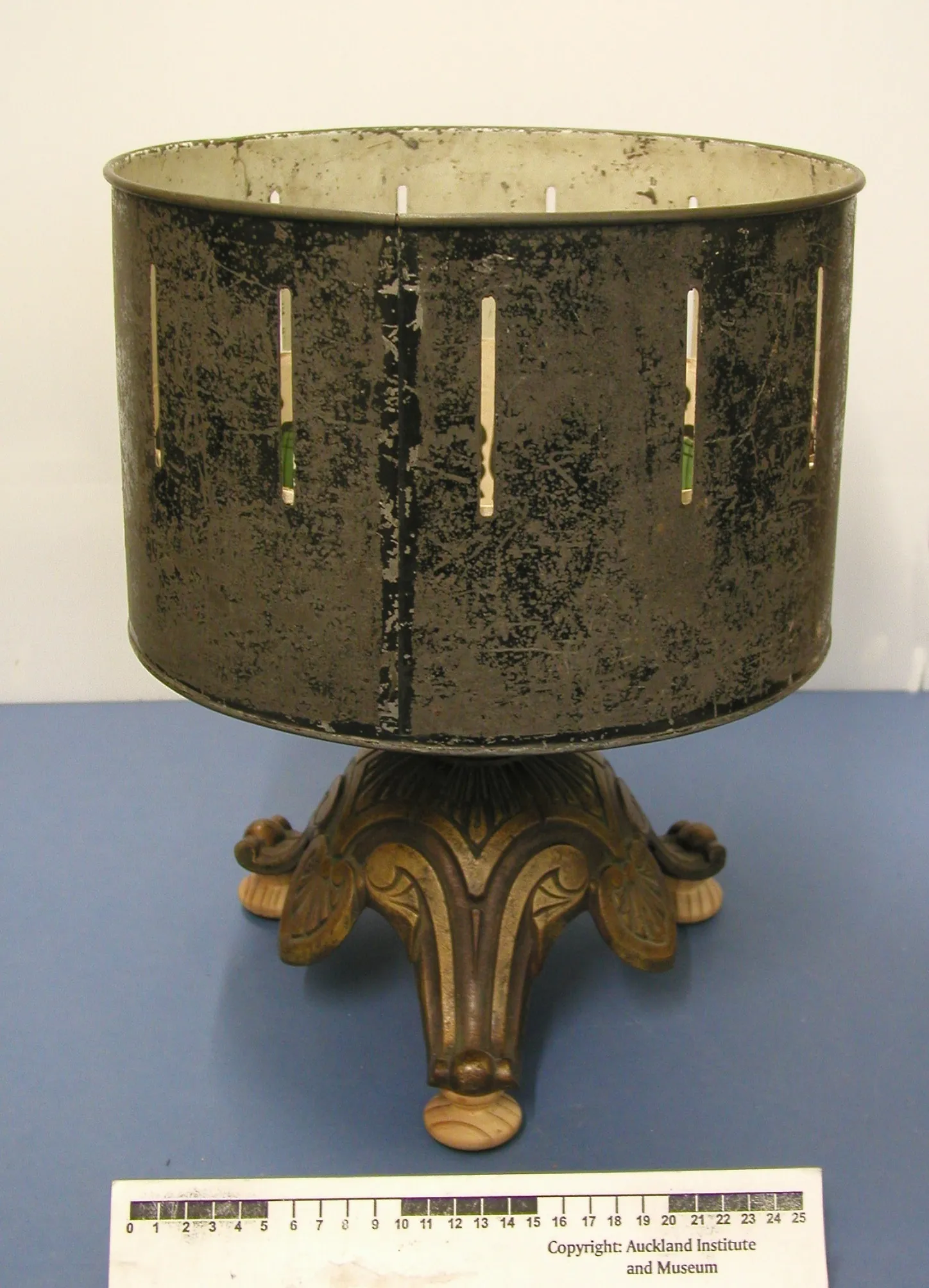
A zoetrope places sequential pictures inside a drum. Narrow viewing slits separate them into glimpses that appear to form a moving scene.
Article
A row of drawings lines the inside of a drum, each showing a slightly different pose. At rest, they are separate pictures. Spin the drum and look through its narrow slits, and the figure appears to repeat a movement. This is the zoetrope, an optical toy from before cinema became widespread.
The pictures and the slits rotate together. Each passing slit offers a brief view of a drawing on the opposite inner wall. The opaque section between slits hides the transition to the next image. These separated glimpses of successive poses create the impression of motion.
Viewed continuously as they turn, the pictures tend to blur. Narrow slits divide the view into brief glimpses. The picture strip sits below the slits, so the viewer looks through them from outside toward the drawings on the opposite wall.
Changing the paper strip gives the same drum a different action. The first drawing follows the last, making walking or running cycles particularly suitable. The device repeats a short movement rather than telling a long story.
An 1870 zoetrope in the Science Museum Group’s collection survives with 48 picture bands. Strips depicting actions such as races and dances could be exchanged. The same spinning drum could show a different short scene with each band.
Sources and editorial notes
americanhistory.si.edu · 조이트로프 움직이는 그림 자료 1
collection.sciencemuseumgroup.org.uk · 조이트로프 움직이는 그림 자료 2
www.nma.gov.au · 조이트로프 움직이는 그림 자료 3
Image source · Auckland Museum
Editorial note: Facts were checked against the linked sources. Interpretations are MUADAILY’s editorial perspective. Image: Auckland Museum · CC BY 4.0 · A zoetrope in the collection of Auckland Museum.
Machine-translated from Korean. Read the original.