Lithophanes create light and shade through variations in porcelain thickness. A shallow relief becomes a detailed picture when backlit.
Article
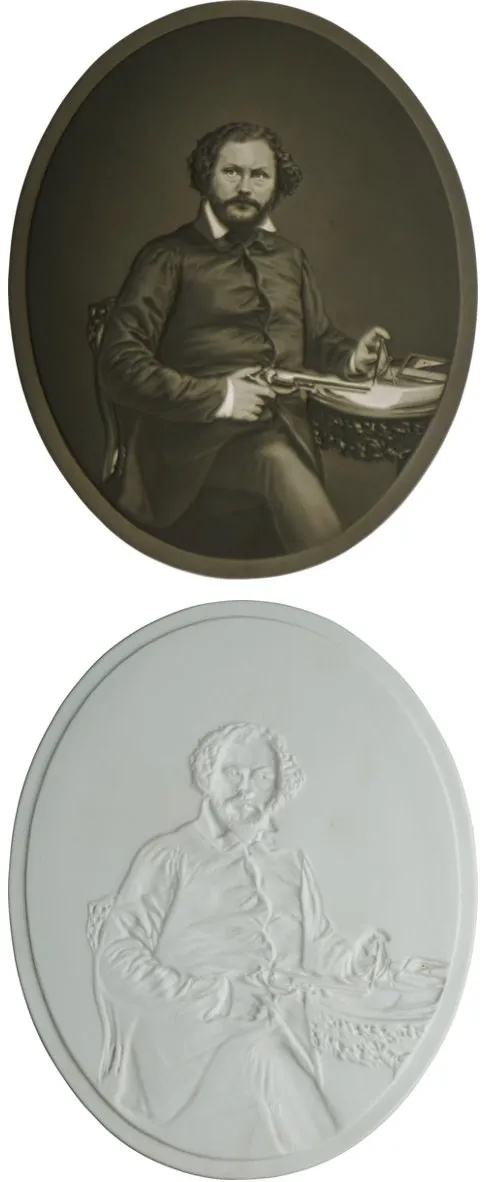
A face or landscape is faintly modelled into a thin white porcelain panel. Put a light behind it, and expressions, folds in clothing and shadows become clear. A lithophane displays its picture through transmitted light, varying the thickness of porcelain instead of applying colour to its surface.
Thin areas let more light through and appear brighter. Thick areas transmit less and look darker. Gradual changes in thickness produce gradual changes in brightness. A panel resembling a shallow relief from the front becomes a shaded image when illuminated from behind.
These porcelain pictures began to be made in Europe in the 1820s. They needed positions where light could reach them, such as a window or a place in front of a lamp. The same panel reveals different degrees of detail depending on the backlight and ambient illumination.
The traditional process described by the Blair Museum of Lithophanes begins with carving wax. The maker works on a backlit glass surface, adjusting the wax’s thickness with small tools. A plaster mould is taken from this relief and used to form a porcelain panel, which is then fired. Light passing through the wax lets the maker examine the light and dark areas before they appear in porcelain.
Switching the light behind the panel on and off can seem to change the picture. Even with the lamp off, the relief forming the face or landscape remains on the porcelain surface. Backlighting reveals those differences in thickness as light and shade again.
Sources and editorial notes
www.lithophanemuseum.org · 빛으로 보는 도자기 그림 자료 1
museudelcinema.girona.cat · 빛으로 보는 도자기 그림 자료 2
www.metmuseum.org · 빛으로 보는 도자기 그림 자료 3
Image source · original photograph by P. Graff 1855, etching 1855 Berlin
Editorial note: Facts were checked against the linked sources. Interpretations are MUADAILY’s editorial perspective. Image: original photograph by P. Graff 1855, etching 1855 Berlin · Public domain · An 1855 lithophane portrait of Samuel Colt, with and without backlighting.
Machine-translated from Korean. Read the original.