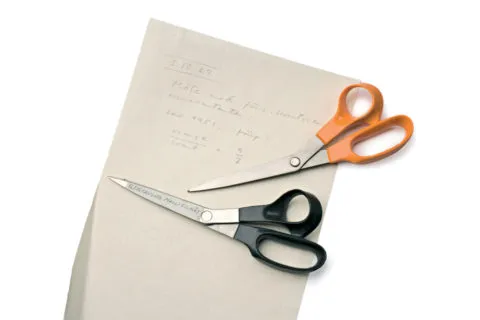
Orange was not the original plan for Fiskars’ 1967 scissors. A choice made while producing prototypes became the colour of a familiar tool.
Article
When looking for scissors in a drawer, the handle colour may be the first thing you notice. Fiskars’ orange scissors have become recognisable by colour alone. Was that shade carefully selected as a brand symbol from the beginning? The company tells a more modest story: an unexpected colour entered the prototype selection in 1967 and won an internal vote.
According to Fiskars’ history, the designer had considered black, red and green. The person making the prototypes used up orange material left in the machine, producing a fourth option. Orange and black became the favourites, and staff chose orange. A production decision about leftover material helped determine a lasting product identity.
Behind the colour was another change: plastic handles. Compared with an all-metal pair of scissors, they offered more freedom to shape the area touching the fingers. The blades cut; the handles receive the grip and transmit force. Different materials and forms serve different jobs within one tool. Fiskars presents the 1967 product as a milestone in plastic-handled scissors.
The handle is more than decoration. The size and angle of the finger openings and the points taking force as the blades open and close affect use. The blades make the cut, but the hand moves them. Looking beyond the immediately recognisable orange reveals the design of the shape the hand meets.
Fiskars subsequently developed scissors for different purposes. That does not mean one model suits every hand and material: familiar general-purpose scissors differ from sewing or kitchen models. The colour story is also the company’s own account. It remains interesting without inventing what the worker felt that day; a small production choice left a visible mark on the design.
A memorable colour can contain a history invisible in the finished product photograph. Someone looked again at a prototype made from leftover material, accepted an unplanned option and chose it. Orange no longer seems like the only possible answer from the start. A useful choice can emerge while something is being made.
Sources and editorial notes
Fiskars Group · Origins of the orange-handled scissors in 1967
Editorial note: Facts were checked against the sources above; interpretations reflect MUADAILY’s editorial perspective. Image: Fiskars Group.
Machine-translated from Korean. Read the original.