Four transistors helped make the 1954 Regency TR-1 small enough to carry. Changes inside the radio let listeners take it beyond the living room.
Article
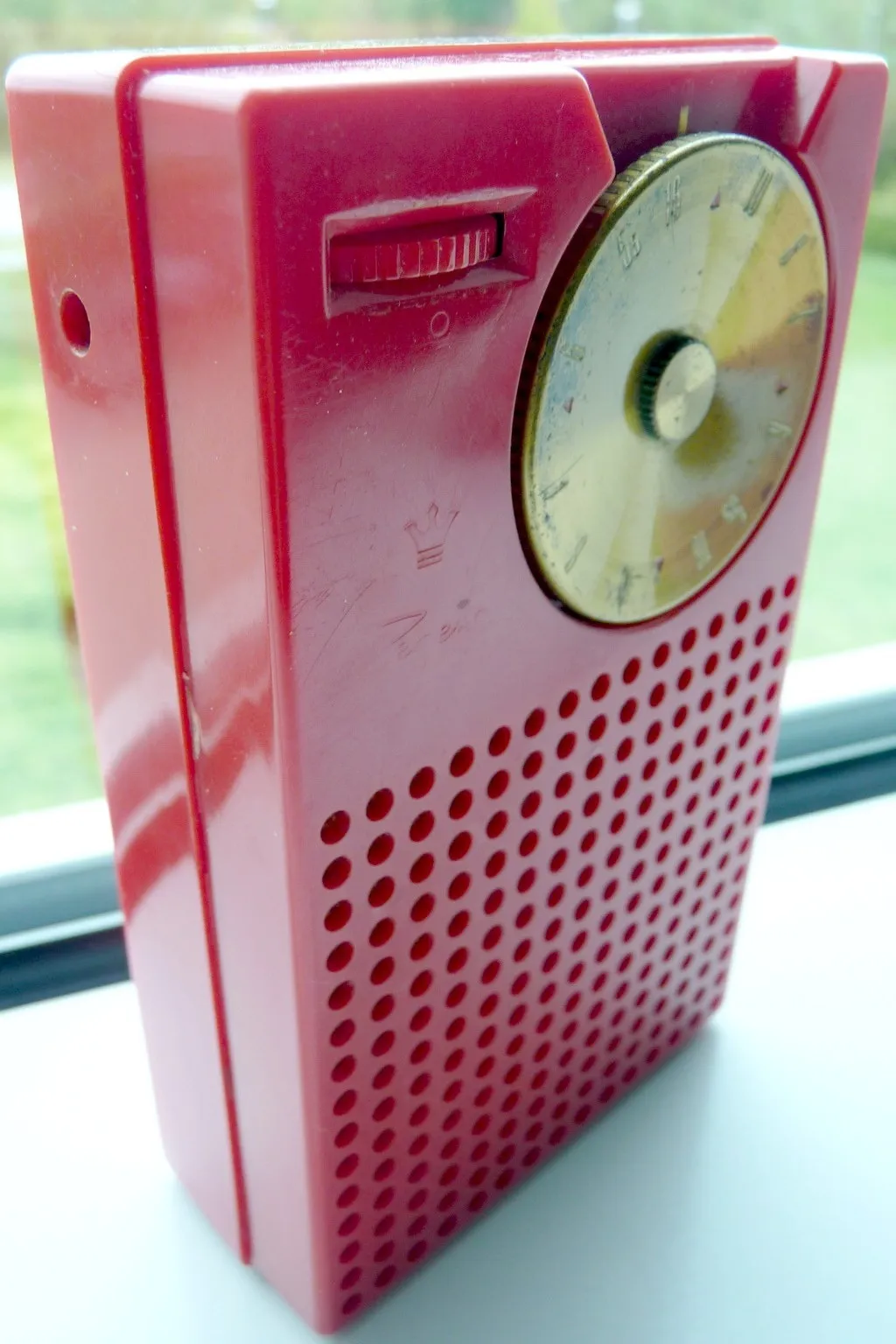
Instead of sitting beside a large radio, a listener could carry a small box outside. Sold in the United States in 1954, the Regency TR-1 became an early emblem of transistor radio. Its simple dial and speaker concealed a change in components that was changing radio’s place in daily life.
Texas Instruments and I.D.E.A. collaborated on the device, which used four transistors. These small alternatives to vacuum tubes helped reduce size and power consumption, moving radio toward a personally carried object.
The Smithsonian gives its price as about 50 dollars at the time. That number cannot be compared directly with today’s inexpensive electronics. Smaller did not immediately mean affordable to everyone; the product also offered ownership of an emerging technology.
Transistors had already been used in hearing aids before the TR-1. Both devices faced the task of fitting audio components into a small body. The Regency TR-1 put those compact components into a portable radio for listening to broadcasts.
The small body still has a tuning dial and a speaker. Finding a station is a familiar action, but the listener can now carry the radio out of the room. The TR-1’s four transistors helped fit the components needed to receive broadcasts into a portable package.
Sources and editorial notes
PBS · Transistor radio history
Image use terms · CC BY-SA 3.0
Editorial note: Facts were checked against the linked material. Interpretations are MUADAILY’s editorial perspective. Image: Cmglee · CC BY-SA 3.0 · Front of a red Regency TR-1.
Machine-translated from Korean. Read the original.