A drink-can tab is a tiny lever. Its geometry opens the scored panel while keeping the used pieces attached.
Article
A finger pulls the ring of a drink can upward, yet the opening moves downward. A small piece of metal redirects the force. After the drink is gone, both the ring and the folded panel remain attached to the can.
It was not always this way. Ermal Fraze’s removable pull-tab separated a ring and a strip of metal when the can opened. Eliminating a separate opener was convenient, but it also produced a small piece of loose rubbish before the drinking had even begun.
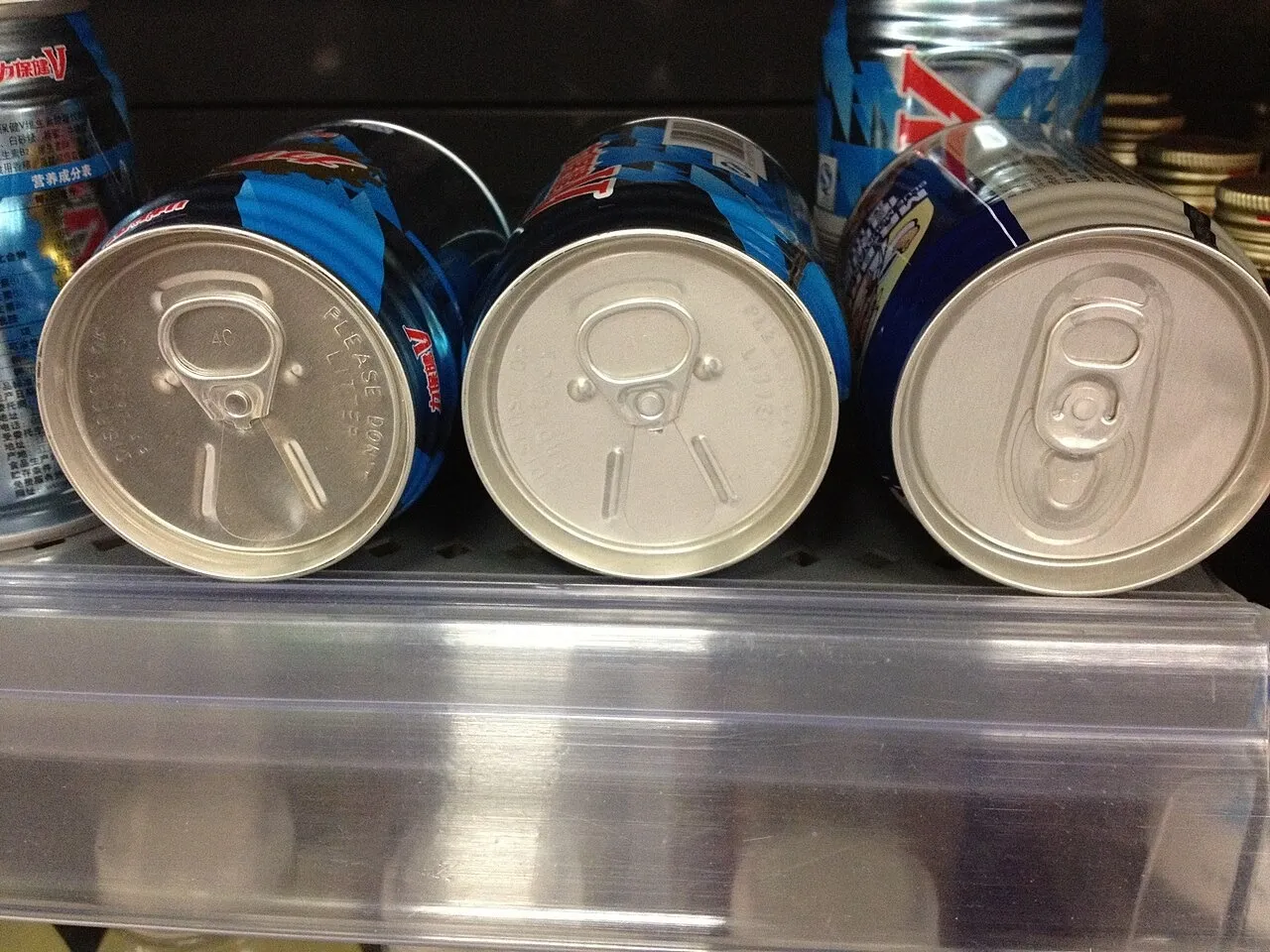
The familiar stay-on tab instead keeps those parts with the can. Daniel Cudzik’s related patent was issued in 1976. Raising one end of the ring makes the other press on a deliberately weakened opening panel. The short end of the lever pushes the metal inward.
The line on the lid is functional too. It determines where the panel tears, while an unbroken section holds the folded piece in place. The finger’s pull, the tab’s rotation and the panel’s opening occur in sequence within a small circle.
Flavours and brands change, but we repeat the gesture almost without thinking. Next time, watch the opposite end as the ring rises. It is a miniature machine that transmits a finger’s force and decides where its used components will stay.
Sources and editorial notes
Smithsonian Magazine · The history of the can tab
Image use terms · CC BY-SA 3.0
Editorial note: Facts were checked against the linked material. Interpretations are MUADAILY’s editorial perspective. Image: 三塚 · CC BY-SA 3.0 · Comparison of removable pull-tabs and stay-on tabs.
Machine-translated from Korean. Read the original.