Kodak’s 1900 Brownie lowered the price of entry to photography. Its small box began a family of many different cameras.
Article
The camera looks like a small box. A lens opening and handle are more apparent than elaborate controls. Kodak introduced the Brownie in 1900 to bring photography into more people’s lives. Its initial price was one dollar.
That sum did not cover an entire photographic hobby: film and processing were additional costs. Still, lowering the cost of the camera encouraged people to photograph nearby faces and moments before mastering specialist equipment.
The Brownie name also drew on Palmer Cox’s popular characters. Marketing targeted children, but the camera did not remain exclusively in their hands. The little box appealed to people photographing families, travel and ordinary days.
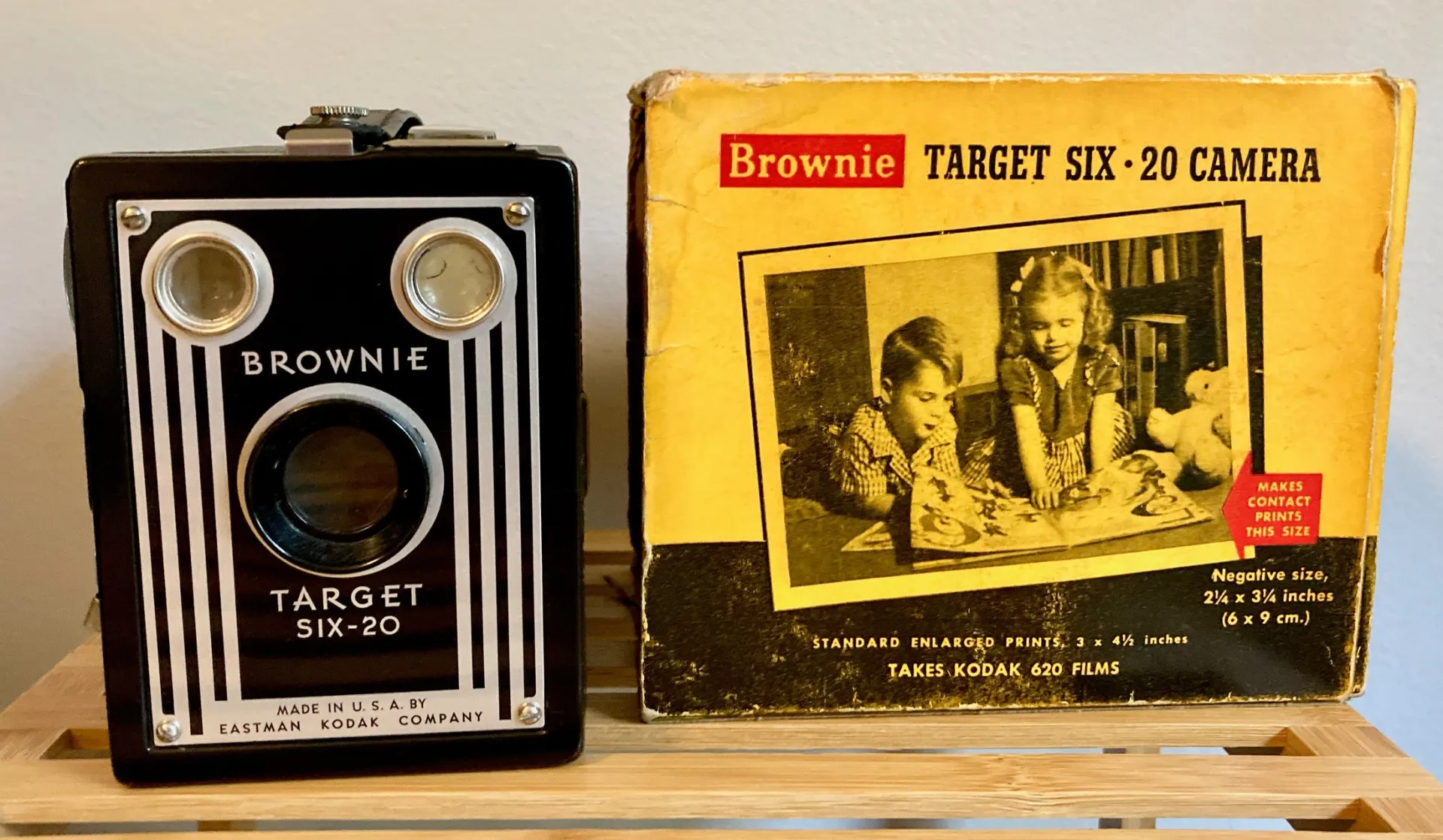
Many Brownie models followed. The photograph shows a Target Six-20, produced from 1946 to 1952, well after the original 1900 Brownie. Formats and details varied among the box cameras, and later models also used rounded plastic bodies.
The first Brownie’s one-dollar price did not include film or processing. Even so, a less expensive camera opened up opportunities to photograph family and travel personally. Alongside pictures commissioned from professional studios, more people could take out a camera in everyday life.
Sources and editorial notes
George Eastman Museum · Brownie camera
Smithsonian · Before Instagram, there was Kodak
Image use terms · CC BY-SA 4.0
Editorial note: Facts were checked against the linked material. Interpretations are MUADAILY’s editorial perspective. Image: Sonicenvy · CC BY-SA 4.0 · Brownie Target Six-20, produced 1946–1952, not the original 1900 model.
Machine-translated from Korean. Read the original.