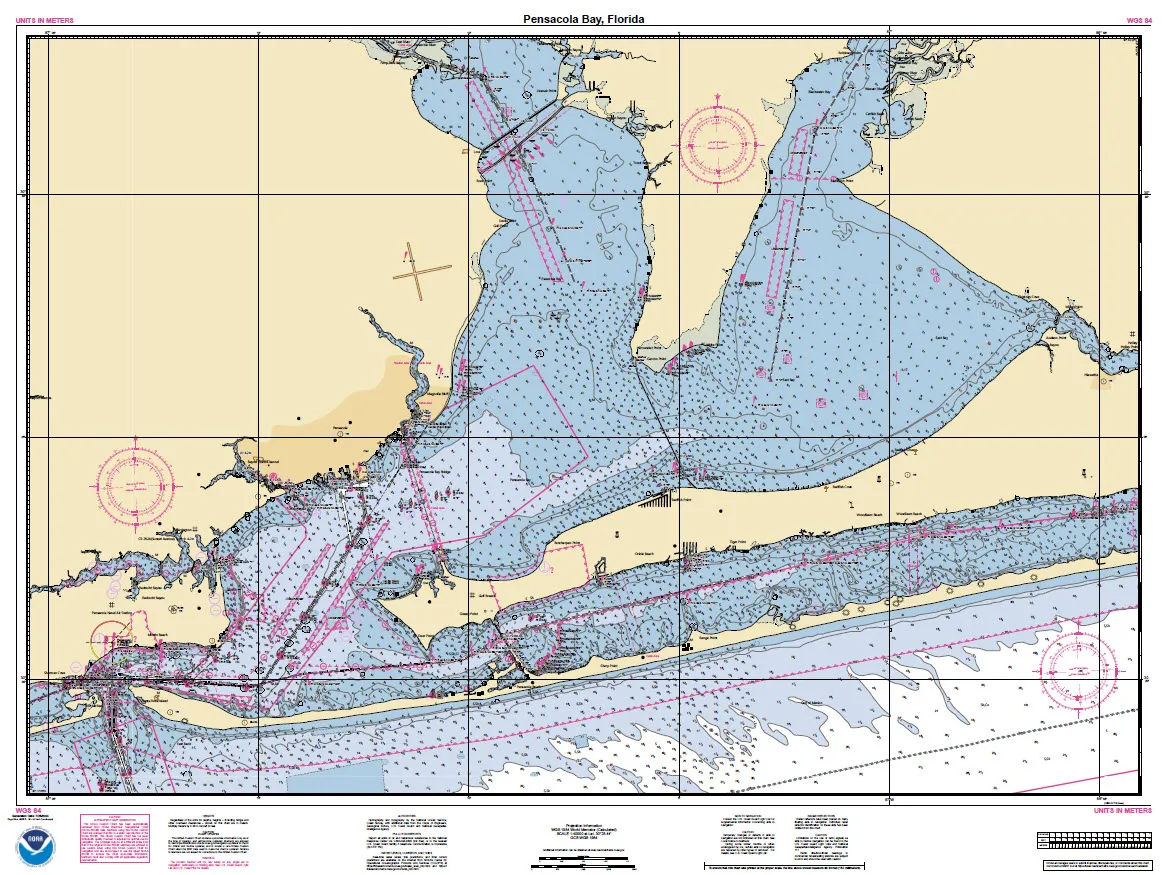
Electronic chart data lets mariners choose the waters they need and create a chart to print.
Article
A map’s coverage and scale are usually chosen by its maker. If a route crosses the edge, the user has to move between sheets. NOAA’s custom chart tool lets users select an area and scale for printing from electronic navigational chart data.
Traditional paper charts were distributed in predetermined formats. In the new tool, users can place the center of the chart to suit a route. Paper is still involved, but the order changes: instead of choosing from ready-made charts, users choose the waters first and generate a chart to match.
Changing a chart’s scale is not simply printing the same picture larger. A narrow harbor calls for nearby depths and navigational marks; planning a long passage requires a wider view. Choosing the area and scale in the custom tool also changes what will fit on one sheet.
NOAA’s examples show charts filled with soundings and symbols along routes, as well as coastlines. Preparing that information for print differs from viewing it on screen. There is no zoom button on paper, so the readable size of lettering and symbols has to be settled when the chart is made.
A custom sheet may not cover the same area as a traditional paper chart. Preparation shifts from unfolding a familiar numbered chart to choosing the location and checking when the output was created. The availability of a custom printout does not remove the need to check up-to-date electronic charts and applicable navigation requirements.
A printed chart contains data available at the time it was made; it cannot update itself afterward. Data can continue to change while the sheet stays fixed. The date of a downloaded chart therefore deserves as much attention as its coverage.
Sources and editorial notes
nauticalcharts.noaa.gov · Official source
nauticalcharts.noaa.gov · Official source
Editorial note: Factual statements are based on the sources above; interpretations reflect MUADAILY’s editorial perspective. Image: NOAA Office of Coast Survey.
Machine-translated from Korean. Read the original.