Small hooks engage with loops and release again. The idea behind Velcro began with burrs caught on clothing and a dog after a walk.
Article
Pull a burr off clothing and its tiny hooks reveal how firmly they grip fabric. After a walk in 1941, Swiss engineer George de Mestral examined burrs on himself and his dog. Instead of merely removing the nuisance, he looked at them under a microscope.
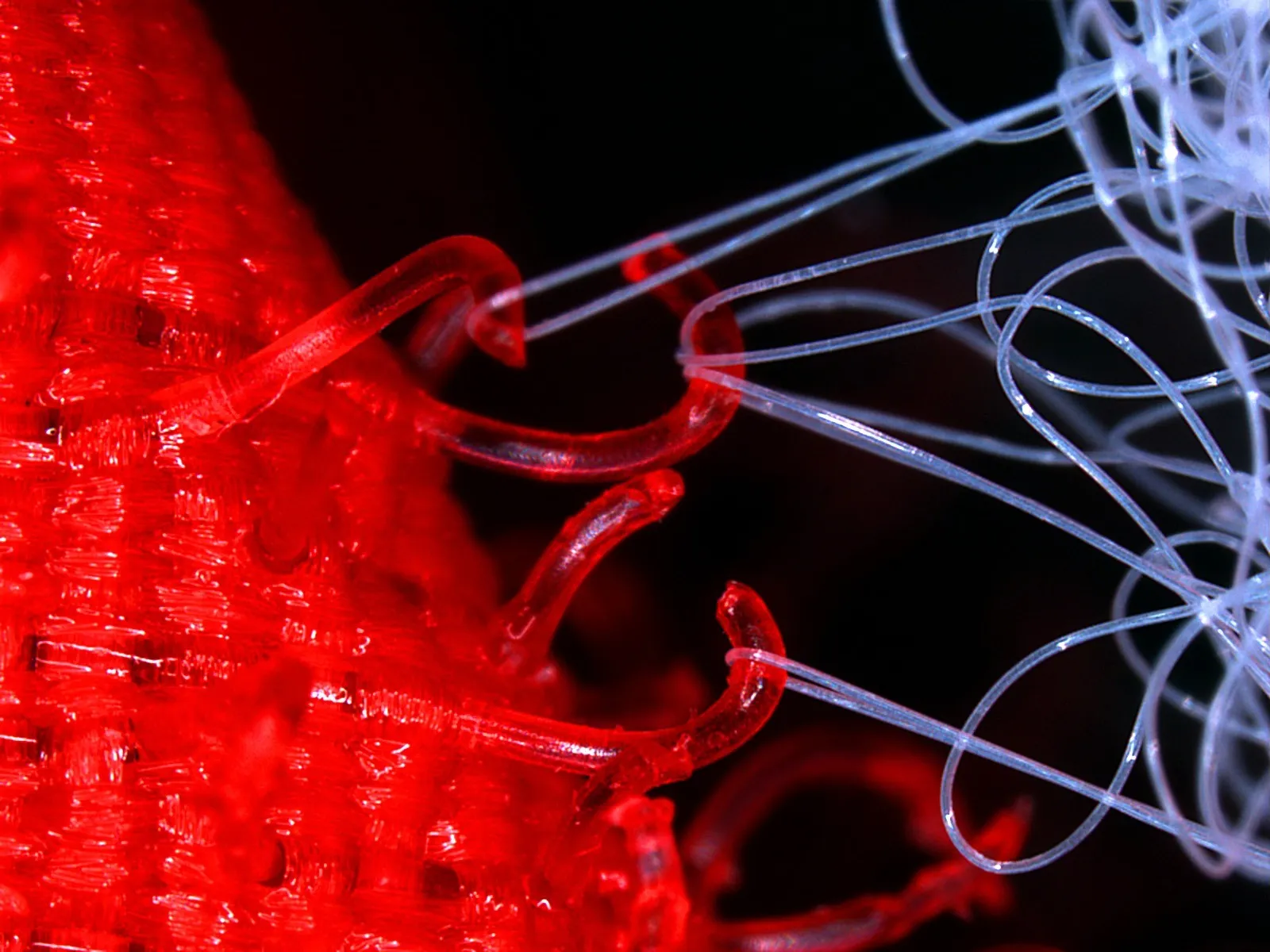
The hooks caught loop-like structures in the fabric. Reproducing that relationship in two strips creates a fastener that attaches and separates again. This is hook-and-loop fastening, often called Velcro. Velcro is a trademark rather than the generic name for the entire category.
The idea did not immediately become a finished product. Materials and manufacturing methods had to produce hooks that engaged reliably and survived repeated release. Nylon and heat treatment helped stabilize the tiny structures. Discovering a plant’s hook and making countless identical hooks in a factory were separate challenges.
Pressing the surfaces together engages many hooks; peeling from an edge releases them progressively. The small structures explain why the fastener feels different depending on the direction of the pull. Its familiar sound accompanies many connections releasing in succession.
The tiny structures are almost invisible when fastening a shoe or bundling cables. Magnification reveals hooks on one side and loops on the other. Hooks that were troublesome to remove from clothing became strips designed to attach and release when needed.
Sources and editorial notes
VELCRO · George de Mestral’s invention
Image use terms · CC BY-SA 4.0
Editorial note: Facts were checked against the linked material. Interpretations are MUADAILY’s editorial perspective. Image: Trazyanderson · CC BY-SA 4.0 · Magnified hook-and-loop fastening structures.
Machine-translated from Korean. Read the original.