A rotating ball transfers ink from the reservoir to paper, making a small mechanical part responsible for each line.
Article
As a ballpoint draws a line, a tiny ball rotates at its tip. One side meets ink inside the pen while the other touches paper. Moving the pen turns the surface and transfers ink outward.
The ball sits in a socket. It must rotate without falling out, while allowing an appropriate amount of ink through the gap. Ball size, surface finish, socket precision and ink properties all contribute to the small writing point.
Ball-based writing devices existed before László Bíró, who is recognized for developing a practical ballpoint pen. The Birome collection recognized by the American Society of Mechanical Engineers documents that work. After patenting a pen in Hungary in 1938, he continued development in Argentina.
The ink-coated ball rolls over the paper. The ball and ink must work together to produce a continuous line. Different inks can change the writing feel even when the tips look similar.
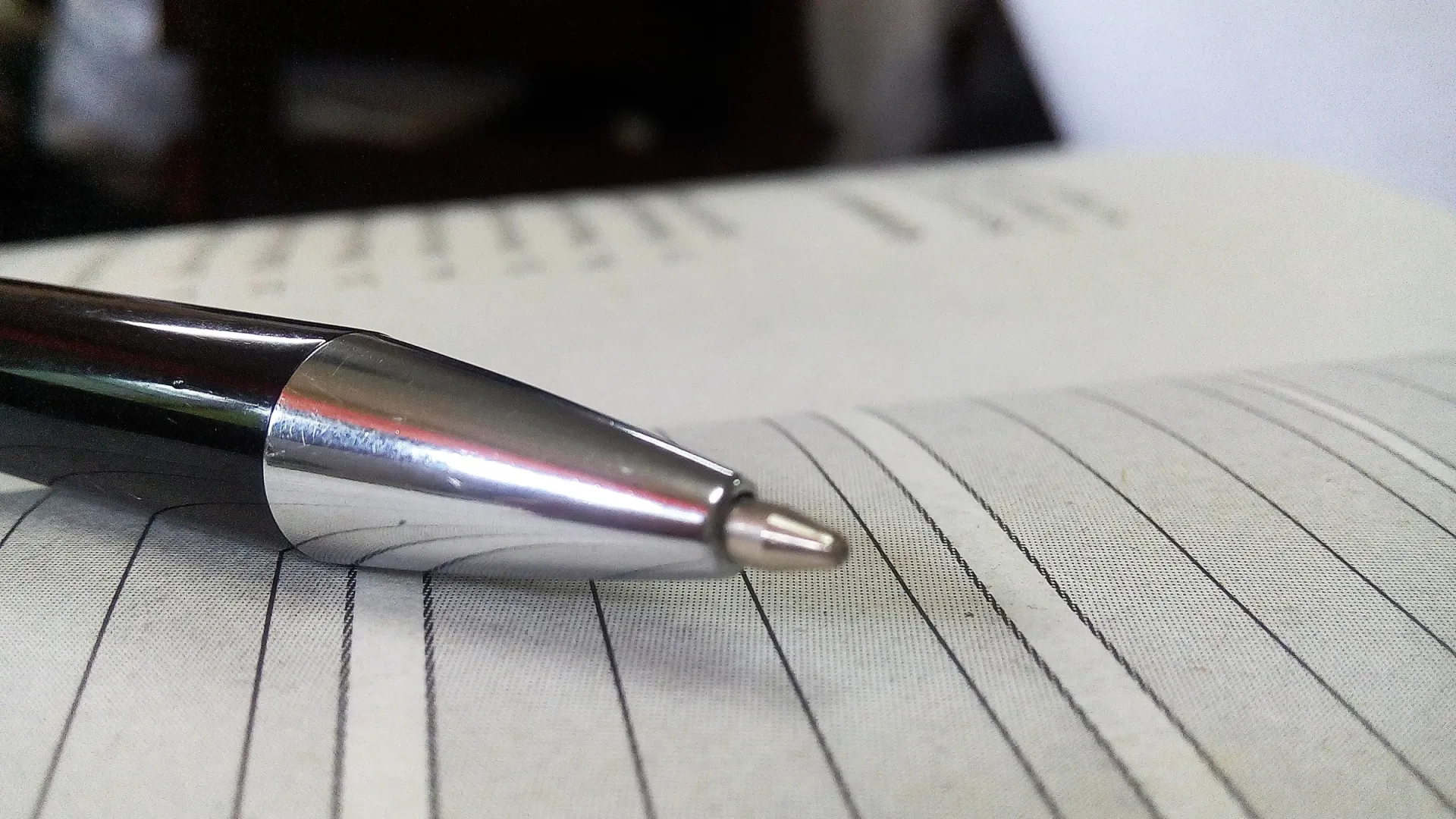
Magnification shows the ball projecting slightly from its housing. As the hand writes a sentence, successive ink-coated parts of the ball’s surface touch the paper.
Sources and editorial notes
Editorial note: Facts were checked against the linked sources. Interpretations are MUADAILY’s editorial perspective. Image: pandakekok9 · CC0 · Close-up of a ballpoint pen tip resting on paper.
Machine-translated from Korean. Read the original.