The eighteenth-century workshop concealed mechanical devices beneath elaborate wood decoration. Keys and buttons transformed desks and cabinets.
Article
A door opens, a drawer behind it moves out, and another small compartment appears. Furniture from the workshop of Abraham Roentgen and his son David concealed mechanisms for such movements. Attention shifts from floral decoration and metal mounts to the way the interior works.
Working in Neuwied, Germany, the Roentgen workshop served European royal and aristocratic clients in the eighteenth century. It developed both elaborate marquetry—pictures assembled from differently coloured woods—and sophisticated mechanical devices.
Parts of desks and cabinets could be set in motion by turning a key or pressing a concealed button. Locks released, folded elements emerged and interior storage became accessible.
The celebrated Berlin Secretary Cabinet, a large cabinet incorporating a writing desk, was bought by the Prussian heir presumptive in 1779. Its tall, ornate body contained multiple elements for writing and storage. The Metropolitan Museum of Art presented the operation of such devices alongside the furniture. With its compartments open, a cabinet takes on a very different outline.
The mechanical parts are concealed. The user encounters a keyhole, a small button or the edge of a drawer. Moving one of them brings a previously hidden space within reach.
Sources and editorial notes
www.metmuseum.org · 뢰트겐 기계식 가구 자료 1
www.metmuseum.org · 뢰트겐 기계식 가구 자료 2
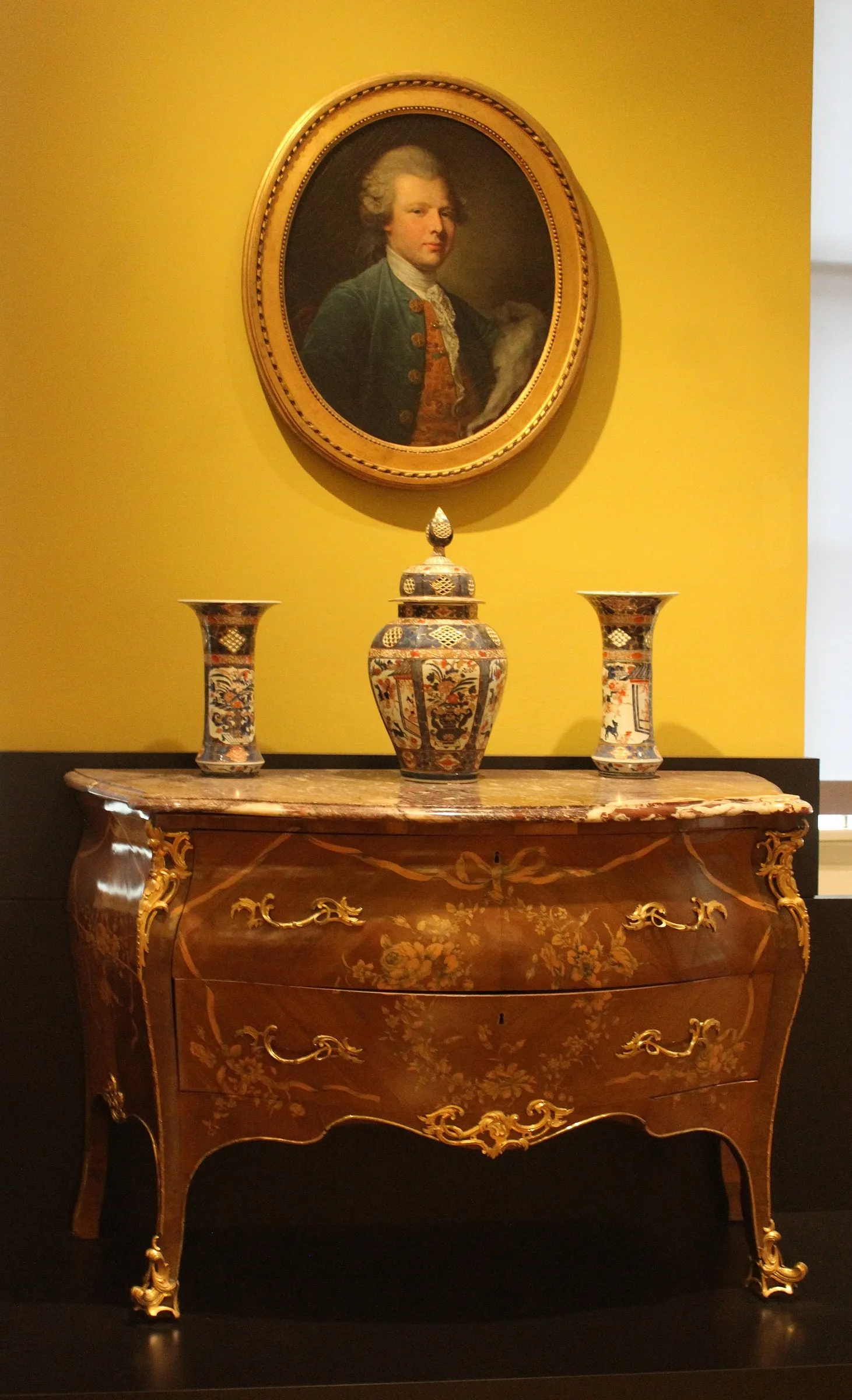
Editorial note: Facts were checked against the linked sources. Interpretations are MUADAILY’s editorial perspective. Image: Dguendel · CC BY 3.0 · A furniture ensemble by David Roentgen displayed at the Herzogliches Museum, Gotha.
Machine-translated from Korean. Read the original.