A 1937 coat created by Schiaparelli and Jean Cocteau turns a visual illusion into embroidery on a moving garment.
Article
When you look at the back of the coat, you see two faces facing each other. However, if you look at the empty space between the faces, a different picture appears. It's a vase. Roses bloom above it, and your attention shifts between the faces and the vase occupying the same space.
This is an evening coat created through collaboration between Elsa Schiaparelli and Jean Cocteau in 1937. It is a work that comes to mind when explaining the dual images of surrealism, but if you look closely, the materials and handwork that brought the drawing onto clothing matter as much as the idea.
From a drawing to the back of a coat
The drawing provided by Cocteau led to Schiaparelli's coat design. Since the line drawing the face becomes the edge of the vase, the same outline changes into a different object depending on what you look at first. The back of the coat is not a decorative plate with a picture attached, but a stage where two images overlap.
The V&A's official introduction video shows both the original sketch and the actual coat. On the screen, you can follow the lines of the flat picture as they change into the texture of the embroidery. The surface revealed depending on the viewing angle and light makes the difference between a design on paper and clothes.
A rose is not just a colored painting
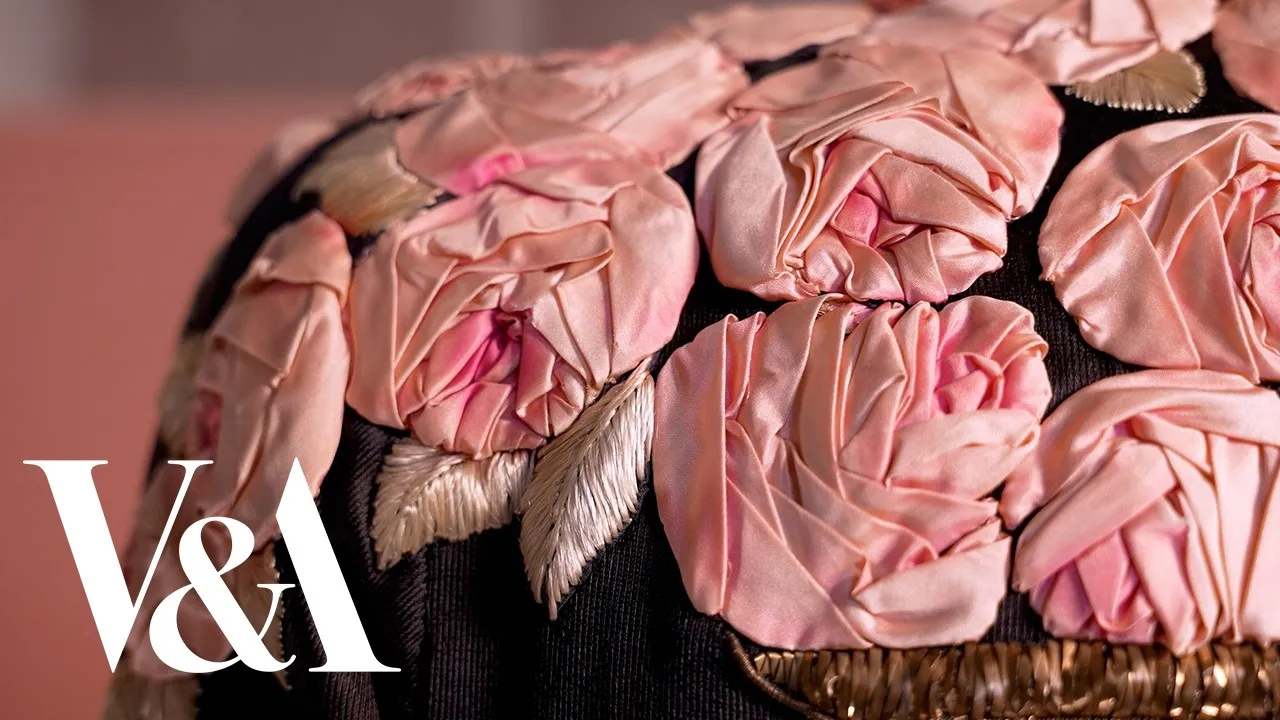
The coat, created by Parisian embroidery studio Lesage, used metallic thread, silk embroidery, and separately attached decorations. The V&A video explains embroidery using flat strips and enlarges the details of silk roses. How you fill the lines and overlap the petals affects how it appears as a single painting from afar.
There is also the fact that it is clothing. An image on a flat surface is fixed, while a garment wraps around and moves with the body. The impression of the face and vase changes depending on how much the decoration rises from the surface and how the fabric falls. Making the original idea readable and turning it into something wearable is another layer of collaboration.
Clothes that make you look back
Schiaparelli went back and forth between clothes and art to create a device that makes familiar objects look unfamiliar. In this coat, an important image is placed on the back rather than the front. When the wearer passes by or turns around, the rose and face are visible later.
The V&A's 2026 exhibition, ‘Schiaparelli: Fashion Becomes Art’, continues from the early works to the house's current design and introduces this coat as a major work. In the video of the conservation team's work, you can also see how the fabric and decoration are inspected before exhibition. The beauty of historic clothing depends both on the idea and on conservation work that preserves it.
Even after recognizing both faces and the vase, there is still something to see about the coat. These are the width of the thread, the overlap of the petals, and the surface of the embroidery that receives the light. Once you understand a painting, you can see the hands that made that painting into something wearable.
The V&A’s introduction and conservation film https://www.youtube.com/watch?v=DA6_UO3s0u4
official channel
https://www.youtube.com/@vamuseum
Sources and editorial notes
V&A · Coat production and preservation video
Schiaparelli · Jean Cocteau Collaboration
Editorial note: Facts were checked against the sources above; interpretations are MUADAILY’s editorial views. Image: Victoria and Albert Museum · Preview of the official coat introduction video.
Machine-translated from Korean. Read the original.