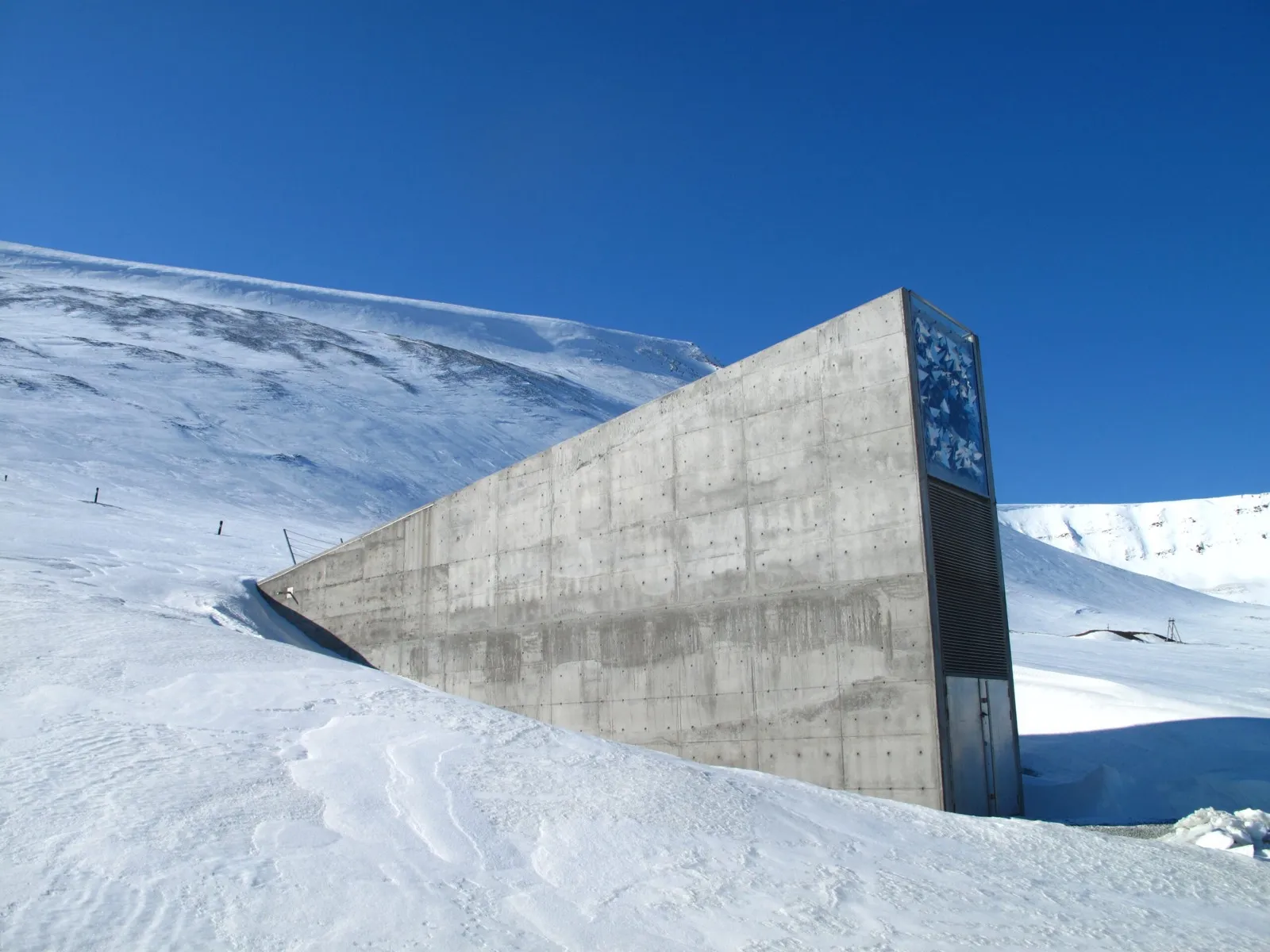
The Svalbard Global Seed Vault safeguards duplicate samples from genebanks worldwide. Storage at −18°C has already supported the return and regrowth of seeds displaced by war.
Article
Important photographs kept on a single computer may be lost if it fails. Seed collections also need backups in separate places. Norway's Svalbard Global Seed Vault stores duplicate seed samples deposited by genebanks around the world. Its chambers inside a snowy mountain protect less an immediate food supply than the possibility of planting again later.
Even within wheat or barley, different varieties and lines have different traits. Resistance to drought or disease may be needed in future breeding. Keeping only today's highest-yielding varieties would reduce the genetic resources available when growing conditions change. Genebanks preserve that diversity; Svalbard holds duplicates so a disaster at one site need not erase it all.
Opened in 2008, the vault's storage chambers sit more than 100 meters inside the mountain. Svalbard is distant from many original collections and has a cold climate. Keeping a backup far away, rather than in another drawer of the same building, reduces the risk of losing both in a single disaster. The far-northern location is part of that strategy.
Seeds are living material and do not last forever in a cool room. Those that tolerate drying and low temperatures can remain ungerminated for long periods when moisture is reduced and storage is cold. Conditions for sprouting are withheld, and aging slows. Life is not completely halted or preserved indefinitely.
Refrigeration keeps the chambers at −18°C. Outdoor cold alone is not expected to maintain that temperature. Surrounding permafrost and rock act as a buffer, slowing warming if cooling is interrupted. The mountain's conditions and maintained equipment work together.
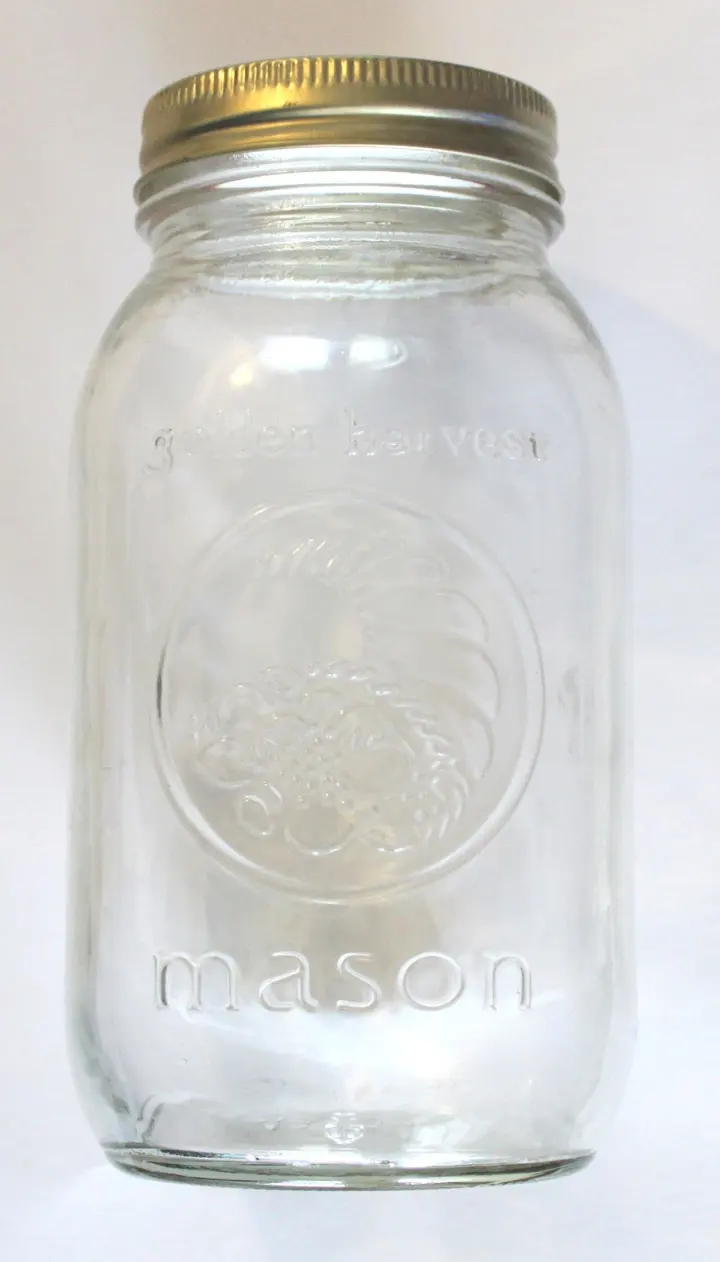
Seeds are dried before shipment, sealed in dedicated airtight aluminum packets, and packed into boxes. Labels and records identify the depositing institution and storage location. Returning the correct material requires knowing which seeds are on which shelf. Names and records are preserved alongside the samples.
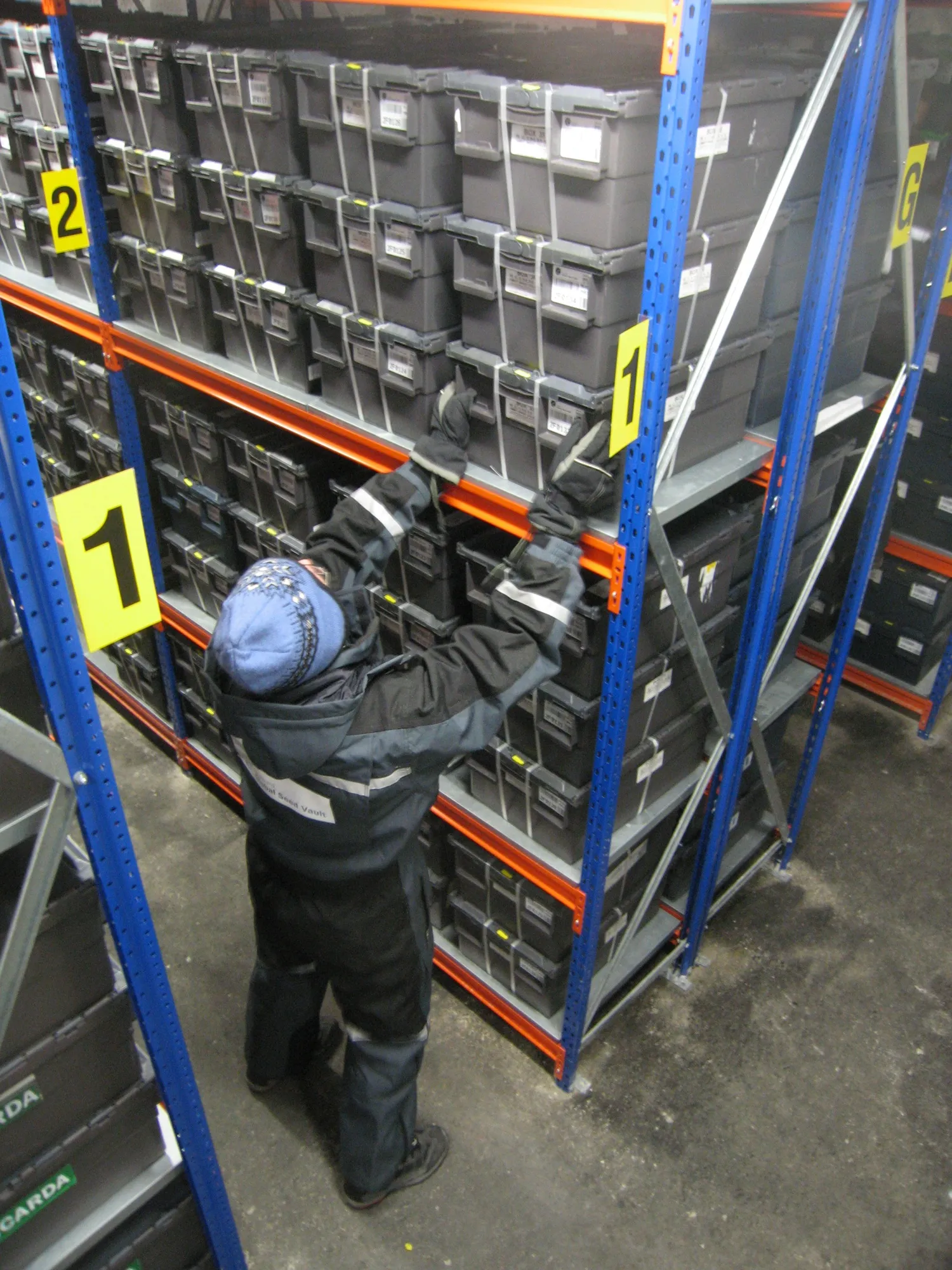
Not every plant can be conserved this way. Svalbard focuses on plants important to food and agriculture whose seeds tolerate drying and cold storage. Others need different methods. The vault is one part of a network of conservation facilities, not a complete collection of every plant in one building.
Ownership remains with the depositing genebank. Boxes are not opened at the vault's discretion, and only the depositor can request the return of its seeds. Being stored in Norway does not make another country's material freely available for distribution. This role differs from that of a genebank supplying research samples.
One backup has already been put to use. The International Center for Agricultural Research in the Dry Areas, ICARDA, had to leave its Aleppo headquarters because of the Syrian civil war. In September 2015, it received its first withdrawal of seeds previously deposited at Svalbard. Seeds sent to Lebanon and Morocco were planted from November that year. The need for a backup arrived without a catastrophe affecting all humanity.
Growing those seeds produced new ones. Some cereals, legumes, and other crops harvested in 2016 supplied seeds redeposited at Svalbard in 2017. Material taken from storage was grown in fields to replenish collections, not placed in an exhibition case. The movement between vault and field returns a stored backup to active use.
Seed longevity varies by species and condition. Reports of some seeds surviving centuries do not establish a shelf life for all seeds. Depositing genebanks monitor the germination of corresponding samples and regenerate collections when needed. Svalbard does not grow the seeds on their behalf; it adds another safeguard to that conservation work.
The vault also needs maintenance. Its access tunnel was made more watertight and cooling infrastructure improved in response to warmer, wetter conditions. It is not a safe that can be locked and left forever. Cultivation and record-keeping by depositors must continue alongside inspection of the storage facility.
A variety with little apparent value today may contain a trait needed later. Future diseases and drying landscapes cannot all be predicted, so current priorities should not erase the remaining possibilities. Svalbard's shelves hold options not yet used. Keeping seeds cold and dry today preserves the chance that someone can plant them when needed.
Sources and editorial notes
Svalbard Global Seed Vault · Opening · Mountain location · Conservation purpose
Crop Trust · Crop diversity and ICARDA conservation examples
Royal Botanic Gardens, Kew · Dry/cold storage principles and lifespan differences between species
Svalbard Global Seed Vault · Withdrawal and cultivation in 2015 and re-deposit in 2017
Svalbard Global Seed Vault · Waterproof tunnel improvement measures in 2017
Svalbard Global Seed Vault · Tunnel and facility improvement construction records in 2018
NordGen / Dag Terje Filip Endresen · Public domain · Image source
Editorial note: Facts were checked against the sources above; interpretations reflect MUADAILY’s editorial perspective. Image: Svalbard Global Seed Vault official material · Photographer not individually credited.
Machine-translated from Korean. Read the original.