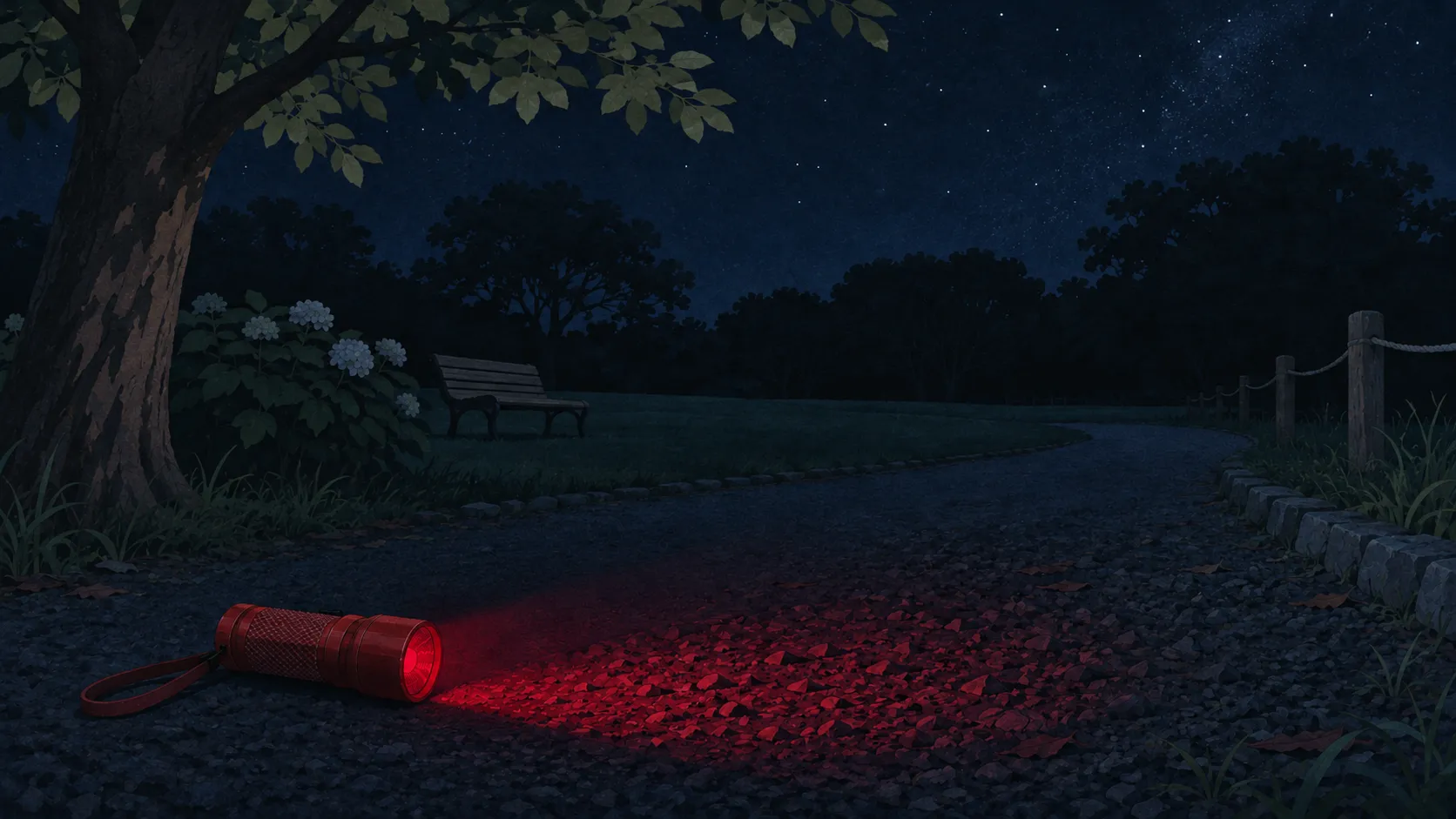
Once your eyes have adapted to darkness, keeping light dim and directed only where it is needed matters.
Article
Glance at a bright screen while stargazing and faint stars that were visible a moment ago can seem to disappear. The sky has not changed in those few seconds. Eyes adjusting to darkness have just received a sudden burst of light, altering how the same sky appears.
The US National Park Service advises giving your eyes time to adapt and using dim red light when illumination is needed. Rod cells, which support vision in low light, are relatively less sensitive to red. That does not make any brightness of red light harmless to dark adaptation: intensity and duration also affect how much light enters the eyes.
Cone cells, prominent in bright-light vision, and rod cells, sensitive in dim light, serve different roles. As light decreases, outlines gradually become visible while colors remain less distinct than in daylight. The emergence of faint stars that previously blended into the background is related to that adjustment.
A red flashlight does not make stars brighter. It helps you briefly check nearby things—a map, a zipper, or a stone underfoot—before looking up again. The National Park Service’s advice is to keep the red light dim. A bright light left on nearby does not lose its effect simply because its color has changed.
In a group, seeing what you need and allowing others to stay adapted to darkness are separate concerns. Pointing a beam at the person ahead or toward the observing area can spread light beyond the task. Briefly illuminating a small patch underfoot helps everyone return to looking at the same sky.
Turn the light toward the ground to check your route, then switch it off to look up. The task becomes clear: while stargazing, a flashlight is there to reveal a needed detail briefly, rather than brighten the whole surroundings.
Sources and editorial notes
Editorial note: Factual statements are based on the sources above; interpretations reflect MUADAILY’s editorial perspective. Image: MUADAILY · AI-generated explanatory illustration.
Machine-translated from Korean. Read the original.