Ice and salt go outside the ice-cream container. Lowering the freezing point lets melting ice draw heat from the mixture inside.
Article
Salt helps ice melt. Yet old hand-cranked ice-cream makers used salt and ice to freeze a milk mixture. Melting in one case and freezing in the other may seem contradictory, but both use the same property: salt water freezes at a lower temperature than pure water.
A mixture of pure ice and liquid water in equilibrium is normally around 0°C. Ice-cream ingredients containing sugar need colder conditions to freeze sufficiently. Adding salt to the outer ice bath changes the conditions at which the ice can melt. As it melts, it takes in heat from its surroundings, making the bath colder.
The ice-cream ingredients go in an inner container, with ice and salt around the outside. Large amounts of salt are not added to the milk to freeze it. The cold outer mixture draws heat through the container wall. That wall keeps the ingredients separate while allowing heat to pass.
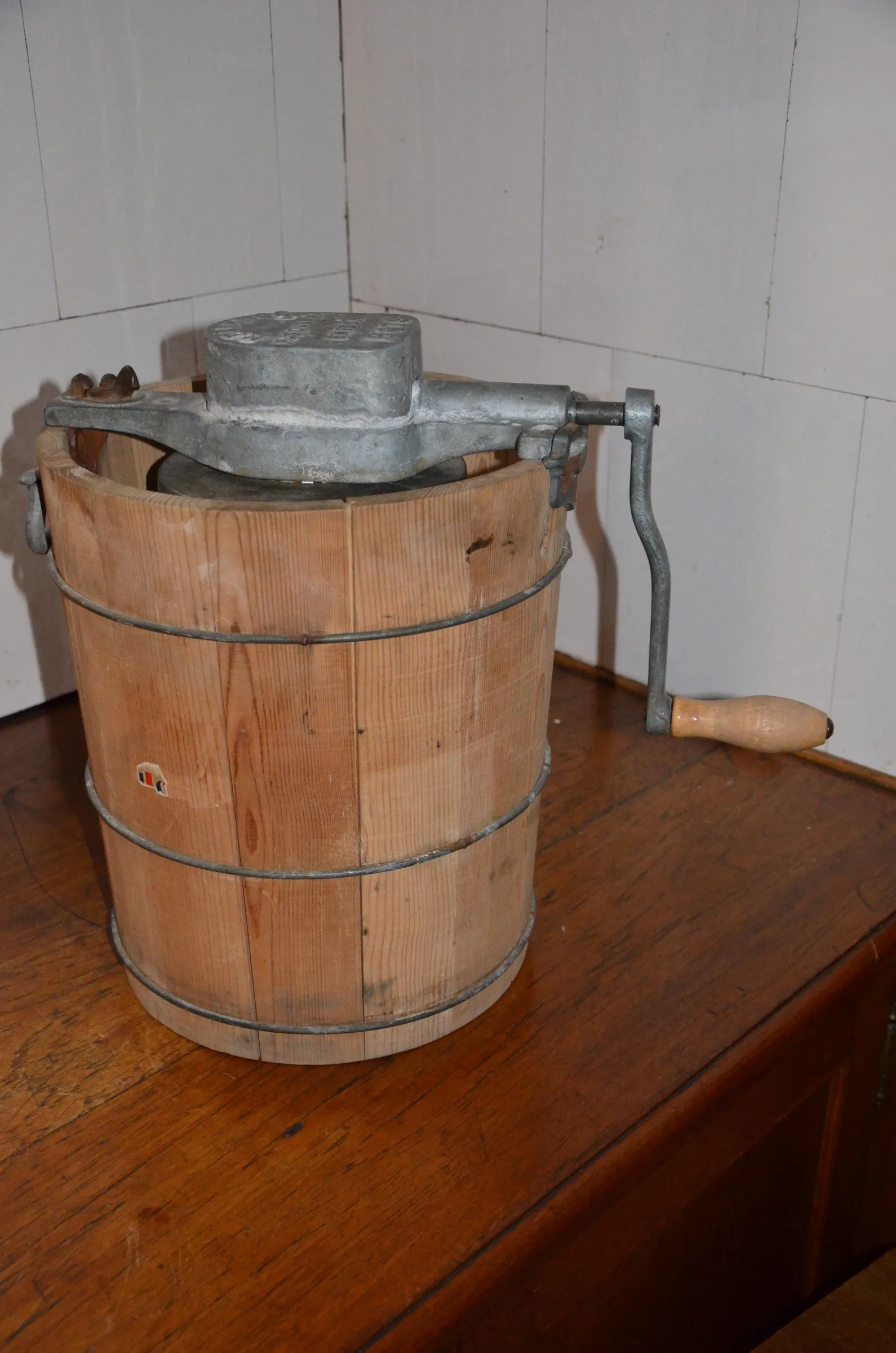
The hand crank keeps the contents moving. Different portions contact the cold wall, and the mixture can be stirred as it begins to solidify. Low temperatures from the ice-and-salt bath and mechanical mixing work together. In the pictured wooden-bucket machine, the space around the metal container is where the salted ice goes.
Adding salt does not make the temperature fall indefinitely. The result depends on factors including brine concentration and the ice remaining. McGill University explains road de-icing and ice-cream making through the same freezing-point change. On a road the useful result is melting ice; around an ice-cream container it is the heat absorbed during that process.
Sources and editorial notes
scienceinthecity.stanford.edu · 얼음 소금 아이스크림 자료 1
www.mcgill.ca · 얼음 소금 아이스크림 자료 2
Image use terms · CC BY-SA 3.0
Editorial note: Facts were checked against the linked material. Interpretations are MUADAILY’s editorial perspective. Image: Bengt Oberger · CC BY-SA 3.0 · Historic ice-cream maker with a wooden outer bucket and metal inner container.
Machine-translated from Korean. Read the original.