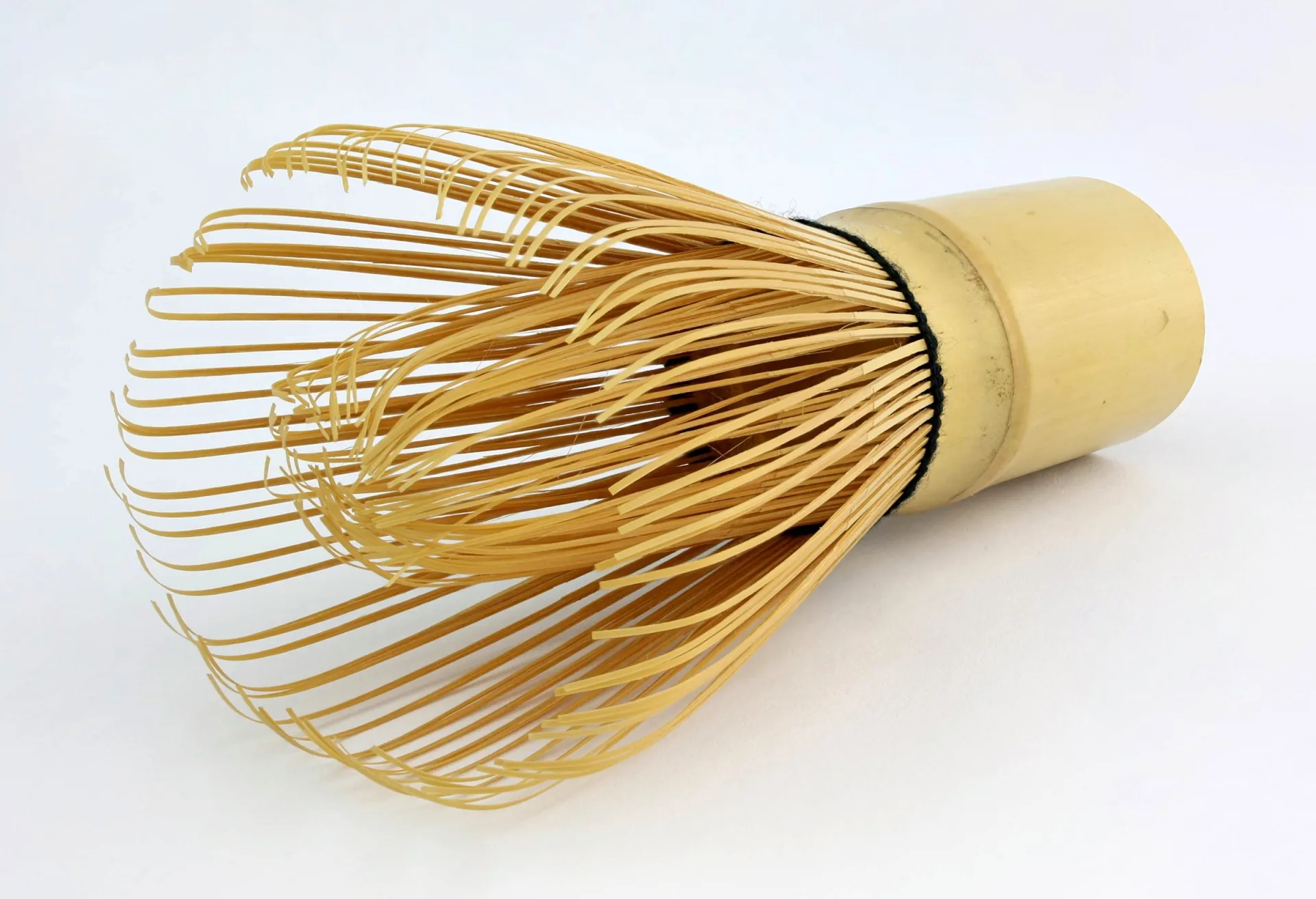
The fine tines of a chasen remain connected to its handle. Bamboo is split and shaved, then thread holds the tines in position.
Article
Fine bamboo tines move through a bowl of matcha. They might look like separate pieces attached to a handle, but the Japanese tea whisk called a chasen is split from one piece of bamboo. The material runs continuously from the thick handle to the delicate tips.
Takayama in Japan’s Nara Prefecture is known for making these whisks. Japan House London presents a handmade example from the area. The bamboo is divided, each tine is shaped, and thread holds the tines in position.
Maker Tango Tanimura’s Kazuho-style whisk uses white bamboo from the Kansai region seasoned for three years. The retailer’s description explains that the bamboo is split into 140 sections and fashioned into a whisk with 70 prongs. Tine counts and tip shapes vary between types of whisk.
The fine tips mix water and matcha powder in the bowl. Bamboo’s flexibility allows the tines to bend slightly as the handle moves. Numerous thin tines pass through the liquid, dispersing the tea and creating foam.
Out of the bowl, the whisk looks like a solid cylinder branching into many fine lines. Follow the gaps between the tines and they all stop near the handle, where its construction from a single piece of bamboo becomes clear again.
Sources and editorial notes
shop.japanhouselondon.uk · 대나무 다선 자료 1
www.postcardteas.com · 대나무 다선 자료 2
Editorial note: Facts were checked against the linked sources. Interpretations are MUADAILY’s editorial perspective. Image: D-Kuru · CC BY-SA 4.0 · A chasen with finely divided bamboo tines.
Machine-translated from Korean. Read the original.