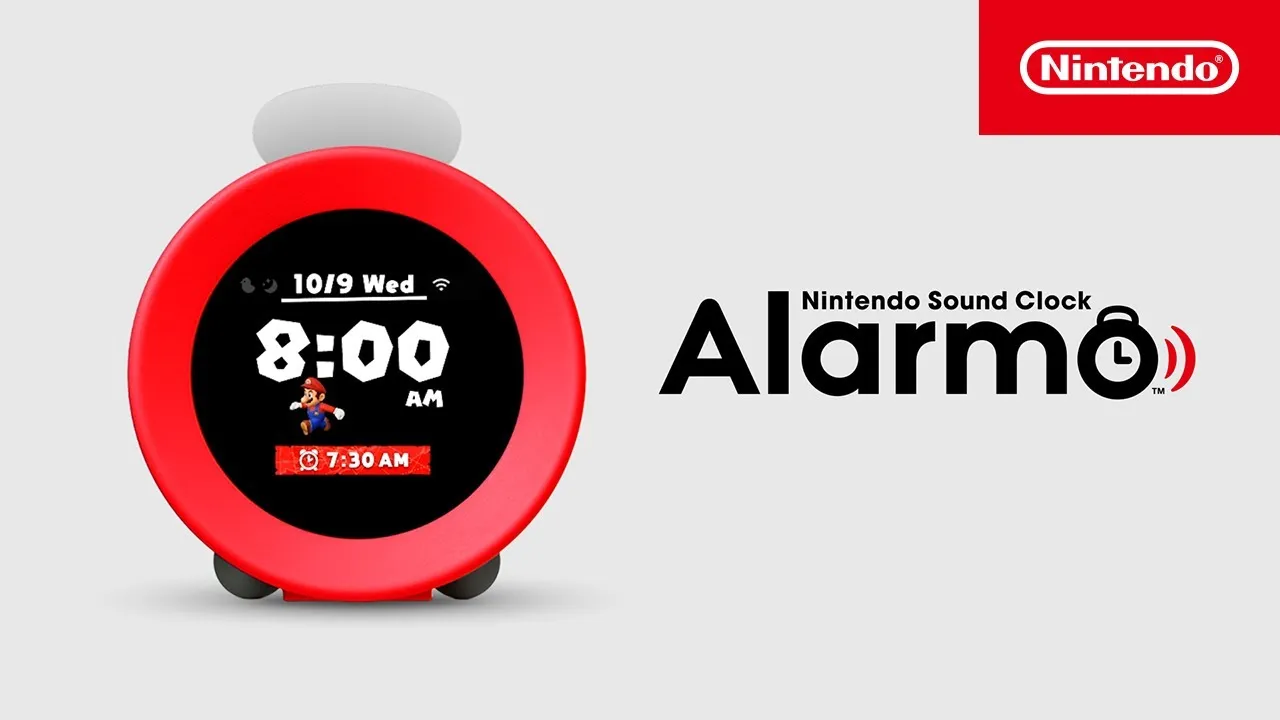
Alarmo responds to movement with game sounds and stops when its user leaves the bed. Its camera-free sensor tracks movement, while its designers chose to leave morning scores out.
Article
An alarm rings, and a hand reaches out before the eyes open. Pressing a button and retreating under the blanket takes little time. Nintendo's red Alarmo clock changes that familiar sequence. Movement triggers game sound effects, and leaving the bed completely stops the alarm with a short fanfare. Getting out of bed, rather than pressing a button, becomes the final action.
First released in October 2024, it may look like a clock for playing Mario or Zelda music, but development began with motion-sensing technology. A radio-wave sensor uses reflected signals to detect the distance and movement of objects. It can register movement under a blanket in a dark room without photographing a face.
The team did not begin with an alarm clock as its goal. While exploring uses for the sensor around sleep, the developers became better able to locate a person in bed. This led them toward an alarm that stops when the person gets up. Changes in pitch during movement, or a different sound on leaving the bed, make the response audible without requiring a glance at the display.
Responses depend on the selected alarm mode. Some become quieter with a little movement; others become more insistent if the sleeper stays in bed. The sensor does not identify individuals. Another sleeper, a pet, or a moving fan within range can confuse it. A button mode, stopped by pressing the dial, remains available for these situations.
Despite its Nintendo origins, Alarmo does not turn each morning into a points-based game. In the developer interview, the team discussed a concern that rewards for getting up might reduce motivation once those rewards disappeared. A proposal for gold medals for early risers and bronze for late risers was not adopted. The designers considered both what the clock could do and what they should avoid asking of someone just waking up.
Instead, it records time spent in bed each night and the interval between the alarm and getting up. On-screen characters and hourly chimes carry through the game atmosphere. To adjust alarm volume, developers actually slept and woke to test it. A sound that seemed quiet during the day could be sufficient on waking, so checking a single adjustment could take a whole day.
Sources and editorial notes
Nintendo · Developer Interview Part 1, Radio Sensor and Development Process, 2024-10-09
Nintendo Support · Sensor Limits · Button Mode Official FAQ
Nintendo of America · Nintendo Sound Clock: Alarmo official announcement video
Nintendo of America Official Video Channel
Editorial note: Facts were checked against the sources above; interpretations reflect MUADAILY’s editorial perspective. Image: Nintendo of America / Nintendo Sound Clock: Alarmo Official Announcement Video Preview © Nintendo.
Machine-translated from Korean. Read the original.