NASA’s X-59 aims to reduce the sound of supersonic flight. Its performance in the air and the noise reaching the ground require separate tests.
Article
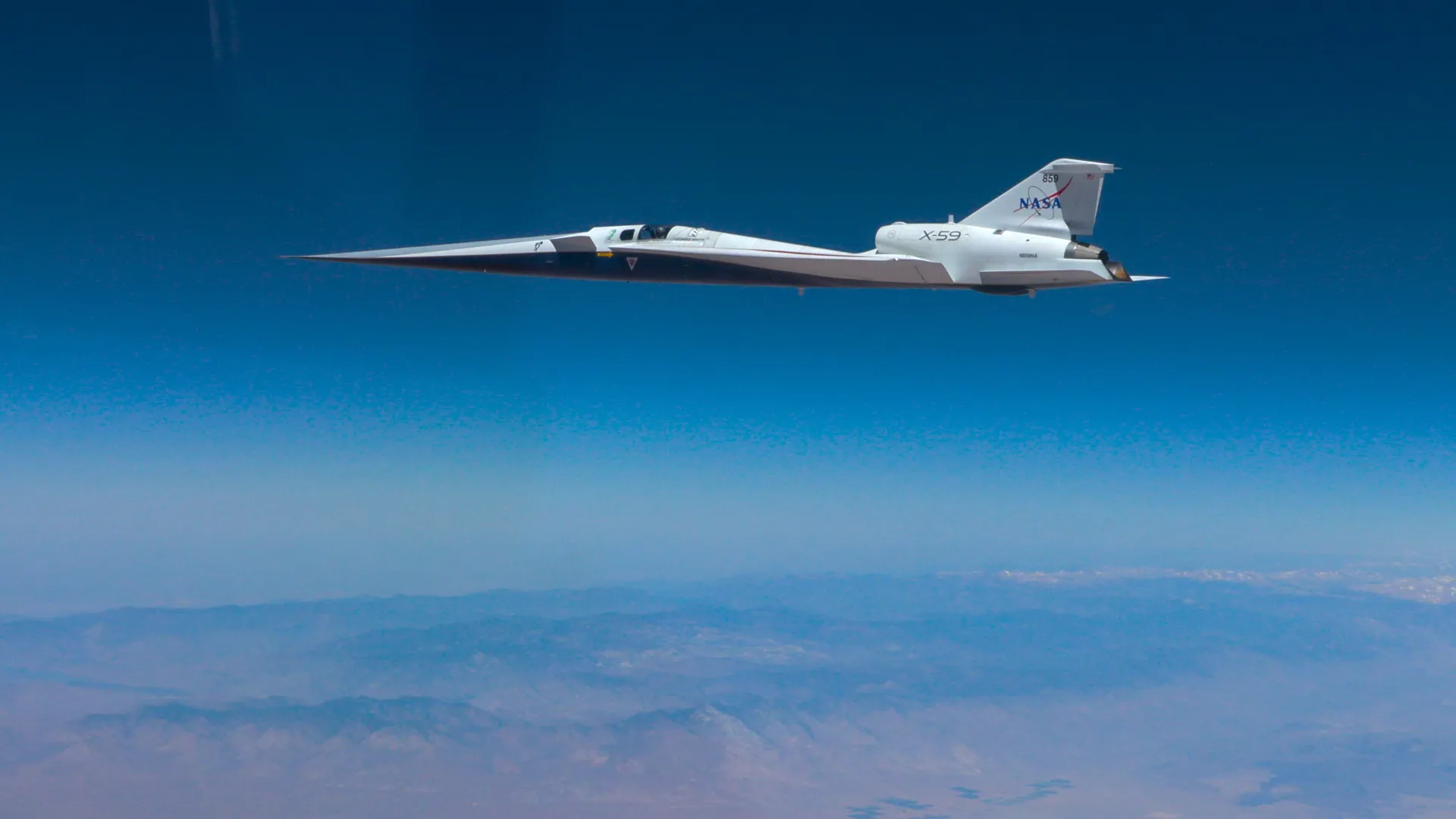
The unusually long nose is the first thing to notice in photographs of NASA's X-59. The slender experimental aircraft places its wings and engine farther back, without a passenger cabin designed to carry more people. Speed is only part of the question it addresses: can an aircraft flying faster than sound produce a quieter noise on the ground?
Pressure waves from supersonic flight are heard as a sonic boom. NASA describes how waves around an aircraft merge into stronger shock waves. X-59's shape is designed to alter how those waves travel. The experiment concerns sound spreading outside the aircraft, rather than shielding passengers from it with headphones.
Flight performance and acoustic results therefore need separate measurements. A sleek photograph cannot establish quietness. Researchers must test the aircraft at the intended speeds and altitudes, then measure sound reaching the ground. Flights over communities to study people's responses are another part of NASA's research plan.
Flight records are accumulating. After its first flight in October 2025, X-59 first exceeded the speed of sound on June 5, 2026. NASA explained that the chase aircraft's sonic boom meant this flight could not verify X-59's low-noise performance. Reaching supersonic speed and establishing how quiet it is remain separate milestones.
NASA reported on October 2 that X-59 had completed six flights in one September week. Its highest speed that week was Mach 1.53, and the total had reached 38 flights by September 25. Repeated departures and returns show progress in the test program. They do not establish passenger-service readiness or the elimination of sonic booms under every condition.
The next questions concern people hearing the aircraft from the ground more than airport departure boards. Researchers aim to gather responses to quieter supersonic sound and contribute evidence to regulatory decisions. X-59's long profile reflects that attention to listeners below. The question is whether faster travel can coexist with ordinary life beneath its path.
Sources and editorial notes
NASA · 2026-06-05 First supersonic flight and verification scope
NASA · 2026-10-02 Record of 6 weekly flights
NASA Quesst · Shockwave and ground sound research
Editorial note: Facts were checked against the sources above; interpretations reflect MUADAILY’s editorial perspective. Photo: NASA / Lori Losey.
Machine-translated from Korean. Read the original.