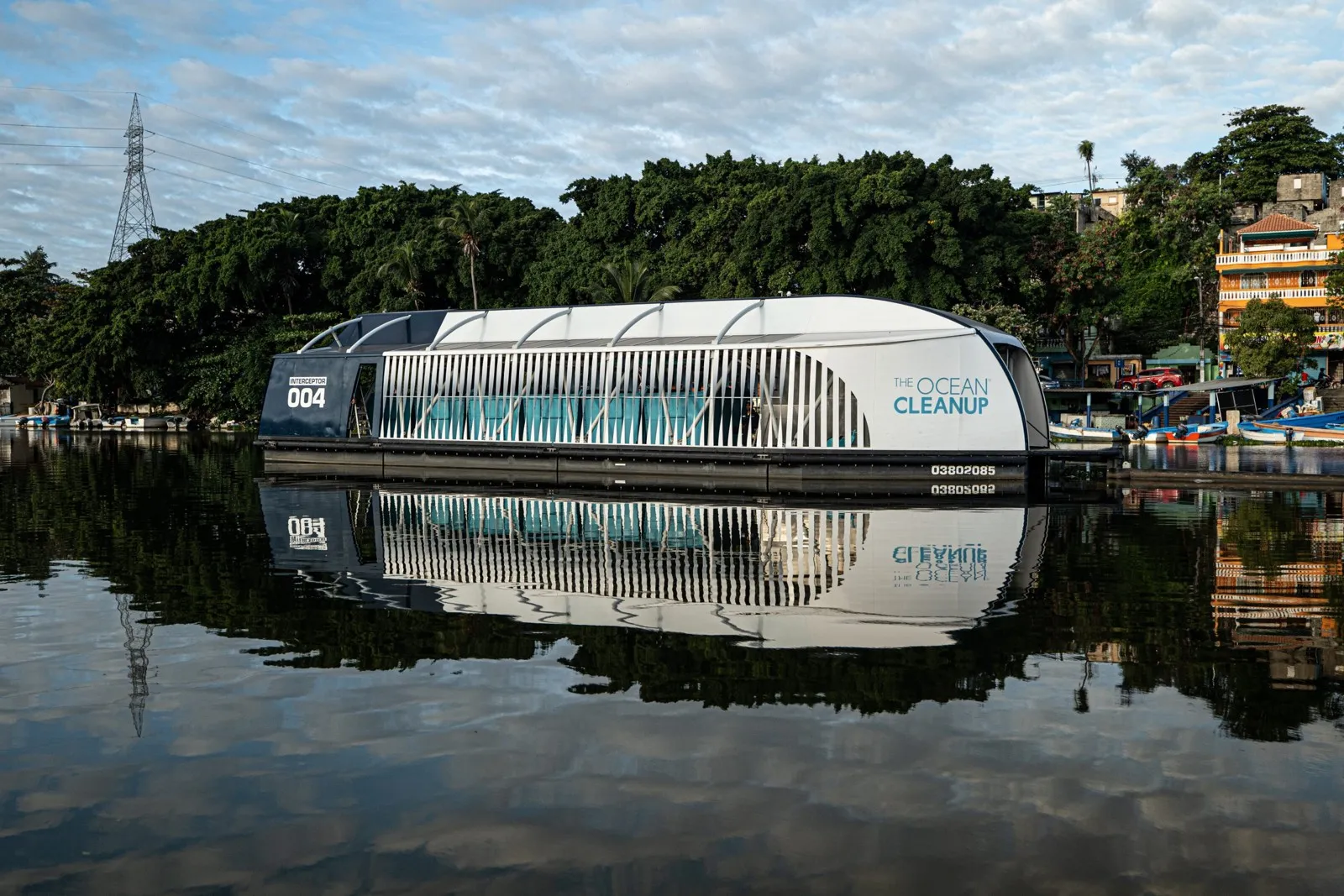
Interceptor Original guides floating river waste to a conveyor for collection. Local operators then move it into the waste-management system on land.
Article
Instead of pursuing each piece of floating litter, a device waits along its route. The Ocean Cleanup's Interceptor Original uses a barrier to guide river waste onto a conveyor belt. It creates a collection point before that waste can travel from river to sea.
The barrier does not form a wall across the entire river. It directs floating waste toward the entrance while water passes between the catamaran's hulls. The design gathers material to one side while leaving a route for the water.
A shuttle distributes waste from the conveyor among six collection bins. Sensors monitor fill levels so that one bin does not overflow while others remain empty. According to the organization, solar power supplies the electronics, conveyor, sensors, and other equipment. River flow and powered machinery work together.
Full bins do not mean the whole process is complete. The system alerts local operators, who move the barge carrying them for emptying. The collected material then enters the local waste-management system. Removing waste from water and dealing with it on land are separate stages.
The same installation does not suit every river. Width, depth, current, seasonal changes, and boat traffic affect the arrangement. The Ocean Cleanup therefore uses several Interceptor types. One design cannot be treated as a universal solution for all rivers.
Introduced in 2019, the Original aims to intercept river waste before it enters the ocean. It does not prevent waste from being generated. Its bins must be emptied and returned before they can receive more. Automation on the water depends on a working waste-handling system ashore.
Sources and editorial notes
The Ocean Cleanup · Interceptor Original collection stages
The Ocean Cleanup · River-specific conditions · Local treatment system
Editorial note: Facts were checked against the sources above; interpretations reflect MUADAILY’s editorial perspective. Image: The Ocean Cleanup.
Machine-translated from Korean. Read the original.