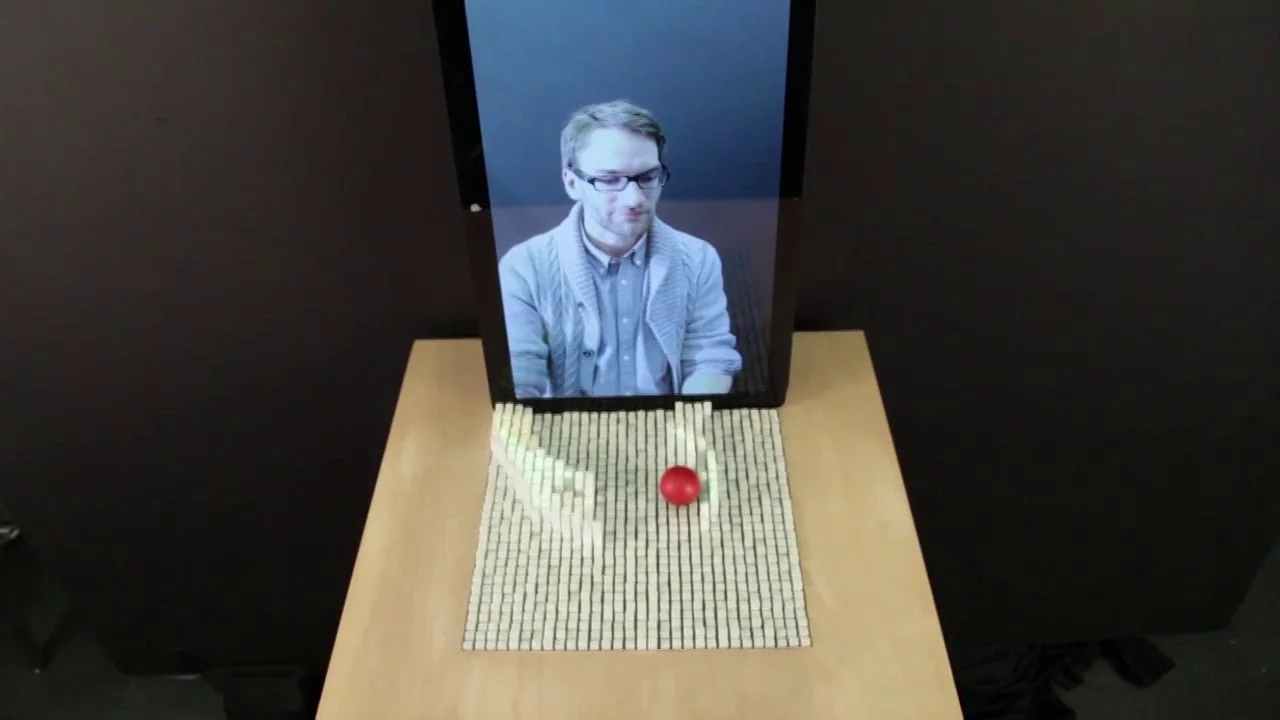
MIT’s inFORM raises and lowers an array of pins to give digital information a physical shape. The 2013 research interface can be pressed by hand and can move objects resting on its surface.
Article
A hand on a video call can point to something, but it cannot push a ball on the table at the other end. MIT Media Lab's inFORM explores that distance through a moving surface. It captures the shape of a remote person's hand and raises or lowers parts of the table, allowing the movement to act on objects nearby.
Presented in 2013, the device contains 900 closely spaced pins that move vertically. Adjusting their heights turns a flat surface into a relief. Lower areas can rise while higher ones descend, continuously changing the shape in response to computer input.
A depth camera and projector sit above the table. The camera tracks hands and objects; the projector adds colors and images to the moving surface. Pins supply the physical shape, while light adds visual information. Users can also touch or press the surface, bringing display and input into the same place.
To move a ball, the surface rises on one side to create a slope. The ball rolls down it. Rather than grasping the ball with a separate arm, the system changes the ground beneath it. The paper also describes pushing and tilting objects with the pins. Different objects behave differently: a ball and an angular block respond to different rolling conditions, and weight and friction matter. The surface cannot manipulate every object in every way.
The researchers also used shape to guide interaction. A raised area can mark a button that the user can both see and feel. Changes in height can constrain movement, creating a physical boundary beneath the hand rather than a line drawn on glass.
Terrain and architectural models were among the proposed applications. Physical relief could show mountain heights or building arrangements to people gathered around the table. The researchers also acknowledge the low resolution. Details smaller than a pin cannot be rendered smoothly, and shapes are limited by each pin's direction and range of travel.
inFORM is a research device with proposed applications, rather than a household product. Its emphasis is on changing one surface as needed, not producing a finely detailed finished model. Pins that showed a landscape can lower into a flat table, then rise again to make a path for a rolling ball.
Image Description: Preview of Tangible Media Group's inFORM official demonstration video. It shows the pin array and remote participant screen.
Image source: Tangible Media Group / Official release video preview
https://vimeo.com/79179138
Image changes: resized with the original aspect ratio preserved and converted to WebP. No cropping.
Sources and editorial notes
MIT Tangible Media Group inFORM
Source of preview · Tangible Media Group / Official Release Video Preview
Editorial note: Factual statements are based on the sources above; interpretations reflect MUADAILY's editorial perspective. Image: Tangible Media Group / Preview of the official release video.
Machine-translated from Korean. Read the original.