Electronic ink holds an image rather than continually lighting and refreshing it. While a reader stays on one page, the display can retain that page without power.
Article
It's easy to think that when the screen turns off, the text disappears. This is a familiar phenomenon in mobile phones and monitors. However, on an electronic ink screen, the last image may remain even if power is not supplied. This is why it can be confusing just by its appearance whether it is on or asleep.
This difference is also evident in the scene of reading an e-book. Even if you look at one page for a long time, the text remains the same. If there is no reason for the screen to constantly change, you can start thinking differently about how you hold the image.
Power is used when the image changes
One of the important characteristics of electronic ink is that it does not require power to maintain the image. Power is used when changing the screen, and the changed state remains even if the power supply is turned off. This is ‘bistability’ mentioned in the technical description.
Typical black-and-white electronic ink changes what is visible by moving white and black particles with different electrical properties. Holding text in place this way differs from continuously refreshing an illuminated display. Color electronic ink can use other configurations.
However, this is a characteristic of the display. It does not mean that an entire e-reader uses no electricity. Processing units, wireless communications, and a front light that illuminates the screen require separate power. Just because text remains on the screen does not mean that the device continues to operate.
Screen that matches your reading speed
What makes electronic ink interesting is that it distinguishes between the moment when something on the screen changes and the moment it stays there. The display shows a new page when the reader turns it, then holds that page while they read. The screen also maintains that state when the user stops.
This characteristic is suitable not only for books but also for displaying information that does not change frequently. A store price label, for example, has distinct periods of updating and simply displaying the same information. You don't need to change every screen this way, but you may make different choices depending on the speed at which information moves.
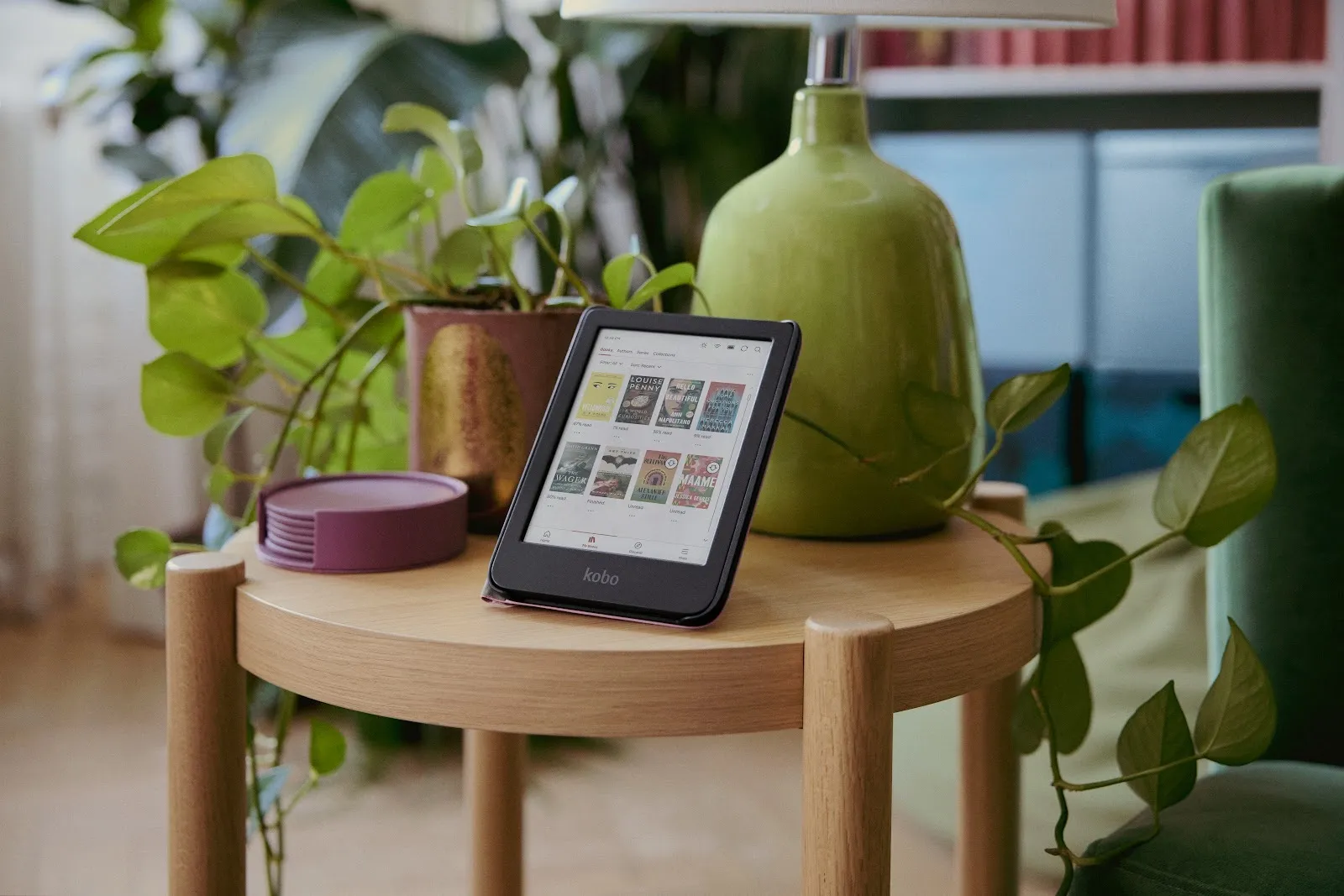
The device in the photo is Kobo Clara Colour. This is an example of an electronic ink screen being incorporated into an actual reading tool. The screen doesn't have to keep doing new things to keep showing the text in front of you. Even if the time spent on one page increases, the letters already shown remain in place.
Sources and editorial notes
E Ink · Image retention and low power characteristics
E Ink · How electronic ink works
E Ink · Actual e-book device example
Original photo · Rakuten Kobo Official Media Library
Kobo Clara Colour · Original photo for press use
Editorial note: Facts were checked against the sources above; interpretations are MUADAILY’s editorial views. Image: Rakuten Kobo · Official media-library press photograph.
Machine-translated from Korean. Read the original.