Roman’s solar panels generate power while shading its instruments. Why an infrared telescope needs to stay cool.
Article
A space telescope needs sunlight to generate electricity. Yet solar heating can interfere with instruments observing faint infrared light. NASA’s Nancy Grace Roman Space Telescope gives its broad solar array two jobs: supplying power and providing shade.
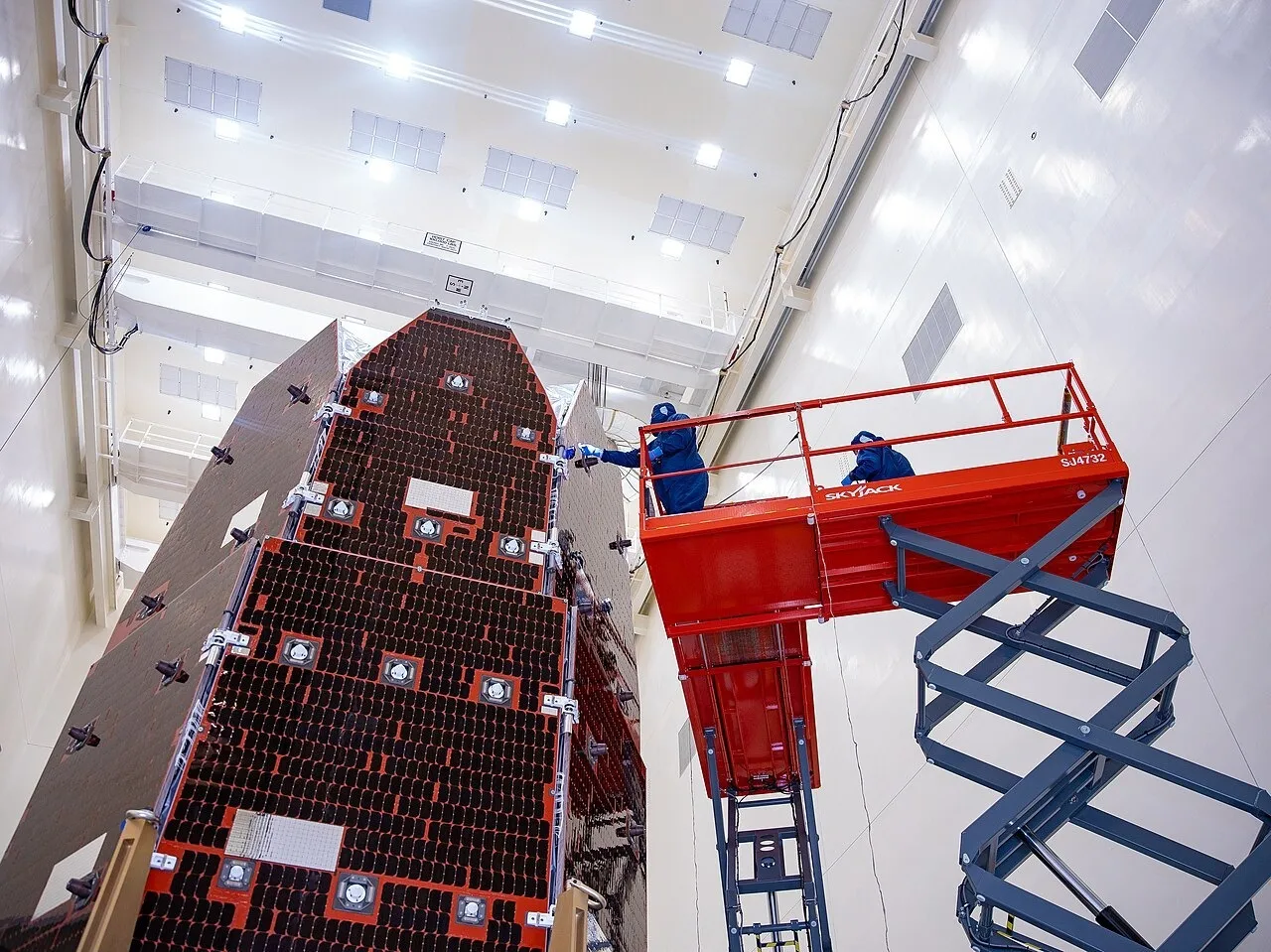
The Solar Array Sun Shield comprises six panels. Two central panels are fixed to the outer structure, while four others are designed to deploy in space into the same plane. Folding reduces their launch volume; deployment creates a broad surface facing the Sun.
Solar cells convert light into electricity on the sunward side. Behind them, shade reduces heat reaching the observatory. NASA’s assembly documentation lists 3,902 cells across the six panels.
The telescope’s own components also emit infrared light. If they become too warm, that emission can overwhelm weak signals from distant objects. Keeping the instruments cool reduces the thermal signal that can interfere with observations.
The outer barrel around the mirrors and additional shields work with the array to keep heat out. Ground photographs from panel inspections at Kennedy Space Center in July 2026 show how the small cells together form a surface broad enough to shade the telescope.
Sources and editorial notes
science.nasa.gov · 로먼 망원경 태양전지 차양 자료 1
science.nasa.gov · 로먼 망원경 태양전지 차양 자료 2
Image source · NASA Kennedy Space Center / NASA/Jolearra Tshiteya
Editorial note: Facts were checked against the linked sources. Interpretations are MUADAILY’s editorial perspective. Image: NASA Kennedy Space Center / NASA/Jolearra Tshiteya · Public domain · Roman solar-array personnel during ground preparation in July 2026.
Machine-translated from Korean. Read the original.