A small amount of working fluid transports heat, with internal grooves or porous material helping it circulate without a pump.
Article
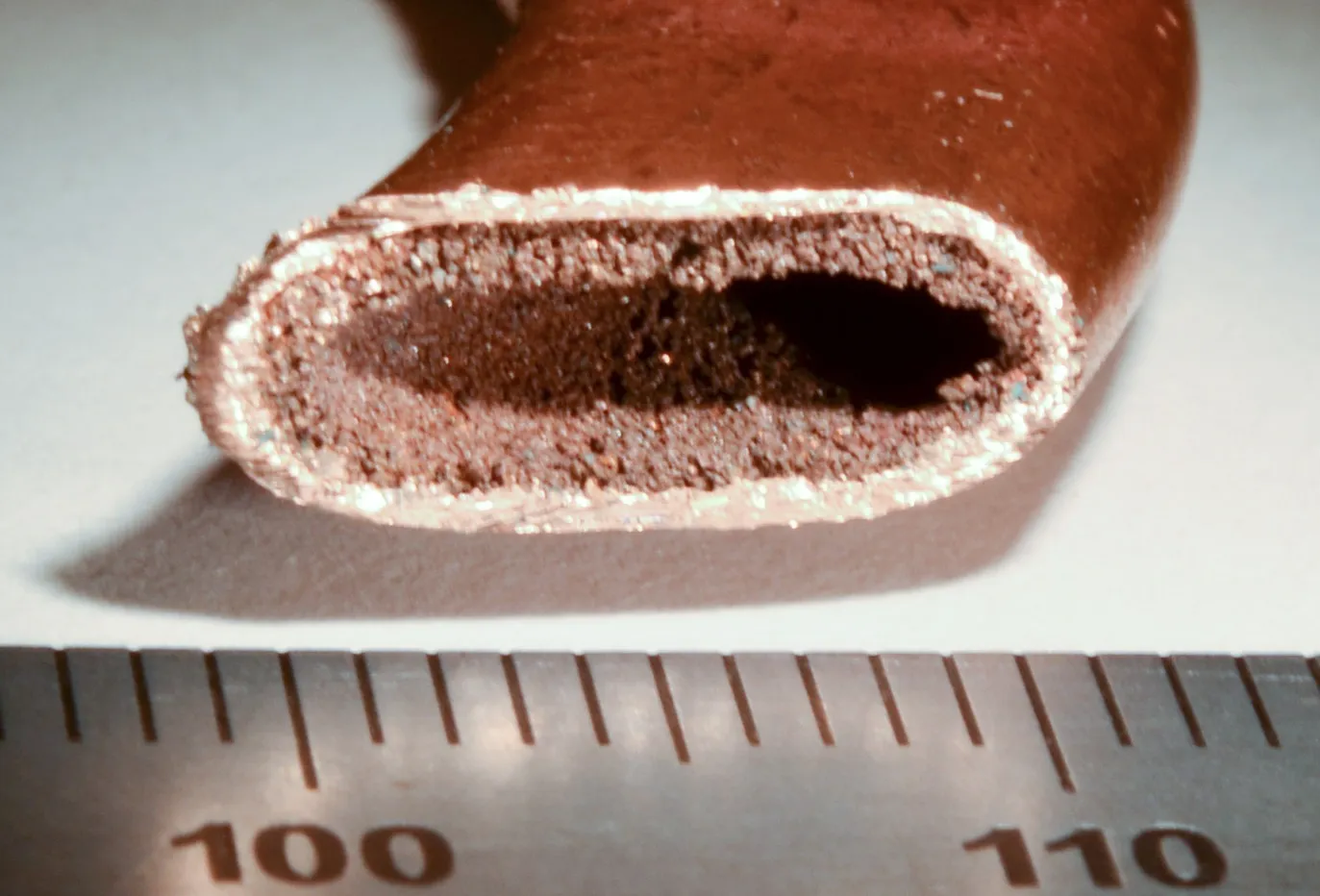
A heat pipe, the flattened metal tube carrying heat inside a laptop, contains a small quantity of liquid and space for vapour. The liquid repeatedly evaporates and condenses, carrying heat from the hot region to a cooler one.
Near the heat source, liquid absorbs energy and evaporates. The vapour moves toward a cooler region, where it condenses and releases heat. This phase change carries energy from one part of the pipe to another.
The condensed liquid needs a return route. Conventional heat pipes contain fine grooves or porous wick structures. As a paper towel draws up water, capillary action pulls liquid through these tiny spaces back toward the evaporator. This return route allows circulation without relying solely on gravity.
NASA’s small-spacecraft thermal-control guide includes heat pipes among devices that transfer heat without a separate pump. Their capacity varies with operating conditions. Fluid, geometry, temperature, orientation and heat load all affect the design.
The transported heat still has to leave the device. A laptop transfers it through a heatsink into air; a spacecraft releases it through structures that radiate heat away. The fluid repeatedly carries heat toward that exit.
Sources and editorial notes
www.nasa.gov · 히트파이프 열 이동 자료 1
Editorial note: Facts were checked against the linked sources. Interpretations are MUADAILY’s editorial perspective. Image: Epbernard · CC0 · Cross-section of a laptop heat pipe.
Machine-translated from Korean. Read the original.