Dawn’s ion engine traded a powerful shove for sustained thrust, sending tiny amounts of propellant out at high speed over long periods.
Article
Could the force felt from a sheet of paper resting on your palm move a spacecraft? NASA used that comparison for the maximum thrust of Dawn’s ion engine: about 91 millinewtons. It is far too little to lift a rocket from Earth, but in space that small force can be sustained.
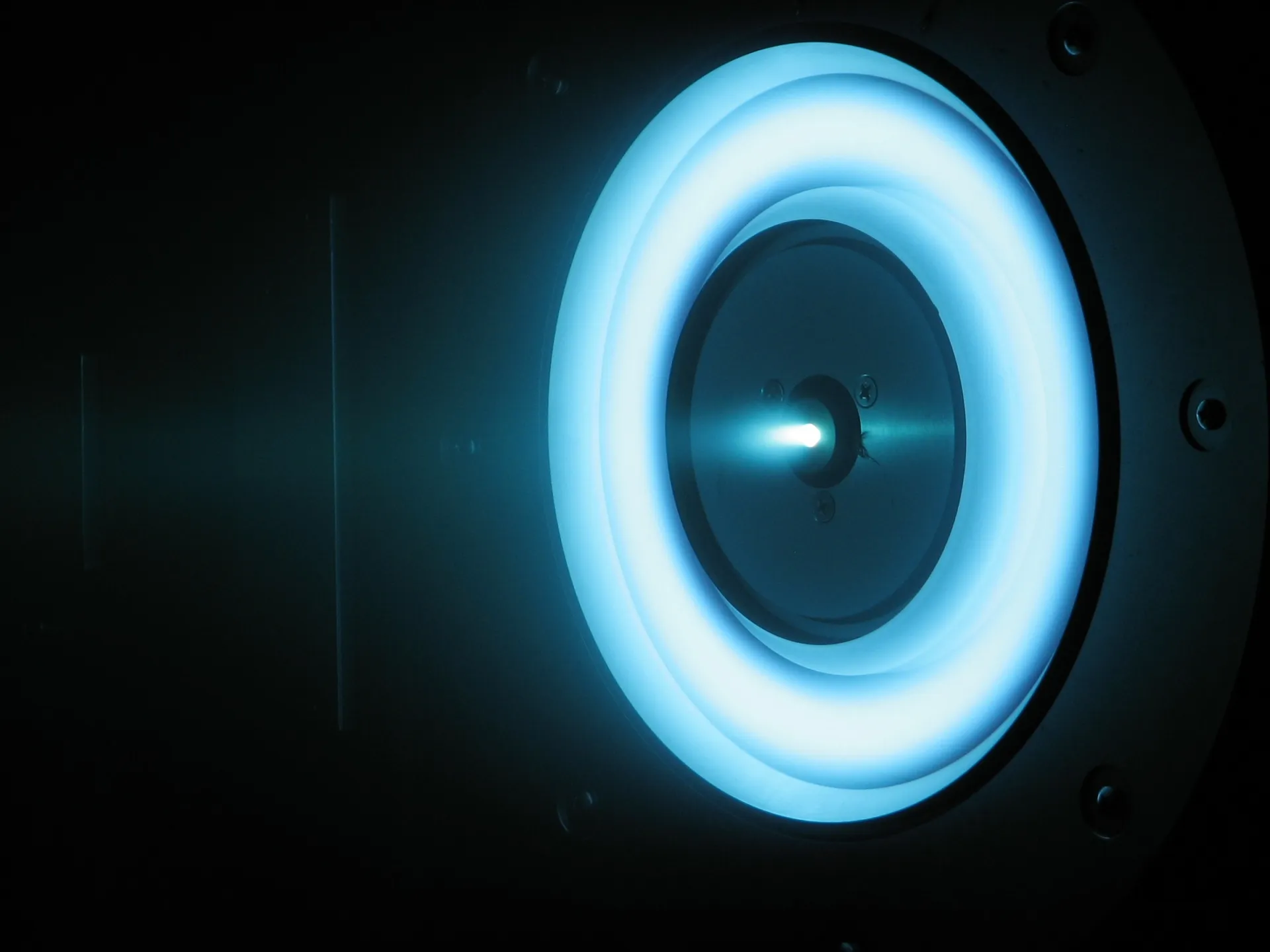
Inside the engine, xenon gas is given an electrical charge to create ions. An electric field accelerates them backward at high speed, pushing the spacecraft in the opposite direction. Solar arrays supply electricity and a tank supplies propellant. Electric propulsion still needs material to expel.
Dawn launched with 425 kilograms of xenon. At maximum thrust, an engine used about 3.25 milligrams per second. Xenon is chemically unreactive and has relatively heavy atoms, useful qualities for this propulsion system. Dawn carried three ion engines but operated one at a time.
Even a tiny acceleration accumulates into a substantial velocity change over days and months. Ion propulsion allowed Dawn to enter orbit around the asteroid Vesta, leave it and travel on to orbit the dwarf planet Ceres. One spacecraft orbited two different bodies.
A chemical rocket supplied the powerful thrust needed to leave Earth. Once in space, Dawn used solar electricity to send out small amounts of xenon. Long after the launch flame had vanished, the spacecraft’s velocity continued to change.
Sources and editorial notes
science.nasa.gov · 돈 탐사선 이온 엔진 자료 1
science.nasa.gov · 돈 탐사선 이온 엔진 자료 2
science.nasa.gov · 돈 탐사선 이온 엔진 자료 3
Image source · NASA/JPL-Caltech
Editorial note: Facts were checked against the linked sources. Interpretations are MUADAILY’s editorial perspective. Image: NASA/JPL-Caltech · Public domain · A later solar-electric propulsion engine under test in a JPL vacuum chamber, a different development model from Dawn’s engine.
Machine-translated from Korean. Read the original.