Earth cannot steer a rover continuously from afar. By assessing its own route, Perseverance has surpassed the cumulative driving record on Mars.
Article
On an unfamiliar route, you look at the ground first: are there ledges or places where a wheel could sink? Then you choose the next direction. A wrong turn can be retraced, but for a Mars rover that maneuver takes up part of a long day.
NASA's Mars rover Perseverance traveled another 91.31m on October 11, surpassing the previous rover Opportunity's cumulative record of 45.16 km. Announced on October 12, the record is less about speed than about the reach of a long-running exploration mission on a distant planet.
When Earth cannot steer every moment
The rover’s route combines planning by the team on Earth with autonomous decisions aboard the vehicle. On Mars, where communication takes time, it is difficult to drive and change direction at every moment while looking at the camera screen. The ability to read the rocks and terrain on site and judge the next move is required.
NASA explained this record and also introduced software improvements. The changes reduce steering maneuvers, allow more continuous rolling and compare the rover’s position with orbital maps while it drives. Alongside the durability of its wheels and drive system, it is improving how it uses the time available for travel.
Sunlight also affects driving. Glare on navigation cameras when driving towards the sun can limit driving time. In places where there are no familiar road signs, not only the terrain but also how well the camera can see the surroundings becomes a condition for movement.
Traveling farther to examine different rocks
The point of a distance record is not simply to raise the odometer reading. Traces of old lake beds, rivers, and crater edges remain from different times. Only by reaching more diverse locations can we examine different types of rocks and compare Mars' past.
Perseverance collected 29 rock and regolith samples. The extended mission launched this time is planned to explore the crater rim until approximately the end of 2028. For vehicles that still have places to go, the new record is more a sign that they have time to move on to the next route than a sign that they have reached their destination.
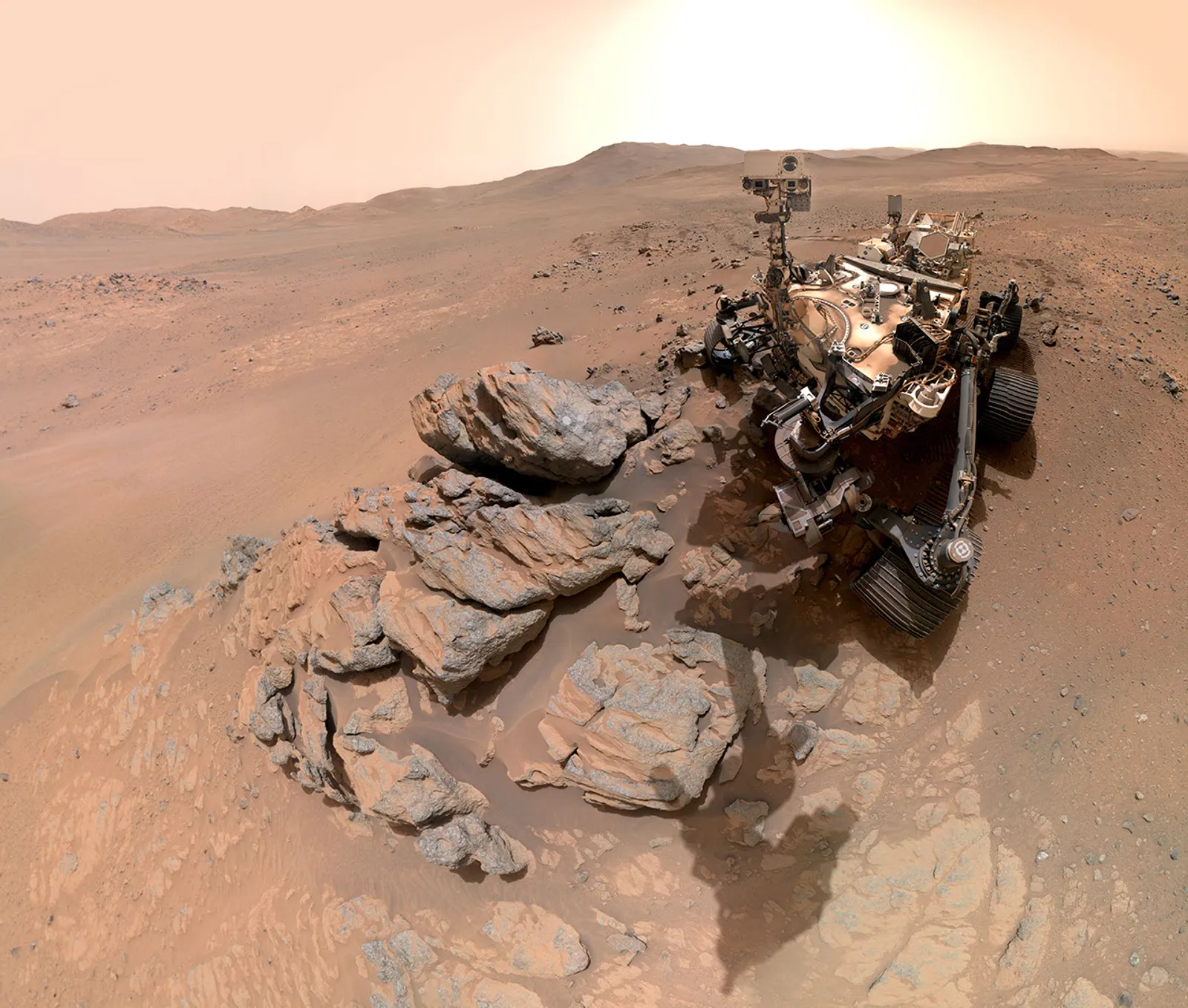
Image information: This is a reference photo of Perseverance taken on March 11, 2026, and is not a photo from the day the driving record was achieved in the article. NASA/JPL-Caltech/MSSS. https://science.nasa.gov/photojournal/nasas-perseverance-rover-snaps-westernmost-selfie/
Sources and editorial notes
NASA · Perseverance Driving Record
Editorial note: Facts were checked against the sources above; interpretations are MUADAILY’s editorial views. Image: NASA/JPL-Caltech/MSSS · Perseverance selfie, March 11, 2026.
Machine-translated from Korean. Read the original.