Sesc Pompeia in São Paulo joins an old metal-drum factory to new sports facilities. Lina Bo Bardi’s complex makes room for performances, reading, and exercise.
Article
Go to a factory to exercise or see a performance. Sesc Pompeia in São Paulo, Brazil, combines a former metal-drum factory with new sports facilities in a cultural and recreational complex. Places to rest and gather sit beside traces of industry.
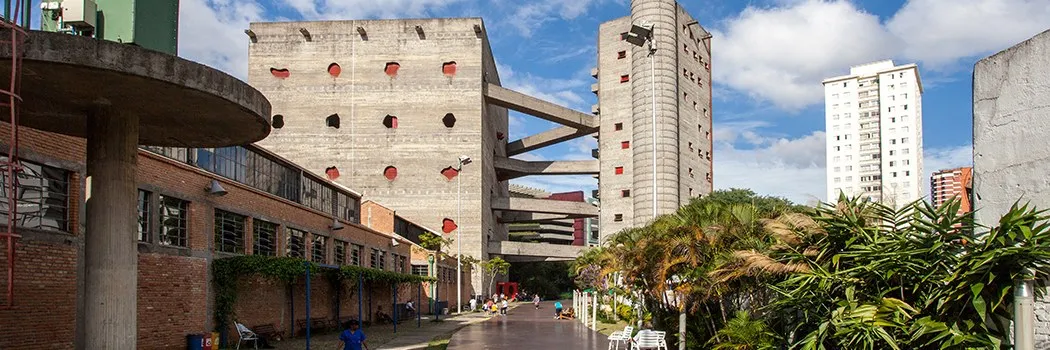
Architect Lina Bo Bardi and her collaborators reused the factory's brick buildings for social and creative activities, while putting sports facilities in separate exposed-concrete structures. Rather than replacing everything with one new building, they connected places of different shapes and sizes.
The cultural space opened in 1982; the sports facilities were completed in 1986. The converted factory and new athletic buildings arrived at different times. Knowing that sequence makes the relationship between the low brick buildings and taller structures easier to see.
Elevated walkways connect the two concrete blocks. The operator describes bridges on four levels leading to the sports halls. Large spaces for exercise and the routes into them are separated, then joined by bridges. The visible paths between buildings have become a defining feature.
The complex includes performance and exhibition spaces, reading areas, a restaurant, a swimming pool, and sports facilities. Everyday activities continue around anyone visiting to look at the architecture. Readers, people exercising, and audiences waiting for a show can all occupy the same complex.
Cross a bridge in the new buildings, and you can return to the old factory. A workplace has become somewhere to rest, learn, and gather. Brick and concrete are joined not only by walkways but by the routes people take through their different activities during the day.
Sources and editorial notes
Sesc São Paulo · History of sports facilities · Old drum factory · 1986 · Aerial passage
Sesc São Paulo · Factory in the official brochure · Opened in 1982
Sesc São Paulo · Facility composition and designer
Editorial note: Factual statements are based on the sources above; interpretations reflect MUADAILY's editorial perspective. Image: Facility Photo Source: Sesc São Paulo.
Machine-translated from Korean. Read the original.