A cord hole reveals the practical purpose of these miniature figures: securing containers suspended from a kimono sash.
Article
Turn a tiny carved animal over and a hole for a cord may come into view. A netsuke was originally a fastening for belongings worn at the waist. It kept the cord attached to a pouch or small container from slipping beneath a sash.
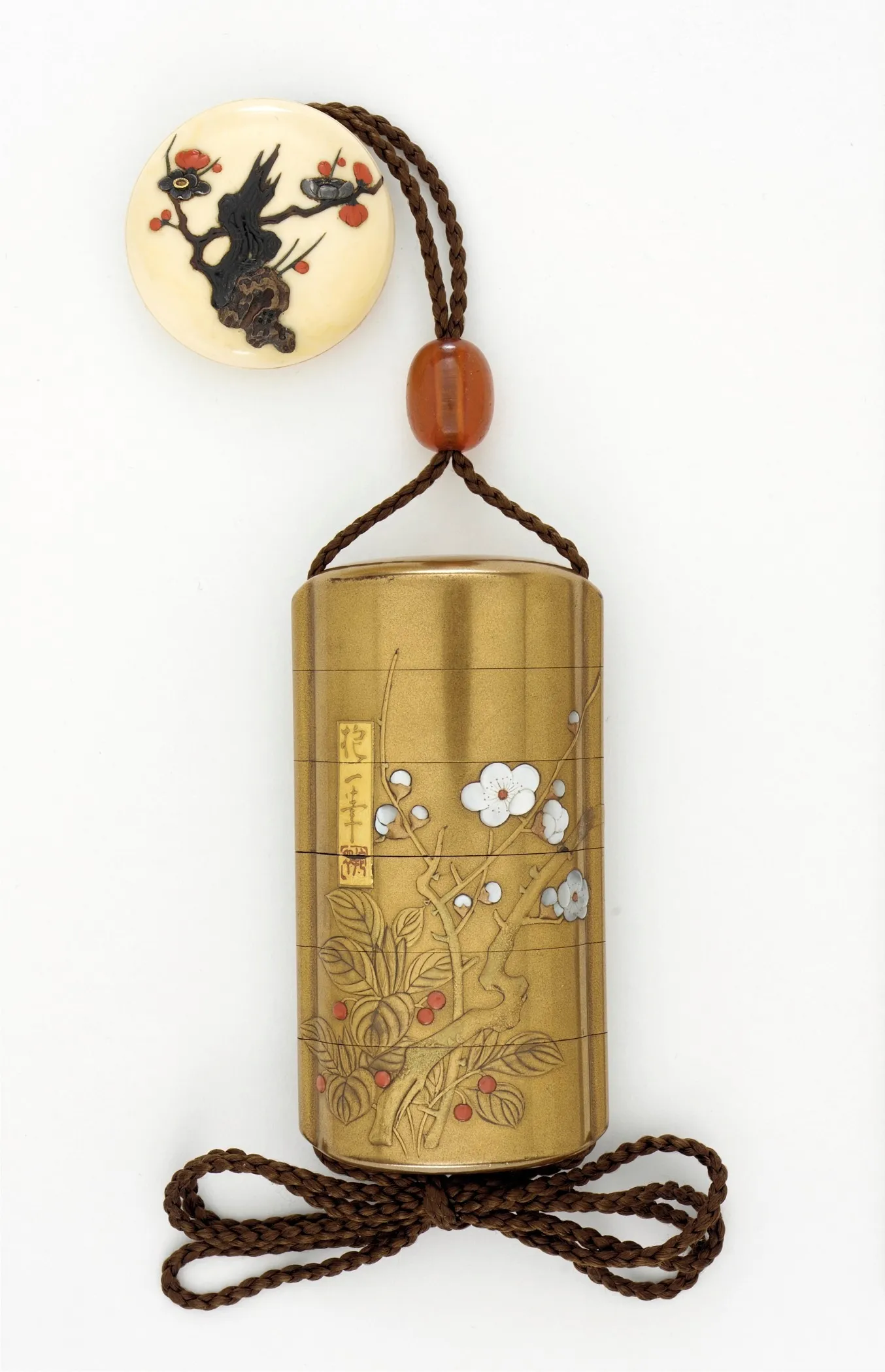
Without the sewn-in pockets of modern trousers, kimono wearers could suspend an inro for seals or medicine, a tobacco pouch or another container from the waist. Its cord passed beneath the broad obi sash, with the netsuke attached at the other end as a toggle.
A simple piece of root or bamboo with a hole could serve the purpose. Makers later carved people, animals and imaginary beings in wood and other materials. During the Edo period, detailed expressions and movements fitted within the practical dimensions of a sash fastening.
Similar-looking carvings could have a different purpose. Okimono were ornaments made to be placed on display. Netsuke carvers made these too, but they often lacked a cord hole.
An inro displayed with its netsuke makes their relationship clear. The container hangs below; above it, a small carving holds the cord carrying its weight. That was the job of the little animal at its wearer’s waist.
Sources and editorial notes
www.tmja.org.il · 네쓰케 끈 고정 장식 자료 1
Image source · Kajikawa School (Japan, active 17th to 19th centuries)
Editorial note: Facts were checked against the linked sources. Interpretations are MUADAILY’s editorial perspective. Image: Kajikawa School (Japan, active 17th to 19th centuries) · Public domain · An inro with ojime and netsuke in LACMA’s collection.
Machine-translated from Korean. Read the original.