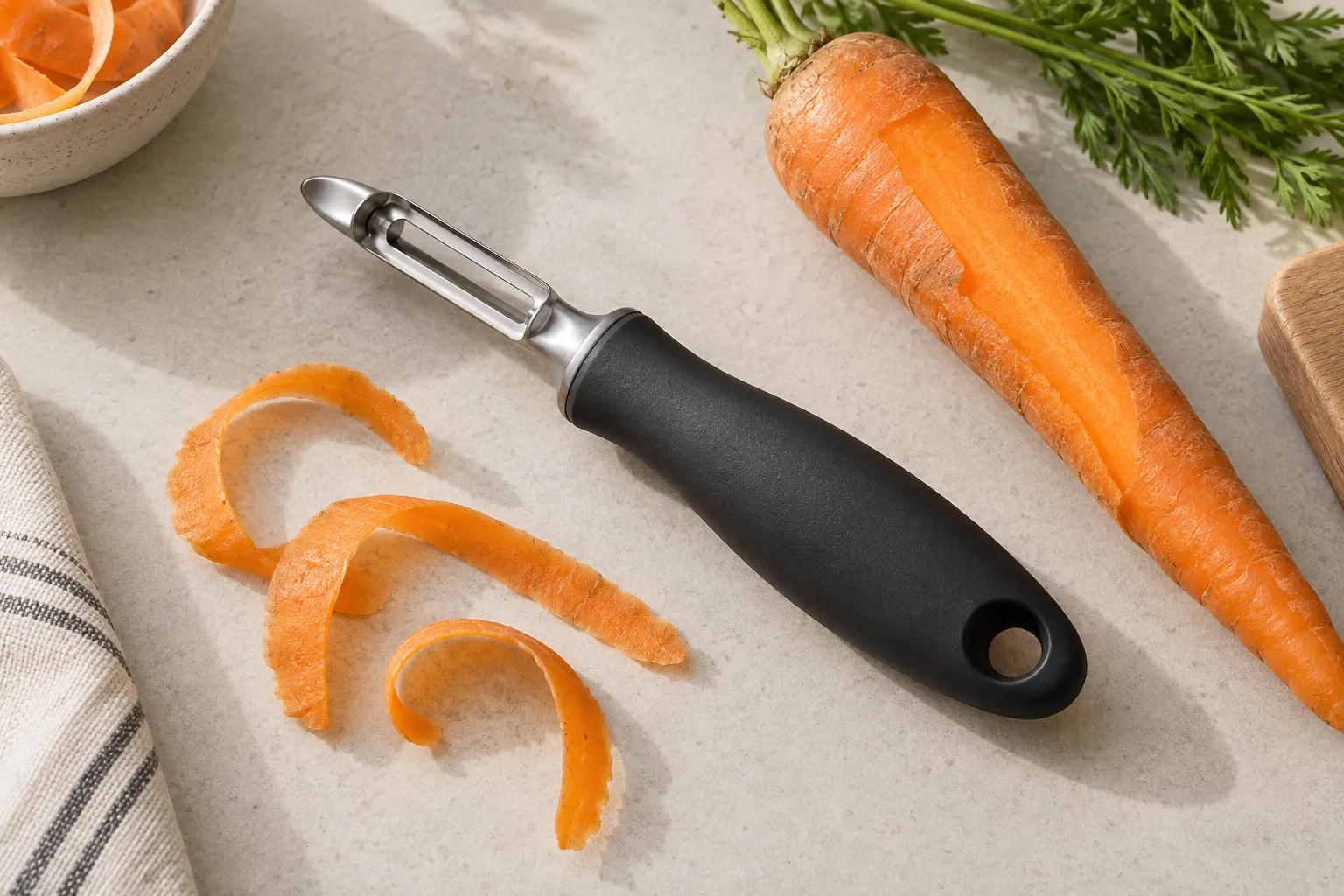
Even if the blade is sharp, cooking is difficult if the handle hurts to hold. OXO started from that inconvenience by changing the thickness and material of the handle and placing carrots in the store to let people try out the difference for themselves.
Article
When peeling a potato, we usually notice the blade first: how thinly it cuts and how easily it removes the skin. When a hand begins to hurt, the handle demands attention. Even a sharp blade is hard to keep using if the tool cannot be held comfortably.
OXO founder Sam Farber noticed that discomfort too. According to the company’s design history, seeing his wife Betsey struggle to hold a peeler because of arthritis prompted him to make a better tool. The thick handles of the Good Grips kitchen range, introduced in 1990, began there.
More handle in the hand
The new handle was broad and oval. Instead of requiring a tight grip on thin metal, it offered a larger area to hold. Differences in hand size and grip strength became part of the design brief.
Its surface used thermoplastic rubber, or TPR. OXO cites its soft feel, grip when wet, ability to bond with other materials, and resistance to washing as reasons for choosing it. Kitchen tools get wet as hands and ingredients are washed. Keeping the shape comfortable in actual use meant considering both form and material.
From one person’s difficulty to a tool for many
PBS presents the peeler as an example of universal design, intended to work for a wide range of people. It began with Betsey’s difficulty without becoming a separate tool only for people with arthritis. The handle changed so that the same kitchen task could be more comfortable.
Different hands may experience it differently. Still, the design placed holding and controlling a tool alongside its blade’s performance. Hands that struggled with existing tools became a starting point for the work.
Why put carrots in the store?
In a photograph, a thick black handle might register as no more than a different shape. OXO recounts placing peelers and carrots in stores so that customers could try them. Holding the tool and peeling a carrot made the handle’s size and surface tangible.
Explaining the change did not require an elaborate demonstration. It took a carrot and the act of holding a peeler. A redesigned handle that addressed Betsey’s discomfort let other people feel the difference for themselves. The new design became clear through an ordinary movement.
Sources and editorial notes
Editorial note: Founding background, launch in 1990, handle shape/material, and store experience are based on confirmed data. The description of the relationship between hands and tools is MUADAILY's editorial interpretation and does not make any claims about the medical benefits of the product or that it will have the same effect on all users. Image: MUADAILY · AI-generated editorial image.
Machine-translated from Korean. Read the original.