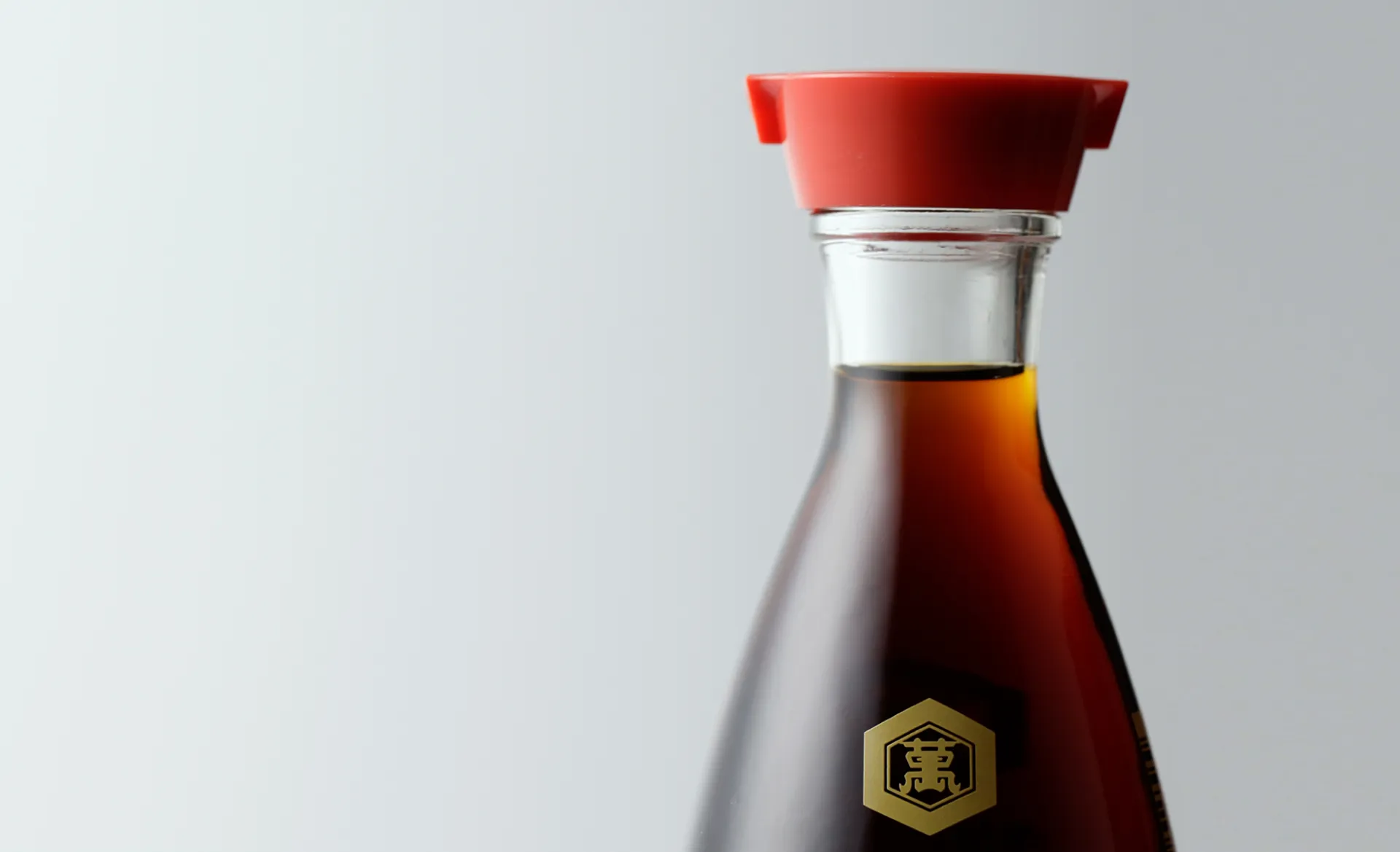
Kikkoman’s red-capped dispenser gives air and soy sauce separate paths. Nearly 100 prototypes helped refine the simple act of pouring at the table.
Article
Pouring a little soy sauce can leave a trickle to wipe from the side of the bottle. For something used at every meal, a small inconvenience repeats often. Kikkoman's red-capped tabletop dispenser began with those everyday actions. How to pour and set it down received as much attention as what it would contain.
Kikkoman worked with industrial designer Kenji Ekuan at a time when soy sauce was commonly transferred from large bottles into smaller table containers. The aim went beyond shrinking retail packaging: the bottle was to become tableware used repeatedly, like a plate or teacup. Ekuan and his team made nearly 100 prototypes over roughly three years before introducing the familiar form in 1961.
The two spouts in the cap separate the path of outgoing sauce from incoming air. When the bottle tilts, sauce flows through one side while air enters through the other. Covering the upper opening with a finger controls the pour. The manufacturer says this arrangement and the shape of the spout tips stabilize the flow and reduce drips.
The body also reflects the way it is held. A narrow neck is easy to grasp, while a wider base gives stability when the bottle is set down. A wide opening makes refilling and cleaning easier, and clear glass reveals how much sauce remains. The design considers both the closed bottle and the act of opening it to refill.
It also mattered that a bottle filled during production could go straight onto the table. No separate small dispenser was needed. After its contents were used, it could be refilled and returned to the same spot. Packaging for selling soy sauce remained useful as tableware. The term tabletop bottle describes a sequence of use as well as a shape.
Knowing the story draws attention to the two holes in the cap. Air enters, sauce leaves, and a finger regulates the flow. The enduring form follows the movement of picking up a bottle, tilting it, and putting it down. Three years of development are reflected in those brief, repeated actions.
Sources and editorial notes
Kikkoman Corporation · 2020 Tabletop Soy Sauce Bottle Development Record
Kikkoman USA · 60th anniversary introduction, prototype, two spouts, finger control explanation
GK Design Group · Design studio’s record of the 1961 soy sauce dispenser
Editorial note: Facts were checked against the sources above; interpretations reflect MUADAILY’s editorial perspective. Photo: GK Design Group / Kikkoman.
Machine-translated from Korean. Read the original.